




01. Edit your brake inspection checklist pdf online
Type text, add images, blackout confidential details, add comments, highlights and more.

Type text, add images, blackout confidential details, add comments, highlights and more.

Draw your signature, type it, upload its image, or use your mobile device as a signature pad.

Send brake inspection checklist via email, link, or fax. You can also download it, export it or print it out.
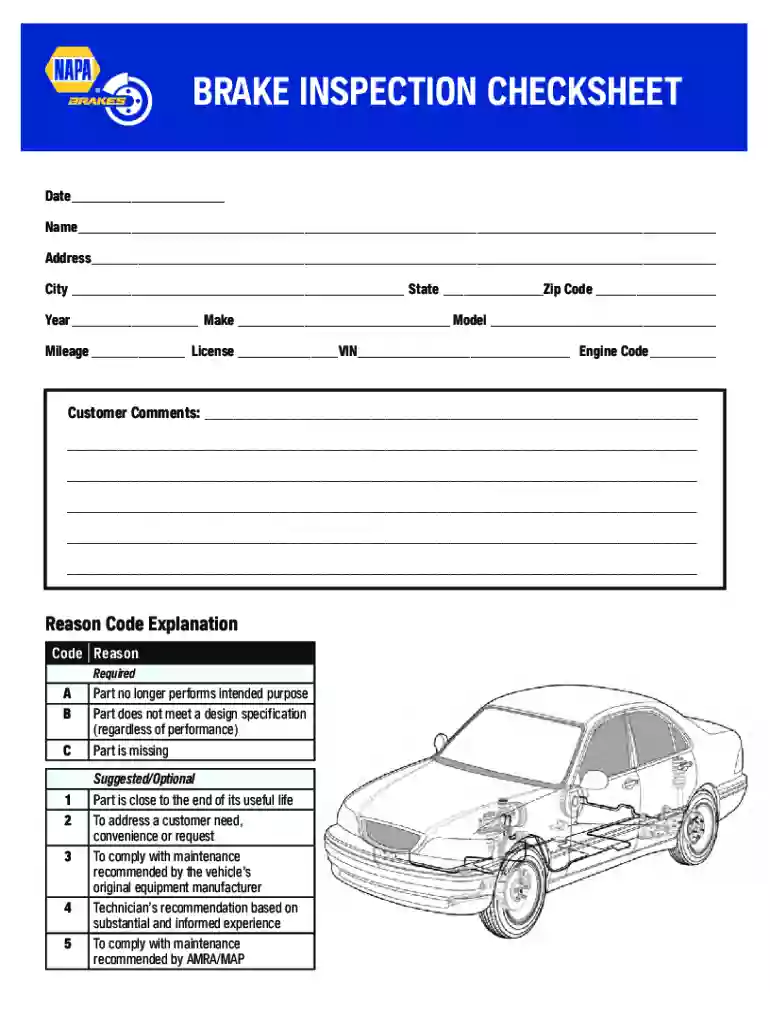
The Brake Inspection Checklist - NAPA Brakes serves as a structured tool designed to ensure comprehensive assessment of a vehicle's braking system. This document outlines the critical components to inspect during a brake evaluation, promoting safety and performance. The checklist can be utilized by automotive technicians, service managers, and vehicle owners to systematically record findings, maintenance history, and necessary repairs. The overarching purpose is to maintain vehicle safety and compliance with regulatory standards, while also ensuring optimal performance.
The checklist typically includes various sections that highlight important aspects of the brake system, such as:
Through careful examination of these components, technicians can document and track the condition of a vehicle's braking system effectively.
Completing the Brake Inspection Checklist - NAPA Brakes involves a series of organized steps. Proper execution ensures a thorough evaluation and documentation of the brake system’s condition.
Preparation:
Visual Inspection:
Measurements:
Fluid Check:
Document Findings:
By following these steps, users can ensure that they complete the inspection accurately and comprehensively document the brake system's health.
The Brake Inspection Checklist - NAPA Brakes is a versatile tool that serves various users in the automotive industry. Understanding who typically uses this checklist is important for maximizing its effectiveness.
Automotive Technicians: Skilled professionals who perform brake inspections as part of routine service and repairs. They rely on the checklist to ensure thorough evaluations of brake systems for different vehicles.
Service Center Managers: Individuals responsible for overseeing automotive repair shops and ensuring that technicians adhere to best practices for inspections and maintenance. The checklist helps maintain quality standards.
Fleet Operators: Businesses managing a fleet of vehicles can use the checklist to standardize brake inspections across multiple vehicles, streamlining maintenance procedures and ensuring safety compliance.
Vehicle Owners: Car owners who wish to be informed and proactive about their vehicle's maintenance may use the checklist during personal inspections or when discussing brake issues with technicians.
Understanding the primary users assists in tailoring the checklist's design and utilizing it effectively across various settings.
Utilizing the Brake Inspection Checklist - NAPA Brakes is critical for several reasons, significantly contributing to vehicle safety and reliability.
Enhanced Safety: Regular inspections help identify potential issues early, reducing the risk of brake failure while driving. This proactive approach can prevent accidents caused by faulty brake systems.
Improved Vehicle Performance: Ensuring that all brake components are in optimal condition leads to better vehicle handling and stopping power, enhancing overall driving experience.
Maintenance Records: Keeping a documented history using the checklist provides valuable insights for future inspections and repairs. This record can be beneficial during vehicle resale or warranty claims.
Compliance with Regulations: For commercial vehicles and service centers, adhering to inspection guidelines helps comply with safety regulations, reducing legal liabilities associated with vehicle safety.
The importance of this checklist cannot be overstated as it promotes responsible vehicle ownership and maintenance practices.
Practical application of the Brake Inspection Checklist - NAPA Brakes can vary across different scenarios, demonstrating its versatility and necessity.
A technician at a local garage performs routine maintenance on a customer’s sedan. Before starting the job, they utilize the checklist to conduct a comprehensive inspection. The technician notes that the brake pads are nearing replacement thresholds and informs the customer, leading to timely maintenance.
As winter approaches, a fleet manager decides to conduct pre-season inspections on company vehicles to prepare them for adverse weather conditions. The manager utilizes the checklist to standardize inspections across all vehicles and ensures that each vehicle's braking system is safe and efficient for winter driving.
A prospective car buyer might request a brake inspection before finalizing the purchase of a used vehicle. A qualified technician employs the checklist to document the braking conditions, including any necessary repairs that could impact the vehicle’s safety and value.
By demonstrating these scenarios, the checklist proves to be an invaluable tool across various contexts, ensuring that individuals and businesses prioritize brake safety effectively.
We've got more versions of the brake inspection checklist pdf form. Select the right brake inspection checklist pdf version from the list and start editing it straight away!
| Versions | Form popularity | Fillable & printable |
|---|---|---|
| 2019 | 4.7 Satisfied (29 Votes) |
At DocHub, your data security is our priority. We follow HIPAA, SOC2, GDPR, and other standards, so you can work on your documents with confidence.
Mar 5, 2014 Wash thoroughly after handling. P270 Do not eat, drink or smoke when using this product.
to prepare technicians for the ASE A5 Brake test. Topics include hydraulic theory, brake system dynamics, brake fluids, ABS operation, and MAP guidelines.


