




01. Edit your form online
Type text, add images, blackout confidential details, add comments, highlights and more.

Type text, add images, blackout confidential details, add comments, highlights and more.

Draw your signature, type it, upload its image, or use your mobile device as a signature pad.

Send it via email, link, or fax. You can also download it, export it or print it out.
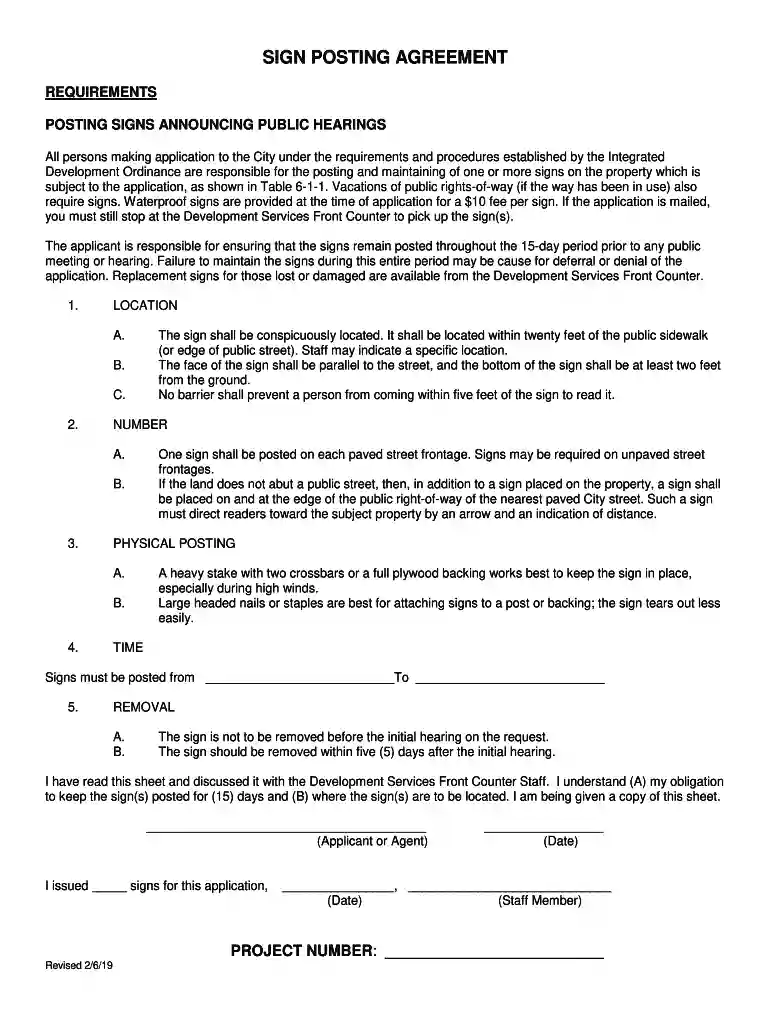
A Sign Posting Agreement is a legally binding document that outlines the obligations of individuals or entities responsible for posting physical signs in specific locations as part of regulatory or legal requirements. These signs are typically used to notify the public of events such as public hearings, construction, or zoning changes mandated by an Integrated Development Ordinance or similar regulatory framework. The agreement ensures that the involved parties adhere to specific guidelines concerning the placement, maintenance, and eventual removal of these signs, thereby promoting transparency and public awareness. Understanding the purpose and scope of this agreement is crucial for applicants to comply properly with legal prerequisites and avoid penalties.
To effectively use a Sign Posting Agreement, involved parties must familiarize themselves with the specific guidelines that dictate how signs should be posted, maintained, and removed. Here is a practical approach:
Review the Requirements: Examine the agreement to understand the location, size, and visibility requirements for the signs. Each step must comply with local zoning or development ordinance requirements.
Gather Necessary Materials: Ensure you have all materials and equipment—such as the sign itself, posts, and tools—needed to comply with the agreement's guidelines.
Installation Procedures: Follow step-by-step installation instructions provided in the agreement. Ensure proper placement so that the sign is visible to the intended audience.
Maintenance Obligations: Regularly inspect the sign for damages or obstructions. The agreement may specify a schedule for maintenance checks to ensure the sign remains clear and visible.
Timely Removal: After the specified event or period, remove the sign in accordance with the agreement. Delayed removal could lead to penalties.
Using the agreement in a step-by-step manner ensures compliance with legal and civic obligations, preventing possible delays or denials in associated processes.
A comprehensive Sign Posting Agreement consists of several critical components that detail the responsibilities of the parties involved:
Sign Specifications: Details regarding the size, content, and material of the sign are vital. Each sign must adhere to these specifications to meet zoning or ordinance requirements.
Location Requirements: The exact location for sign placement is often dictated within the agreement. Placement must consider visibility and accessibility to intended audiences.
Display Duration: Specifies timeframes for how long a sign must remain posted. This duration typically coincides with relevant regulatory or legal timeframes.
Maintenance Duties: Outlines the frequency and method for maintaining the sign, ensuring it remains legible and in good condition throughout its display period.
Removal Procedures: Clear guidelines for when and how signs should be taken down, ensuring no obstructions remain after the applicable period is concluded.
Understanding these elements helps ensure full compliance with the agreement's terms, thereby minimizing legal risks.
Here is a guide on how to complete a Sign Posting Agreement effectively:
Read the Agreement Thoroughly: Before completing any sections, ensure you understand all terms and obligations. This provides clarity and reduces errors.
Fill Out Identifying Information: Accurately enter your organization's name, contact information, and authorized signatories on the agreement form.
Specify Sign Details: Enter details about the signs you will post, including dimensions, wording, and intended placement locations.
Compliance Confirmation: Check boxes or complete sections confirming you are aware of and agree to adhere to all requirements, including schedule terms.
Signature Section: Provide authorized signatures from your organization, confirming your agreement to all stipulated terms.
Submit the Agreement: Follow submission instructions, ensuring the document is sent to the correct regulatory body or authority for processing.
Completing these steps with precision guards against discrepancies that could lead to non-compliance issues later.
The legal use of a Sign Posting Agreement centers around its function as a regulatory tool to ensure public awareness and compliance with local ordinances. The agreement itself is used for:
Regulatory Compliance: It serves as evidence that the sign poster understands and commits to meeting all legally mandated requirements.
Public Notification: Legally mandates applicants to alert the public about upcoming zoning changes, hearings, or developments ensuring community involvement or feedback.
Enforcement: Acts as a contract that authorities can reference to enforce compliance or levy penalties should guidelines not be met.
Understanding these legal applications helps involved parties appreciate the importance of strict adherence to the agreement’s terms.
State-specific rules often categorize certain additional provisions that must be respected when executing a Sign Posting Agreement:
Zoning Ordinances: Each state might have unique zoning laws or ordinances affecting where and how signs are posted. Compliance with these is mandatory to avoid legal complications.
Environmental Considerations: States may impose additional requirements such as preserving trees or natural landscapes during sign placement.
Duration Flexibility: Some states might offer variable display durations depending on the season or specific legislative guidelines.
Applicants must investigate state-specific rules applicable to their situation to ensure complete adherence to all local laws and regulations.
Practical scenarios illustrate the critical nature of a Sign Posting Agreement:
Public Hearings: A neighborhood association could use the agreement to announce forthcoming public meetings discussing local developments.
Construction Notices: A construction company may utilize the agreement to post signs warning residents of upcoming roadwork or building projects.
Zoning Changes Announcements: Local governments often post signs detailing potential zoning adjustments, improving transparency for community stakeholders.
Each example demonstrates the agreement's role in promoting clear communication and regulatory adherence within communities.
The use of a Sign Posting Agreement is prevalent across various entities:
Developers and Contractors: Engaged in construction or development projects, ensuring legal compliance and public awareness.
Municipal Authorities: For posting civic notices such as habitat conservation efforts or public safety alerts.
Property Management Companies: Informing tenants and neighboring residents about changes affecting the property.
Understanding which stakeholders use these agreements highlights their role in regulatory processes designed to increase public interaction and compliance.


We've got more versions of the SIGN POSTING AGREEMENT form. Select the right SIGN POSTING AGREEMENT version from the list and start editing it straight away!
At DocHub, your data security is our priority. We follow HIPAA, SOC2, GDPR, and other standards, so you can work on your documents with confidence.
THE SIGN MUST BE POSTED FOR 15 DAYS AFTER THE PERMIT IS APPROVED. The appeal period is 15 days after the permit issued.
All signs and flyers in the Thomas Commons must be approved and stamped before posting Banner signs may only be posted on the OC


