







Definition & Meaning
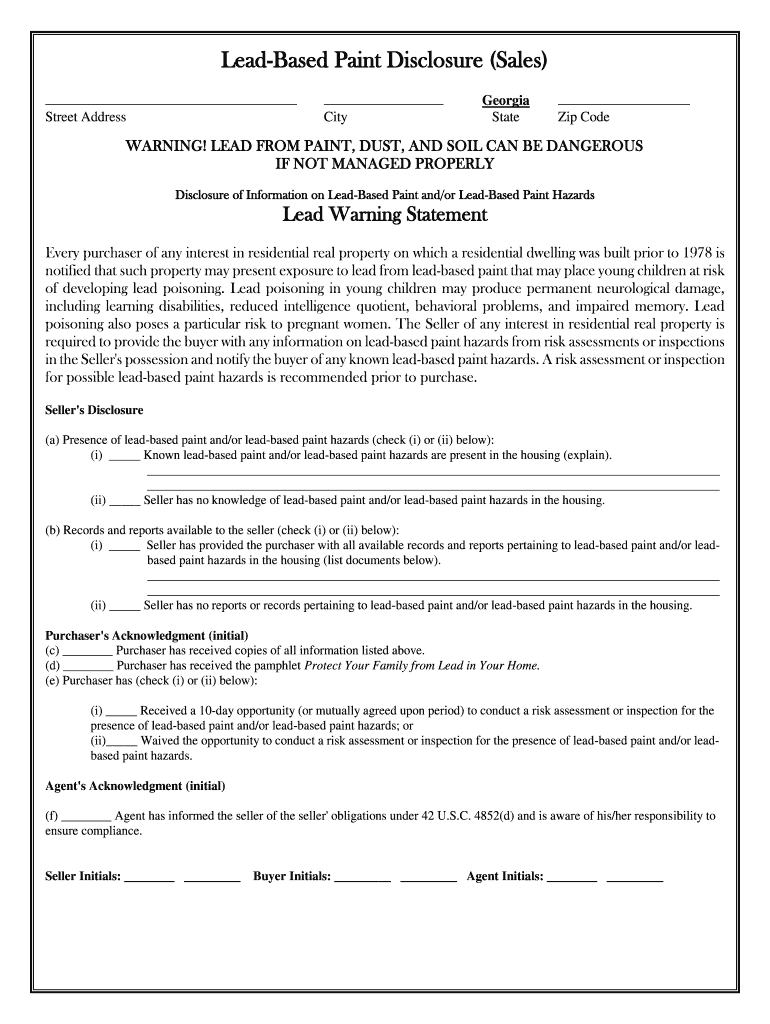
A lead-based disclosure warning is a crucial legal document designed to inform parties involved in the sale or lease of residential properties about potential lead hazards. This form is mandated by the federal government for any property built before 1978, reflecting concerns over health risks associated with lead exposure, particularly in older homes. This document demands transparency about known lead paint issues, aiming to safeguard public health by allowing buyers or renters to make informed decisions. The form underscores the seller's or landlord's legal obligation to provide this information, ensuring compliance with disclosure regulations and fostering trust in real estate transactions.
Key Elements of the Lead-Based Disclosure Warning
The lead-based disclosure warning comprises several vital elements that ensure all parties understand the property's condition regarding lead hazards. Key components include:
- Seller/Owner Disclosures: The form requires sellers or landlords to declare any known lead-based paint or hazards on the property. This section must be completed truthfully to avoid legal repercussions.
- Acknowledgment of Receipt: Buyers or tenants must acknowledge receiving the disclosure form and accompanying information on lead poisoning prevention.
- Inspection Opportunity: The document also grants potential buyers the opportunity to conduct a lead inspection or risk assessment before finalizing the transaction.
- Certification of Accuracy: Both the seller and buyer must certify the accuracy of the disclosed information, ensuring all declarations are honest and complete.
Steps to Complete the Lead-Based Disclosure Warning
Completing the lead-based disclosure warning involves specific steps to ensure compliance and transparency:
- Review Property Records: Sellers should begin by reviewing any available records or reports related to lead-based paint on the property.
- Complete Seller Disclosures: Accurately fill out the section regarding known lead hazards, detailing any past inspections, abatement efforts, or awareness of lead paint.
- Provide EPA Pamphlet: Share the Environmental Protection Agency's “Protect Your Family from Lead in Your Home” pamphlet with the buyer.
- Facilitate Buyer Inspection: Offer buyers a 10-day period to conduct a lead-based paint inspection. Note that this period can be waived by mutual agreement.
- Obtain Signatures and Acknowledgments: Ensure all parties sign and acknowledge receipt of the disclosure information, which includes confirming the opportunity for a lead inspection.
Legal Use of the Lead-Based Disclosure Warning
This disclosure serves several legal purposes, primarily focused on protecting public health and ensuring regulatory compliance:
- Compliance with Federal Law: The form is a legal requirement under the Residential Lead-Based Paint Hazard Reduction Act of 1992, ensuring landlords and sellers notify parties of potential risks.
- Liability Protection: Properly completing and filing the form protects sellers and landlords from legal action stemming from nondisclosure of lead hazards.
- Transparent Transactions: It fosters transparency by mandating all known information about existing lead conditions, contributing to informed purchasing decisions.
Important Terms Related to the Lead-Based Disclosure Warning
Understanding terminology related to the lead-based disclosure warning is crucial for accurate form completion and comprehension:
- Lead-Based Paint: Paint containing lead, commonly used in homes before the ban in 1978, known for its durability but hazardous to health.
- Abatement: A process to reduce or eliminate lead paint hazards, often involving removal or covering of lead-painted surfaces.
- EPA: The Environmental Protection Agency, the federal body responsible for developing guidelines and informational resources related to lead hazards.
State-Specific Rules for the Lead-Based Disclosure Warning
While federal law mandates the use of the lead-based disclosure form, some states have additional requirements:
- State Variations: Certain states might impose stricter regulations or provide supplementary disclosure forms to address state-specific concerns.
- Local Ordinances: Review local guidelines or ordinances, as some municipalities may have unique rules regarding lead disclosures that supersede federal standards.
- State Agency Resources: Utilize state environmental or housing agency resources for guidance on fulfilling both state and federal lead disclosure obligations.
Penalties for Non-Compliance
Non-compliance with lead-based disclosure requirements can result in severe penalties:
- Financial Liabilities: Failure to provide the disclosure form can lead to substantial fines and penalties, potentially costing thousands of dollars.
- Legal Action: Buyers or tenants may pursue legal action if lead hazards are discovered without adequate prior disclosure, resulting in court-mandated remediation or compensation.
- Government Fines: The EPA, among other federal and state agencies, may impose strict fines for violations of the Residential Lead-Based Paint Hazard Reduction Act.
Software Compatibility
Various software tools facilitate the digital handling of lead-based disclosure forms:
- Real Estate Platforms: Use real estate-specific software like TurboTax or QuickBooks that may offer templates for completing and managing disclosure documents.
- Online Document Services: Platforms like DocHub allow for electronic completion, signing, and sharing of disclosure forms, simplifying compliance processes.
- Compatibility with Existing Systems: Ensure these tools integrate well with other digital systems used in real estate transactions for seamless operation.
Who Issues the Form
The lead-based disclosure warning is typically standardized and offered by:
- Federal Agencies: As a form mandated by federal law, it is often available through the EPA or HUD websites.
- State Housing Authorities: State-specific templates may be issued by local housing or environmental agencies.
- Real Estate Professionals: Realtors often provide these forms as part of the transactional paperwork to ensure compliance during property sales or leases.
Disclosure Requirements
Understanding the disclosure requirements is vital for ensuring legal compliance in property transactions:
- Mandatory Information: Sellers and landlords must disclose known information regarding lead-based paint hazards and provide the relevant EPA pamphlet.
- Documentation of Inspections: If any lead inspections or risk assessments have been conducted, these results must be shared with potential buyers.
- Record Keeping: Maintain copies of disclosure forms and related documentation for a minimum of three years post-transaction, as required by law.




