






Definition and Purpose of the STT Report
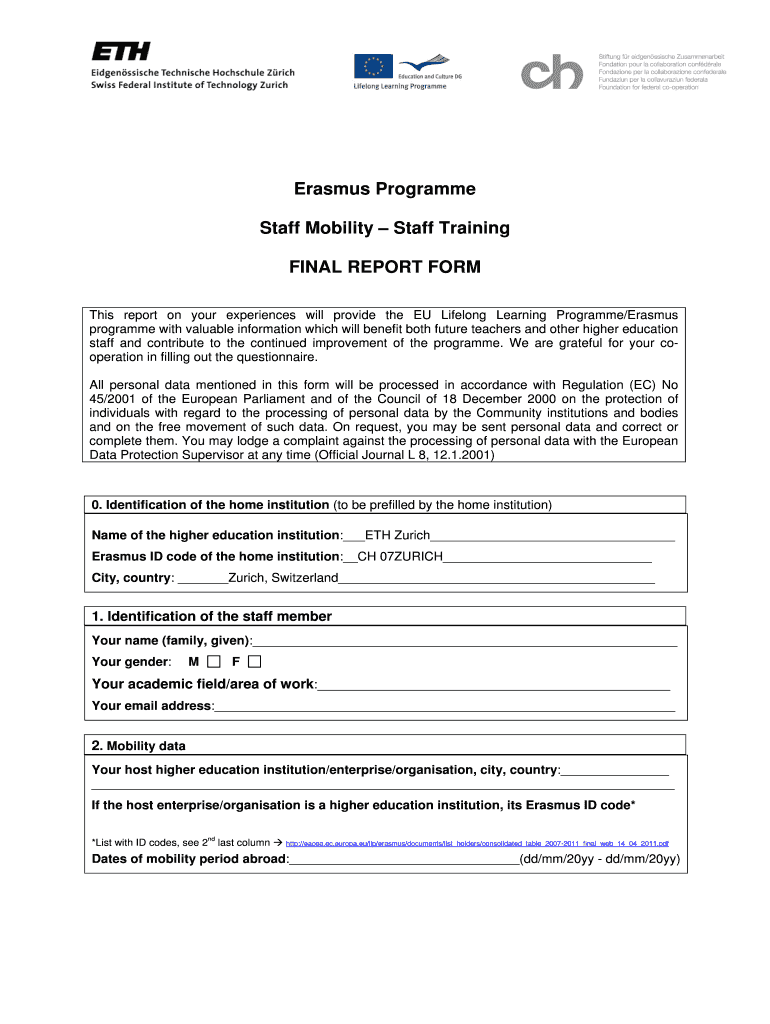
The STT Report, which stands for Staff Training and Mobility Final Report, is a critical document used within the Erasmus Programme for Higher Education. Its primary purpose is to collect detailed feedback and experiences from participants who have undergone staff mobility for training. This information helps improve the effectiveness of the programme for educators and higher education personnel in the future.
Key Functions
- Feedback Collection: The report captures participants' experiences during their mobility period, focusing on the training received.
- Program Enhancement: It serves as a tool for program administrators to assess and refine the mobility initiatives based on participants' insights.
- Compliance and Documentation: Institutions use the report to fulfill documentation requirements and ensure transparency in international collaborations.
Steps to Complete the STT Report
Completing the STT Report involves several important steps, ensuring that all necessary information is accurately captured and submitted.
- Personal Identification: Begin by filling in your personal and professional details, ensuring that all fields are completed as required.
- Mobility Data Entry: Enter specifics about your mobility such as dates, destination institution, and nature of activities.
- Section Evaluation: Focus on sections dedicated to the content of the activities and the organization of the stay.
- Feedback and Recommendations: Provide detailed feedback on the training period and suggest improvements.
- Cross-Verification: Review all entered information for accuracy before submission.
Common Mistakes to Avoid
- Incomplete Fields: Ensure no mandatory fields are left blank.
- Inaccurate Dates: Verify dates with official records to ensure correctness.
- Omission of Feedback: Provide comprehensive insights to maximize the utility of the report.
How to Obtain the STT Report
The STT Report is typically obtained from your institution or the Erasmus Programme's designated portal. It is essential to access the correct version as part of the formal documentation process.
- Institutional Resources: Most participating universities or colleges provide a downloadable version of the report.
- Erasmus Programme Portal: Access the form via the official website if your institution directs you there.
- Digital Formats: Obtain the report in various formats suitable for digital completion and submission.
Tips for Access
- Check with Coordinators: Confirm the correct form version with your Erasmus coordinator.
- Ensure Compatibility: Verify that the digital form can be opened with your available software applications.
Elements of the STT Report
The STT Report consists of several critical sections that participants must complete accurately. Each section serves a specific purpose in collecting data and feedback.
Personal Identification and Mobility Data
- Identification Information: Includes name, home institution, and contact details.
- Mobility Details: Covers host institution, timeframe, and purpose of training.
Content and Evaluation
- Training Content: Requires description of training activities and their relevance.
- Mobility Evaluation: Participants rate their experience and suggest potential improvements.
Importance of the STT Report
The STT Report is indispensable for both the individual participant and the Erasmus Programme. It serves various essential roles.
For Participants
- Reflection: Encourages reflection on personal and professional growth during the mobility period.
- Contribution: Offers a chance to influence future program enhancements through detailed feedback.
For the Erasmus Programme
- Quality Control: Supports measuring the success and areas for improvement of mobility initiatives.
- Data Collection: Generates valuable data for evaluating program duration and participant satisfaction.
Who Typically Uses the STT Report
The primary users of the STT Report are participants of the Erasmus Programme undergoing staff training mobility. However, the report also serves other significant users.
- Staff Members: Generally from higher education institutions partaking in professional development.
- Program Administrators: Responsible for reviewing reports to enhance future training schemes.
- Educational Institutions: Use completed reports for internal assessments and program improvements.


Legal Use of the STT Report
The STT Report functions as a formal document within the scope of the Erasmus Programme. It helps with several legal and procedural requirements.
- Documentation Compliance: Ensures all mobility activities are recorded and reported as per program regulations.
- Funding Justification: Completes necessary documentation to justify the funding received during the mobility period.
- Audit Trails: Provides a verifiable trail of activities and outcomes as part of institutional accountability.
Digital vs. Paper Version
The STT Report is available in both digital and paper versions, each offering distinct advantages depending on user preferences and institutional requirements.
Digital Version
- Benefits: Easier distribution and storage; quicker submission processes.
- Considerations: Requires compatible software and devices.
Paper Version
- Benefits: Preferred in environments with limited digital access.
- Considerations: Manual submission can be time-consuming and less efficient.
State-Specific Rules for the STT Report
While the Erasmus Programme operates within a European context, certain state-specific interpretations or execution rules can affect how the STT Report is used or submitted.
- Institutional Policies: Variability in how each university manages report submission and review.
- State Educational Regulations: Compliance with local education laws and guidelines, especially for data privacy and participant feedback.
Key Takeaways
- Consult Local Guidelines: Always refer to institution-specific guidance for tailored instructions.
- Maintain Compliance: Adhere to all relevant policies to ensure successful report completion and submission.