
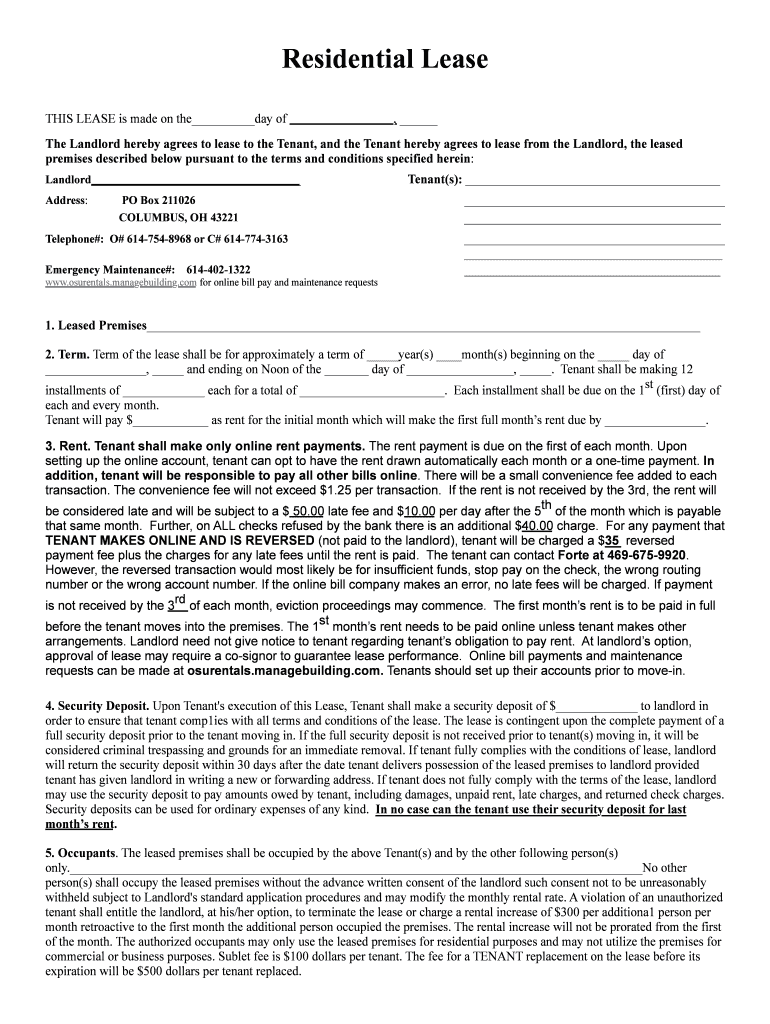







Definition & Meaning
A Residential Lease Agreement is a legally binding document that outlines the terms and conditions under which a landlord leases property to a tenant. This agreement provides a framework for both parties, clarifying responsibilities, procedures, and obligations. The phrase "The Landlord hereby agrees to lease to the Tenant, and the Tenant hereby agrees to lease from the Landlord" signifies the mutual understanding and consent to abide by the terms laid out, forming the core legal commitment between both parties.
Key Components
- Identities: Includes the names and contact information of both the landlord and the tenant.
- Property Details: Description of the leased property, including address and specific areas included in the lease.
- Lease Term: Duration of the lease, noting the start and end dates.
- Rent Details: Specifies rent amount, payment frequency, methods of payment, and any penalties for late payment.
Who Typically Uses the Agreement
This agreement is primarily utilized by individuals and entities in the United States involved in real estate leasing, including private landlords, property management companies, and tenants seeking residential housing. The document serves varying purposes depending on the user's role, offering clarity and legal coverage for landlords, while protecting tenants' rights and providing a clear understanding of their responsibilities.


User Benefits
- Landlords: Secure legally guaranteed income and establish grounds for property upkeep and tenant behavior standards.
- Tenants: Gain assurance of tenancy rights and clear guidelines on usage and maintenance of leased space.
Key Elements of the Agreement
Understanding the critical elements within a residential lease agreement is vital for both parties to ensure compliance and avoid disputes.
Primary Provisions
- Security Deposits: Terms regarding the deposit amount, conditions for return, and allowable deductions.
- Maintenance Responsibilities: Outlines who is responsible for property upkeep and routine repairs.
- Occupancy Rules: Details permissible occupants, guests, and rules for subleasing.
- Pet Policies: Specifies restrictions or permissions regarding pets, including types, sizes, and any associated fees.
How to Use the Agreement
Utilizing a Residential Lease Agreement effectively requires understanding its clauses and aligning them with state and federal regulations.
Steps to Execution
- Drafting the Agreement: Customize the document to reflect specific rental terms and add any additional clauses necessary to fit the rental scenario.
- Reviewing Legalities: Ensure compliance with local and state housing laws; seeking legal counsel is advisable for complex situations.
- Signing: Both parties should read the document thoroughly before signing. It's recommended to have a witness or notarize signatures for added legal security.
Legal Use of the Agreement
The Residential Lease Agreement is a critical legal document that offers security and clarity for both landlords and tenants. In the U.S., it must comply with state-specific landlord-tenant laws, which provide the legal framework for rental agreements. Violation of these laws can lead to legal disputes and potential eviction proceedings.
Important Legal Aspects
- State Compliance: Ensuring the agreement meets specific state regulations is crucial to its enforcement.
- Amendments and Addendums: Any modifications to the original agreement should be documented with both parties’ consent to maintain legal integrity.
State-Specific Rules
Each U.S. state has distinct laws governing residential leases, affecting everything from security deposit regulations to eviction procedures.
Examples
- California: Requires disclosure of specific health hazards, such as mold or lead-based paint.
- Texas: Regulates the maximum timeframe for returning a security deposit post-lease termination.
Important Terms Related to the Agreement
Understanding key terms is essential for proper execution and enforcement of a residential lease agreement.
Glossary
- Premises: The property or part of a property rented to the tenant.
- Breach of Contract: Failure to comply with the terms set forth in the agreement.
- Quiet Enjoyment: Tenant's right to enjoy the leased property without interference.
Versions or Alternatives to the Agreement
While the standard Residential Lease Agreement covers most scenarios, there are variations tailored to meet specific needs.
Types
- Month-to-Month Lease: Offers flexibility for tenants not wishing to commit to long-term agreements.
- Sublease Agreements: Allows tenants to lease the property to a third party, under specific conditions.
Comprehending these aspects equips both landlords and tenants with the necessary knowledge to enter into and uphold a residential lease agreement effectively.




