
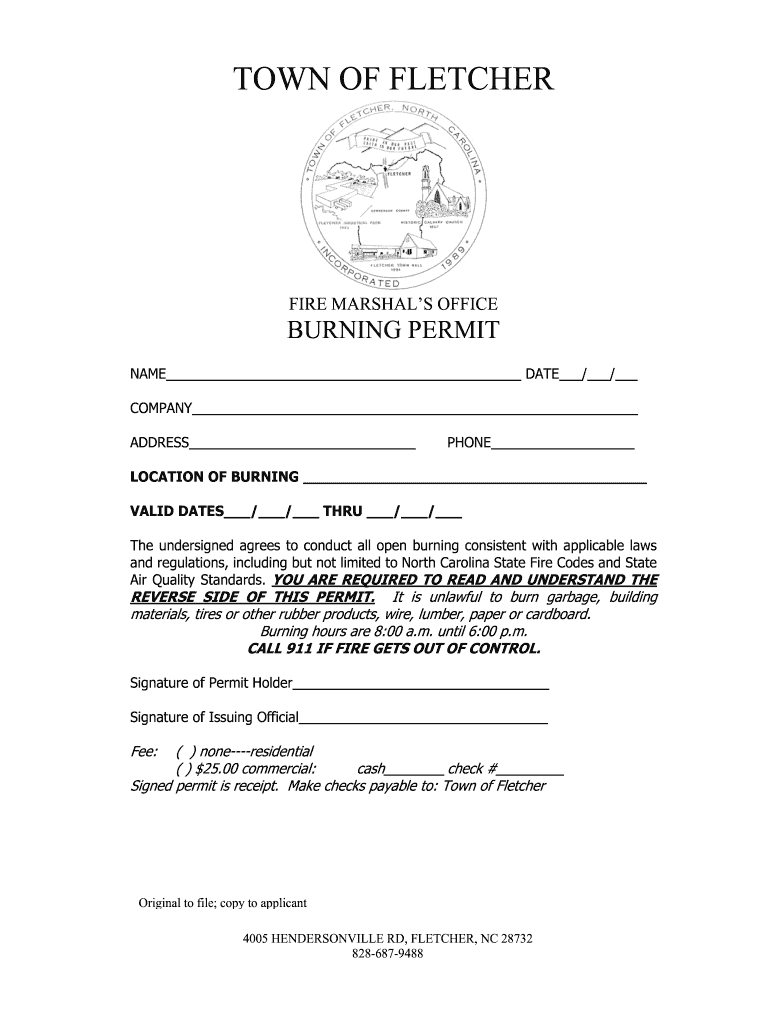







Understanding the NC Burn Permit Application
The NC burn permit application is a critical document for individuals wishing to conduct open burning activities in North Carolina. It is issued by relevant local authorities and is designed to ensure compliance with environmental and safety regulations. The application provides essential information regarding permissible burning activities, required permits, and guidelines to follow so that burning can be done responsibly.
Key Information Required in the NC Burn Permit Application
When filling out the NC burn permit application, certain information must be provided to complete the process:
-
Applicant Information: This includes the name, address, and contact information of the person applying for the burn permit. Accurate details are crucial as the permit is often tied to the applicant's identity.
-
Location of Burning: The specific address or geographic coordinates where the burning will occur must be indicated. This helps local officials determine the appropriate regulations based on the area.
-
Burning Type: Applicants must specify the type of materials they intend to burn. Common categories include yard waste, agricultural residues, or land clearing debris. Each type may be subject to different legal and safety standards.
-
Proposed Burning Dates: The dates and times for the intended burning activities must be included. This is essential for scheduling inspections or monitoring by local authorities.
-
Acknowledgment of Regulations: Applicants must indicate their understanding of local and state regulations regarding open burning. This section usually requires a signature confirming compliance with local fire codes and air quality standards.
Issuing Authority for the NC Burn Permit
The NC burn permit application is typically processed by local fire marshals or designated fire departments within municipalities. The authority that issues the permit may vary by county or city, and it is important for applicants to contact the correct agency for a smooth application process.
-
Local Fire Marshal's Office: This office is the primary point of contact for applications and inquiries about the burn permit process.
-
North Carolina Forest Service: In some cases, particularly for agricultural burns or larger land-clearing operations, the North Carolina Forest Service may be involved in issuing the permits.
Application Process for the NC Burn Permit
The process to obtain an NC burn permit may vary slightly depending on the issuing authority; however, the following steps generally apply:
-
Contact the Local Authority: Begin by contacting the local fire marshal or fire department to obtain the required application form or details about the online application system.
-
Complete the Application: Fill out the NC burn permit application form, ensuring all required fields are accurately completed.
-
Submission of the Application: Submit the completed permit application form either online or in person, depending on local regulations.
-
Wait for Approval: After submission, there may be a waiting period while the local authority reviews your application. It is advisable to allow sufficient time before the intended burning date for this process.
-
Permit Issuance: If approved, the permit will be issued, detailing the specific conditions under which burning may take place.
Conditions and Restrictions for Open Burning
When granted, the NC burn permit comes with specific conditions and restrictions to minimize risks and comply with environmental regulations. Common conditions include:
-
Designated Burning Hours: The permit often specifies allowable burning hours, which vary by jurisdiction. Generally, burning is restricted to certain times to reduce the risk of fire spreading.
-
Prohibited Materials: Certain materials are off-limits for burning, including plastics, tires, and hazardous waste. Violating these restrictions can lead to penalties.
-
Weather Conditions: The burning permit may require certain weather conditions to be met, such as wind speed and humidity levels. This is to ensure safe burning practices.
Consequences of Non-Compliance
It is crucial for permit holders to adhere to the regulations outlined in the burn permit. Non-compliance may result in:
-
Fines: Financial penalties can be issued for violations of the terms of the burn permit.
-
Revocation of the Permit: If the conditions of the permit are not followed, the local authority has the right to revoke the permit.
-
Legal Action: In serious cases, continued non-compliance may lead to legal consequences, including potential lawsuits or further administrative actions from local authorities.
The NC burn permit application process is an important step for responsible burning practices in North Carolina. Understanding the required information, application process, and regulations helps ensure that open burning is conducted safely and legally.




