







Definition & Meaning
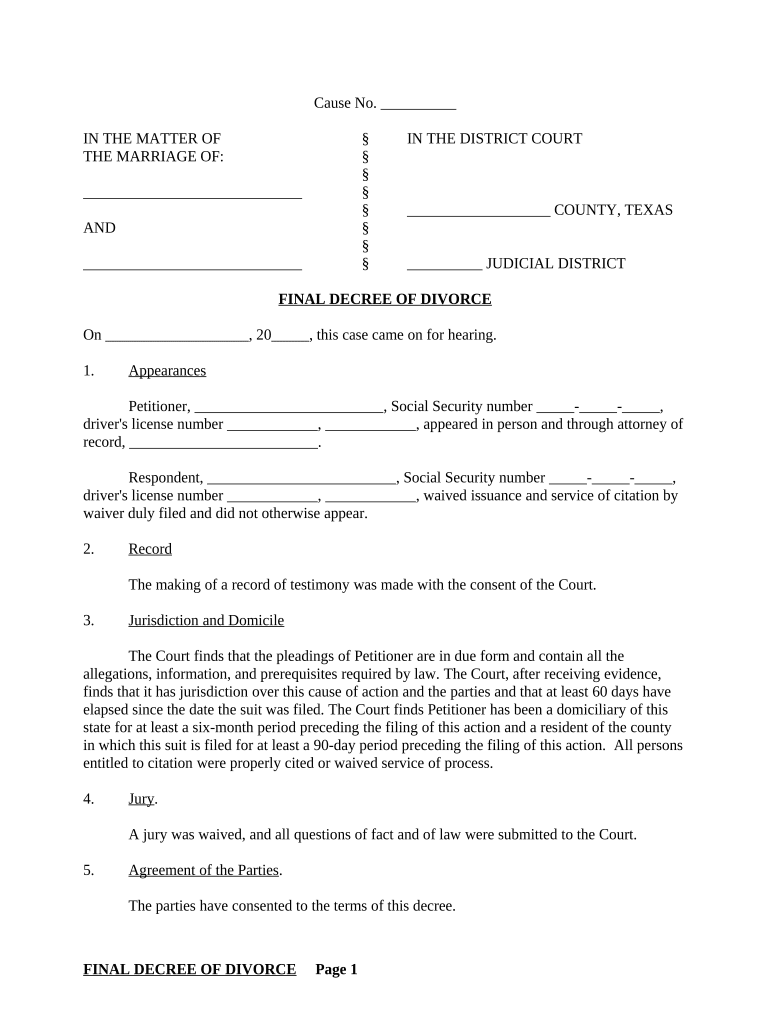
A Final Decree of Divorce is an official legal document issued by a court to formally end a marriage. In the context of U.S. law, it serves as the conclusive decree that outlines the terms agreed upon or ordered by the court regarding the dissolution. Beyond severing the marital bond, this decree deals with various responsibilities and rights of the parties involved. It typically contains specifics about property division, debt responsibility, and any agreement on spousal support. The decree ensures the parties adhere to the applicable legal and financial obligations post-divorce. Its role is crucial in providing legal closure and facilitating future financial arrangements between ex-spouses.
Key Components of the Final Decree
- Jurisdiction Information: Details regarding the court issuing the decree and its authority over the divorce proceedings.
- Parties Involved: Identification of the petitioner and respondent, confirming their agreement to the divorce terms.
- Marital Estate Division: Specifications on how marital property is divided, including assets and liabilities.
- Child-related Stipulations: If applicable, arrangements concerning child custody, support, and visitation rights.
- Debt Responsibility: Allocation of duties regarding existing debts between the parties.
- Spousal Support: Terms related to alimony, specifying if it's awarded, its amount, and duration.
Steps to Complete the Final Decree of Divorce
Navigating through the process of finalizing a divorce involves several key steps that culminate in the issuance of a final decree. The steps ensure all legal and procedural requirements are met efficiently, offering a structured approach to ending the marital connection.
- Filing a Petition: One spouse must file a divorce petition in the appropriate court, establishing the intent and grounds for divorce.
- Serving the Petition: The respondent must be formally notified about the divorce action to ensure they are aware of the legal proceedings.
- Responding to the Petition: The respondent can agree, counter, or contest the divorce terms, which influences subsequent steps.
- Pre-trial Procedures: These may include mediation or negotiation to resolve disputes around assets, custody, or support.
- Court Hearings: If disagreements persist, court hearings allow both parties to present their cases, leading to court decisions on unresolved issues.
- Drafting the Decree: Once terms are agreed upon or determined by the court, a draft decree is created detailing all settlements and obligations.
- Judicial Approval: The court reviews the draft and issues the final decree, officially concluding the divorce process.
Legal Use of the Final Decree of Divorce
The final decree serves several critical legal functions. Its legally binding nature settles the dissolution of marriage and ensures both parties are compliant with state and federal regulations. The decree is enforceable in court, providing a mechanism to return to court if the terms are violated.
Examples of Legal Applications
- Property Settlements: Enforcing asset division as specified in the decree.
- Spousal and Child Support: Utilized in court to compel compliance with financial obligations.
- Modification Requests: The decree may later be contested for modifications if circumstances change, like alteration in financial status.
How to Obtain the Final Decree of Divorce
Securing a final decree involves satisfying the court's procedural requirements throughout the divorce process. The process ensures an equitable dissolution and full compliance with legal obligations.
Steps to Obtain the Document
- Completion of Divorce Process: Follow through all necessary legal steps and court procedures leading up to the final hearing.
- Hearing Attendance: Ensure attendance at the final hearing, where the judge finalizes the divorce terms and issues the decree.
- Decree Issuance: After judicial approval, a formal document is issued, which can be collected from the court clerk.
- Certified Copies: Obtain certified copies in case the decree needs to be filed or presented to other entities like financial institutions.
Important Terms Related to Final Decree of Divorce
Understanding the language within the decree is crucial for compliance and understanding one's rights and obligations. Some key terms often encountered include:
- Petitioner/Respondent: Refers to the spouse initiating the divorce and the other party, respectively.
- Marital Estate: All properties and debts accumulated during the marriage that are subject to division.
- Custody & Visitation: Legal terms detailing parental rights and responsibilities concerning child upbringing.
- Alimony/Spousal Support: Financial support from one spouse to another post-divorce, based on established needs and capabilities.
- Equitable Distribution: Referring to the fair, though not necessarily equal, division of assets and debts between spouses.
Key Elements of the Final Decree
The final decree's components vary by jurisdiction but consistently cover critical aspects of dissolving a marriage. Each element ensures both parties' financial and legal responsibilities are resolved equitably.
Core Elements
- Division of Assets: Details on splitting marital property and personal belongings.
- Debt Allocation: Specifies which party is responsible for particular financial obligations.
- Spousal Support: Outlines conditions, amount, and timelines for alimony payments.
- Child-related Orders: Includes custody, support, and visitation rights, if applicable.
- Miscellaneous Provisions: May include clauses covering issues like tax commitments and shared property sale protocols.
State-specific Rules for the Final Decree of Divorce
While divorce laws share common themes across the United States, states can have distinct rules affecting the final decree. Understanding these variations is crucial for fulfilling local requirements and expectations.
Examples of State-specific Criteria
- Residency Requirements: Timeframe for one or both spouses' residency before filing.
- Property Laws: Whether the state adheres to community property or equitable distribution principles.
- Waiting Periods: Mandatory periods between filing and finalizing the decree.
- Filing Fees and Schedules: Variances in court costs and timelines due to the state's administrative processes.
Who Typically Uses the Final Decree of Divorce
The final decree is an essential document for the divorcing parties, ensuring clarity and enforcement of their rights and obligations post-divorce. Its utility extends to related parties affected by its terms.


Typical Users
- Spouses: Directly affected individuals, needing the decree for personal and legal compliance.
- Attorneys and Legal Counsel: Use the document to advise and represent clients effectively.
- Financial and Tax Advisors: Assist clients by interpreting financial implications outlined in the decree.
- Courts and Judges: Use the decree during potential enforcement proceedings or when addressing disputes.




