







Definition & Meaning
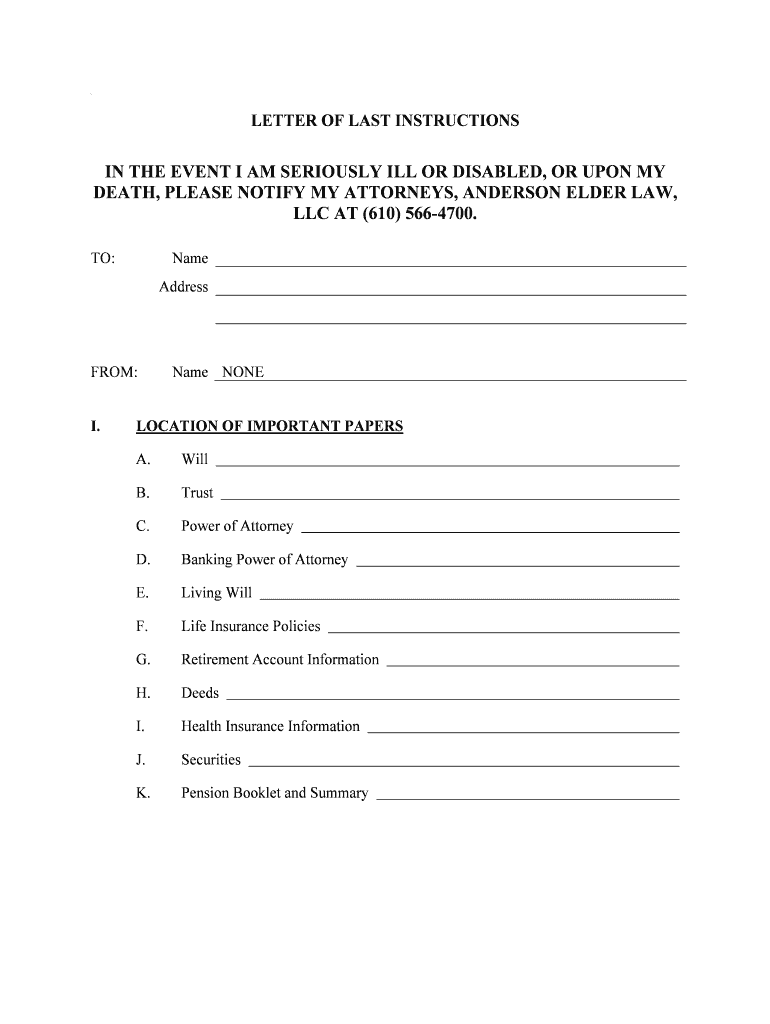
The "Letter of Last Instructions" is typically an informal document utilized when one is seriously ill, disabled, or upon passing. It serves as a practical guide for personal representatives or family members. Unlike legal documents such as wills or trusts, it's not legally binding but provides crucial guidance. This letter includes details about financial accounts, insurance policies, digital assets, and personal wishes about health care, providing a comprehensive roadmap for managing one's affairs when they can no longer do so themselves.
Steps to Complete the Letter
-
Gather Personal Information: Start by compiling essential personal details, such as full name, Social Security number, and date of birth. Include contact information for key individuals like family members, legal representatives, and healthcare providers.
-
List of Assets: Provide an inventory of all assets, including real estate, bank accounts, investments, and personal property. Detail their locations and any relevant account numbers or passwords.
-
Funeral Arrangements: Clearly state preferences for funeral services, burial, or cremation. Include contact information for any pre-arranged services with funeral homes or similar entities.
-
Beneficiary Information: Identify beneficiaries for various accounts and policies. Indicate any specific items or amounts to be distributed, which prevents confusion and ensures wishes are honored.
-
Legal and Financial Contacts: List contact information for attorneys, financial advisors, and accountants. This section facilitates communication with professionals who have insight into managing financial or legal matters.
-
Digital Accounts and Passwords: Document online account credentials and passwords. This helps executors or family members manage digital assets and social media profiles.
-
Healthcare Directives: Detail any advance healthcare directives or living wills. This section provides instructions for medical care in scenarios where immediate guidance could impact decision-making.
-
Final Messages: Include personal notes or final messages for loved ones. These serve as an emotional bridge, offering comfort and closure to family members.
Why Create a Letter of Last Instructions
Without a "Letter of Last Instructions," families often face added stress during periods already marked by grief. This document provides clear guidance that minimizes potential familial disputes, ensures personal wishes are respected, and greatly reduces confusion around asset management.
- Clear Communication: It conveys wishes regarding personal effects and care preferences, avoiding ambiguity.
- Efficiency: Having all necessary information compiled streamlines processes like securing bank accounts or distributing assets.
- Peace of Mind: Provides peace to loved ones knowing decisions align with the individual’s desires.
Who Typically Uses This Document
The "Letter of Last Instructions" is utilized by individuals who wish to manage their affairs comprehensively:
- Seniors or Elderly: Common among those approaching end-of-life planning.
- Individuals with Critical Illness: Provides a sense of control over impending circumstances.
- Estate Planners: Often recommend this document to clients for thorough preparation.
- Executors: Benefit from the guidance provided, easing administrative burdens.
Key Elements of the Document
This document should include several critical components to serve its purpose effectively:
- List of Contacts: Who to notify including family, friends, and professional contacts.
- Detailed Asset Breakdown: Covers everything from property to personal effects.
- Healthcare Preferences: Instructions regarding medical interventions or life support.
- Funeral Plans: Any pre-arrangements for services or memorials.
- Final Wishes: Miscellaneous desires or messages to loved ones.
Legal Use and Implications
While the "Letter of Last Instructions" is not legally binding, it complements formal documents like wills or trusts:
- Coordination with Legal Documents: Works in tandem with legal instruments, reinforcing directives.
- Advisory Role: Provides guidance but cannot override legally binding documents.
- State-specific Considerations: Certain states might have guidelines on drafting non-binding documents.
Examples of Effective Letters
Several real-world scenarios illustrate successful use:
- Digital Executor Designation: Detailing online account access for estate executors saved a family weeks of effort.
- Advance Medical Directives: Ensured medical choices aligned with patient preferences, validated by healthcare proxies.
- Simplified Estate Distribution: Prevented disputes through precise asset and beneficiary documentation.
State-Specific Rules
While generally standardized, certain localized considerations might affect document use:
- Estate Taxes: Different states have varying thresholds and rules around estate and inheritance taxes.
- Healthcare Proxy Legislation: State laws may vary on the rights and duties of healthcare agents.
- Digital Asset Laws: Some states have enacted laws allowing digital executor appointment.
This comprehensive Roster of instructions plays a pivotal role in thorough estate planning, supporting families during potentially challenging times by providing clarity and direction.




