Definition and Purpose of the Application Form
An application form is a structured document used to collect necessary information from individuals who are seeking a specific status, such as applying for a passport, a job, or academic enrollment. It serves as both a data gathering tool and a means to ensure that applicants meet eligibility requirements. The information typically requested includes personal details, contact information, and specifics relevant to the application’s purpose, such as proof of identity or employment history.
Essential Components of an Application Form
- Personal Information: This section includes the applicant's full name, date of birth, address, and contact numbers. It establishes identity and communication channels.
- Purpose of Application: Clearly stating the purpose helps remove ambiguity and ensures that the right protocols are followed. For example, if it's a passport application, there may be additional questions specific to travel.
- Eligibility Questions: Certain application forms request information to determine if the applicant meets established requirements. Examples include citizenship status for passport applications and educational qualifications for job applications.
Formatting and Guidelines
- Input Fields: Applications should use standard input fields for clarity, such as drop-down menus for state selection or checkboxes for eligibility confirmations.
- Instructions: Clear instructions are vital. They guide applicants on how to complete the form accurately and what documents to provide.
Application Process for Passport Renewal
The process of renewing a passport typically involves several key steps ensuring that applicants can maintain valid travel documentation. Familiarizing oneself with these steps can streamline the experience.
Steps to Renew a Passport
- Gather Required Documents: Applicants must compile documents that can include the current passport, a passport photo that adheres to specifications, and a completed application form specifically for passport renewals.
- Complete the Application Letter: This may require individuals to write a specific application letter for passport renewal, detailing the request and necessary identifiers.
- Payment of Fees: Renewal fees vary based on the type of passport and the processing speed. Applicants must check the up-to-date fee structure on official websites.
- Submission of Application: Renewals can often be handled by mail or in person at designated government offices. It’s crucial to choose the proper method based on urgency and personal convenience.
- Tracking Status: Many jurisdictions provide ways to track the renewal status online, allowing applicants to monitor the progression of their requests.
Common Issues and Solutions
- Delayed Process: Individuals should allow plenty of time for processing, as delays can occur. Renewing a passport well in advance of planned travel is advisable.
- Documentation Errors: It’s essential to double-check all documents for accuracy. Mistakes can lead to rejections or delays in processing.
Signature Requirements for Passport Documents
When applying for or renewing a passport, signatures play a crucial role in identity verification and consent. Understanding how to manage this requirement can prevent issues.
Acceptable Signature Formats
- Wet Signature: This refers to a physical signature made with ink, still often required for many forms, including passport applications.
- Digital Signature: Some jurisdictions have begun to accept digital signatures facilitated through secure online platforms to streamline the process.
Importance of Legally Binding Signatures
The signature not only authenticates the document but serves as a declaration of truthfulness of the information provided. Misuse or falsification of signatures can lead to severe legal consequences.
Considerations for Filing an Online Application
With the rise of technology, applying for a passport online has become more prevalent. Ensuring that applicants understand the digital filing process is crucial for a successful application.
Steps for Online Application Submission
- Visit the Official Website: Access official resources to avoid scams or misinformation.
- Create an Account: Some platforms require users to create an account to manage their applications. This includes setting up personal credentials.
- Fill Out the Application Form: Online forms typically guide users through each filling requirement with prompts and tooltips.
- Upload Documents: Users should prepare electronic versions of required documents, ensuring they adhere to size and format restrictions set by the online portal.
- Payment Processing: Online submissions generally include direct payment processing for fees, making this a convenient option.
Security Measures
- Data Protection: Online portals should employ encryption and secure login methods to protect user privacy. Applicants need to ensure they are using safe networks when submitting sensitive information.
Practical Examples of Application Letters
Understanding how to write an application letter can enhance the quality of an application submission, particularly for passport and other important documents.
Sample Scenarios
- Renewing a Nigerian Passport: Applicants often need to draft a formal letter that requests specific changes or renewals. This letter should include details such as the passport number, full name, and specifics regarding the request.
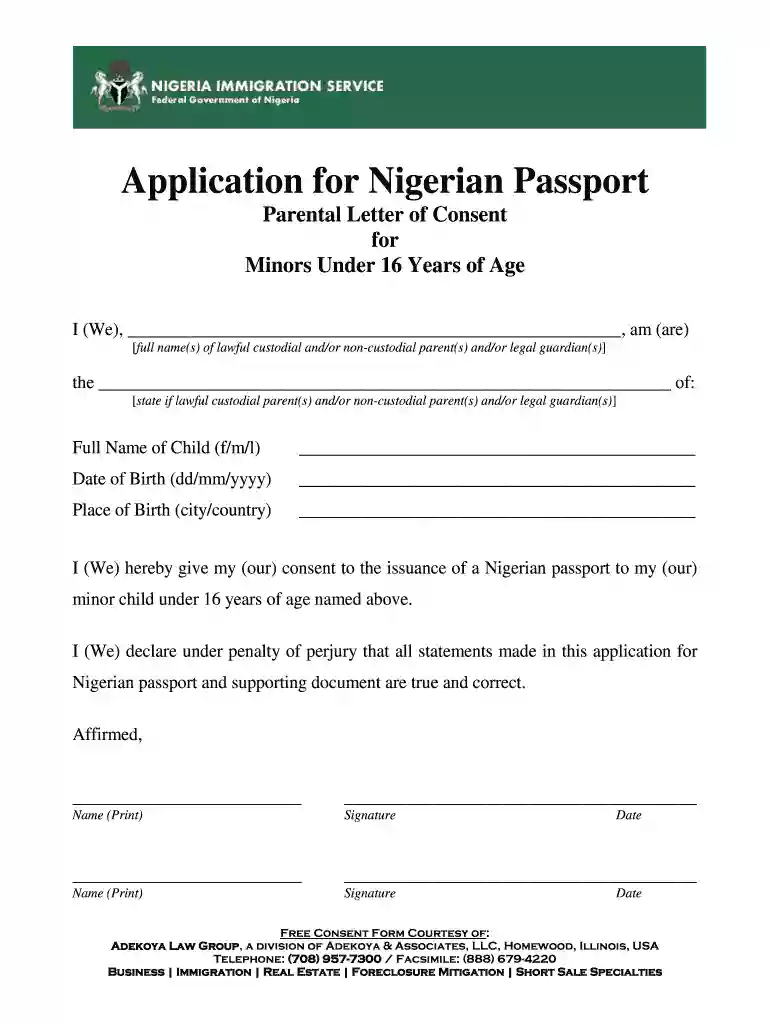
- Parental Consent for Minors: When minors are involved, a letter that clearly states parental consent for passport application is essential. It should include information about the child and the signing parent or guardian.
Structure of an Effective Application Letter
- Opening: Briefly introduce the purpose of the letter.
- Body: Include all relevant details that support the request.
- Closing: A polite closing that reaffirms the request and includes contact information.
Compliance and Regulations for Application Forms
Understanding the legal implications of submitting application forms, particularly those related to passports, can help applicants avoid common pitfalls.
Key Regulations
- Privacy Protection: Many forms include privacy statements to protect personal data. It is essential for applicants to read these carefully.
- Signature Legality: Signatures on forms like passport applications must meet specific legal standards, particularly in terms of authenticity and consent.
Consequences of Non-Compliance
Failing to comply with regulations or submitting inaccurate information can lead to application denial, delays, or even legal repercussions.