
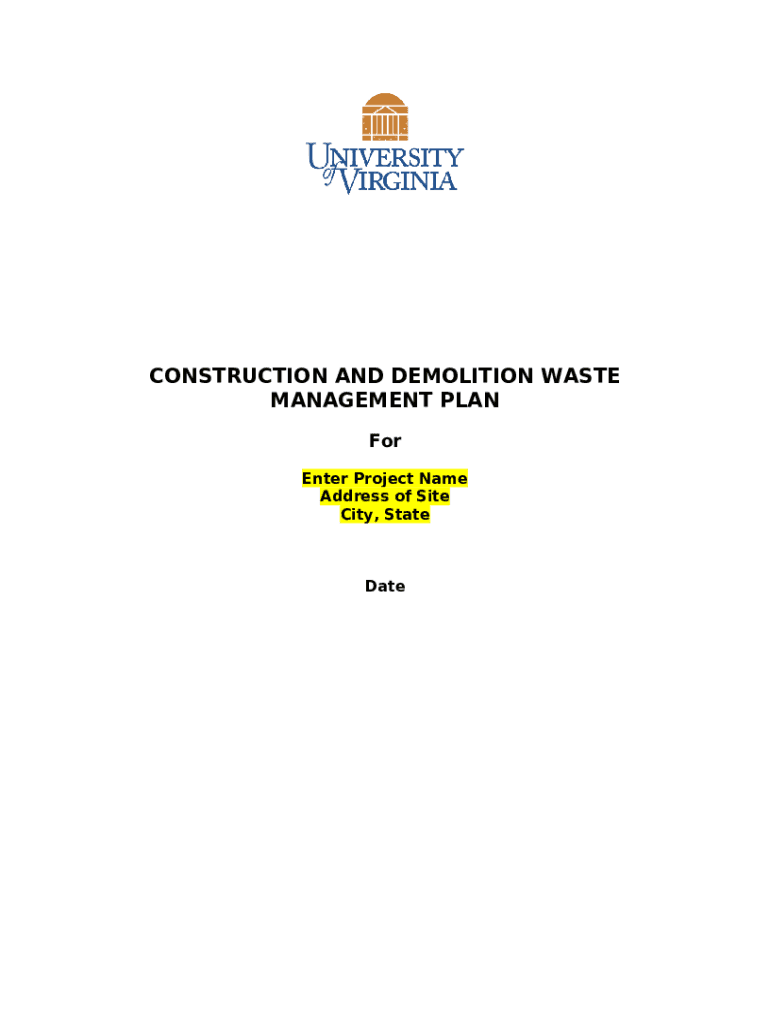







Definition and Meaning of Construction Waste Management Plan Template
A Construction Waste Management Plan Template is a structured document used to outline procedures for managing waste generated by construction projects. This template is essential for projects exceeding a significant budget or those anticipated to produce substantial demolition debris. It aims to ensure that waste handling aligns with environmental regulations, thus protecting the environment. The template serves as a guide for documenting project objectives, anticipated waste types, procedures for waste management, and protocols for dealing with hazardous materials. By standardizing these details, the template helps ensure compliance with federal, state, and local laws, safeguarding against any legal discrepancies.
Key Components and Features
- Project Purpose and Scope: Describes the overall objectives of the construction project and the rationale for managing waste effectively.
- Contact Information: Lists key personnel involved in the waste management process, such as project managers and environmental consultants.
- Waste Characterization: Details anticipated types of waste and their characteristics, emphasizing the importance of accurate identification for effective disposal.
- Management Procedures: Outlines methods for handling various waste types, ensuring they are disposed of in an environmentally friendly manner.
- Hazardous Materials Protocols: Specifies procedures for handling and disposing of hazardous materials safely and in compliance with regulations.
- Recordkeeping and Documentation: Ensures that records are maintained for all waste management activities, providing documentation for regulatory compliance.
How to Use the Construction Waste Management Plan Template
Utilizing the Construction Waste Management Plan Template effectively requires a systematic approach that simplifies the process while ensuring thoroughness and accuracy. The template serves as a foundational document to be tailored according to the specific needs and scope of the project in question.
Steps to Implement the Template
- Download and Review: Obtain the template from an authoritative source and review its sections to understand the scope and structure.
- Customize the Content: Modify the template to reflect project-specific details such as project location, expected start and end dates, and stakeholders.
- Identify Waste Types: List all possible waste types anticipated during the project's lifecycle, from setup to completion.
- Assign Responsibilities: Delegate responsibilities to appropriate team members for each aspect of the waste management process.
- Establish Procedures: Develop specific waste management procedures, including recycling measures and disposal methods, tailored to the identified waste types.
- Document and Record: Use the template to document all procedures and ensure transparent recordkeeping practices.
Steps to Complete the Construction Waste Management Plan Template
Completing the Construction Waste Management Plan Template involves a detailed, methodical approach to ensure all pertinent information is captured accurately. This process is crucial for avoiding delays and non-compliance issues during the construction project.
Detailed Instruction Process
- Gather Required Information: Collect all necessary data regarding the construction project, including regulatory requirements and existing waste management policies.
- Complete Initial Sections: Fill in the project overview and contact information to ensure clarity on project scope and involved personnel.
- Characterize Waste: Conduct a thorough assessment to identify and categorize all types of waste that will be produced.
- Develop Handling Procedures: Write detailed management procedures for each waste type, ensuring methods align with legal and environmental standards.
- Include Spill Response Protocols: Develop comprehensive spill response protocols, especially where hazardous materials are involved.
- Finalize Recordkeeping Guidelines: Specify the documentation process, including the forms and records that need maintenance for compliance.
- Review and Revise: Examine the completed plan for accuracy and completeness, and revise sections as necessary.
Who Typically Uses the Construction Waste Management Plan Template
The Construction Waste Management Plan Template is typically utilized by a variety of stakeholders within the construction industry. These users are often responsible for ensuring that construction waste is managed in compliance with environmental standards and within the constraints of project budgets.


Common Users of the Template
- Project Managers: Responsible for overseeing the entire project, including the implementation of the waste management plan.
- Environmental Consultants: Provide expertise on the best practices for managing waste in compliance with environmental regulations.
- Regulatory Compliance Officers: Ensure that all waste management activities conform to local, state, and federal laws.
- Construction Supervisors: Implement waste management practices on-site, ensuring adherence to the plan.
- Waste Management Companies: Offer specialized services for waste collection, recycling, and disposal, operating under the guidance of this template.

Legal Use of the Construction Waste Management Plan Template
The Construction Waste Management Plan Template serves as a legally binding framework for managing waste in accordance with regulatory requirements. It ensures that all procedures are documented and performed within the boundaries of the law.
Relevant Legal Considerations
- Federal Regulations: Ensures compliance with overarching federal laws relevant to waste management and environmental conservation.
- State and Local Laws: Adaptation of the plan to meet specific state and municipal regulations that may vary regionally.
- Environmental Impact Assessments: Incorporating assessments to ensure planned procedures minimize adverse environmental effects.
- Permit Requirements: Addresses the need for any specific permits required by law to manage and dispose of construction waste.
Key Elements of the Construction Waste Management Plan Template
The template is composed of several fundamental elements, each serving a specific role in the broader aim of delivering a comprehensive waste management strategy for construction projects.
Essential Components
- Project Overview: Presents the project's goals and waste management objectives.
- Anticipated Waste Streams: Identifies potential waste categories and forecasts quantities.
- Waste Reduction Strategies: Proposes methods for minimizing waste generation at its source.
- Recycling and Reuse Plans: Details plans for recycling materials and reusing waste whenever feasible.
- Disposal Procedures: Details management and final disposal options for non-recyclable waste.
- Training Requirements: Specifies training protocols for employees to ensure proper handling procedures are followed.
Examples of Using the Construction Waste Management Plan Template
The Construction Waste Management Plan Template offers practical examples that showcase its flexibility and application across various scenarios. These examples illustrate how the template can be adapted for different project needs and complexities.
Practical Applications
- Urban High-Rise Developments: Tailoring procedures to address limited space and strict regulatory controls often encountered in urban environments.
- Large-scale Infrastructure Projects: Adapting the template to manage waste generated from infrastructure projects such as highways or bridges.
- Renovation Projects: Customizing the template for projects involving substantial demolition waste.
- Residential Developments: Implementing waste management strategies focused on recycling and reducing waste sent to landfills.
By offering a mix of detailed content and practical examples, this comprehensive approach aims to maximize utility for users of the Construction Waste Management Plan Template.




