







Definition and Purpose of a Manhole Inspection Form
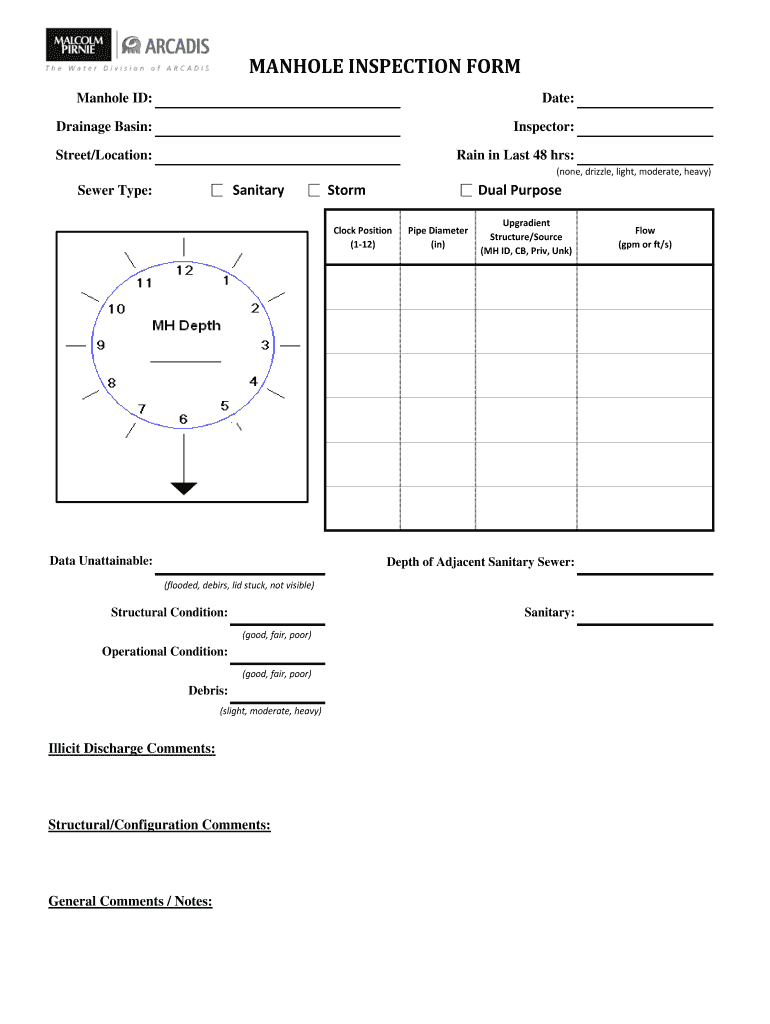
A manhole inspection form is a crucial document used primarily by municipal workers, engineers, and contractors to record the condition and operational status of manholes. This form comprehensively guides inspectors in assessing various attributes, which ensures the integrity and safety of sewer systems. It typically includes sections for identifying the manhole location, inspector information, the date of inspection, and the operational conditions observed.
Key Components of the Form
- Identification Details: This section generally includes the manhole's unique ID number, location coordinates, and the inspector's name.
- Inspection Date: Capturing the date is crucial for tracking the maintenance history of the manhole.
- Sewer Type: Indicates whether the manhole is part of a storm sewer, sanitary sewer, or combined sewer system.
- Structural Condition Assessment: This involves notes on the physical state of the manhole itself, including the integrity of the structure, signs of deterioration, and visible cracks or leaks.
- Operational Status: Observations about the functionality of the manhole, such as flow capacity and any blockages or issues affecting sewage movement.
- Debris Levels and General Observations: Field notes regarding any debris collected, potential illicit discharges, or other anomalies must also be recorded.
Steps to Complete the Manhole Inspection Form
Completing a manhole inspection form entails a systematic approach to ensure thorough documentation. Observers should follow these steps for efficiency.
-
Preparation: Gather necessary tools and safety equipment prior to the inspection. This includes personal protective gear, measurement tools, and any specific guidelines provided by local regulatory bodies.
-
Locate the Manhole: Use GPS or physical maps to arrive at the designated manhole location. Confirm that you are at the correct site as indicated by your documentation.
-
Conduct a Visual Inspection: Examine the manhole’s exterior and surrounding area. Look for signs of erosion, overgrowth, or flooding which could affect the structure.
-
Open the Manhole: Use the appropriate tools to safely open the manhole cover. Exercise caution as the area may have hazardous gases or unstable footing.
-
Inspect the Interior: Collect data on the structural integrity and operational status while inside the manhole. Check for corrosion, structural damage, and how well objects are flowing within the channel.
-
Document Findings: All observations should be clearly recorded on the manhole inspection form. Include photographs or sketches to provide visual context where necessary.
-
Close and Secure: Once inspection activities are complete, ensure the manhole cover is securely replaced to prevent any accidents or safety issues.
-
Review and Submit: After completing the form, review entries for accuracy before submitting it to the appropriate department for record-keeping.
Who Uses the Manhole Inspection Form?
Multiple professionals and organizations rely on the manhole inspection form for various purposes:
- Municipalities: City or county workers employ the form to keep sewer systems functional and compliant with local health and safety standards.
- Engineering Firms: Contractors overseeing new developments or maintaining existing infrastructure use the form to document conditions and quality assurance.
- Environmental Agencies: Regulatory bodies may request copies of these forms to ensure compliance with environmental laws and address potential public health risks.
These users contribute to a collective goal of maintaining efficient waste management systems and ensuring public safety.
Important Terms Related to Manhole Inspections
Understanding technical terms is vital for accurate reporting and compliance. Here are some key terms commonly associated with the manhole inspection form:
- Ingress/Egress: Refers to the access points for entering and exiting the manhole.
- Flow Capacity: The maximum volume of fluid that can pass through the manhole without causing backups.
- Structural Deterioration: The breakdown of materials that compromises the integrity of the manhole.
- Illicit Discharge: Any unauthorized release into the sewer system that may pose environmental or public health risks.
These terms help to standardize communication among parties involved in infrastructure inspections and maintenance.
Legal Compliance and Use of Manhole Inspection Forms
The manhole inspection form adheres to local, state, and federal regulations, making its accurate completion imperative for compliance. Inspectors must be aware of:
- State-Specific Guidelines: These can dictate how manhole inspections should be conducted and documented according to regional environmental laws.
- Public Health Regulations: Forms may need to be submitted to regulatory agencies that oversee public health to ensure community safety from potential contaminants.
Non-compliance can lead to legal implications for municipalities, including fines or mandates to rectify identified issues.
Examples and Scenarios of Using the Manhole Inspection Form
Real-world scenarios illustrate the practical application of the manhole inspection form:
- Routine Inspections: A city department conducts quarterly inspections of all manholes within the municipal fleet, using the form to document any necessary repairs or upgrades.
- Emergency Response: Following heavy rainfall, inspectors respond to increased reports of sewer overflow. They use the form to evaluate manholes for blockages and structural failure.
- Pre-Construction Assessments: Before new construction, engineers inspect existing manholes in the area to assess impacts on current sewer systems, employing the form as part of environmental assessments.
These examples demonstrate the form’s versatility in various contexts, enhancing its importance in urban infrastructure management.




