Definition and Purpose of the Seizure Questionnaire - qpsorg
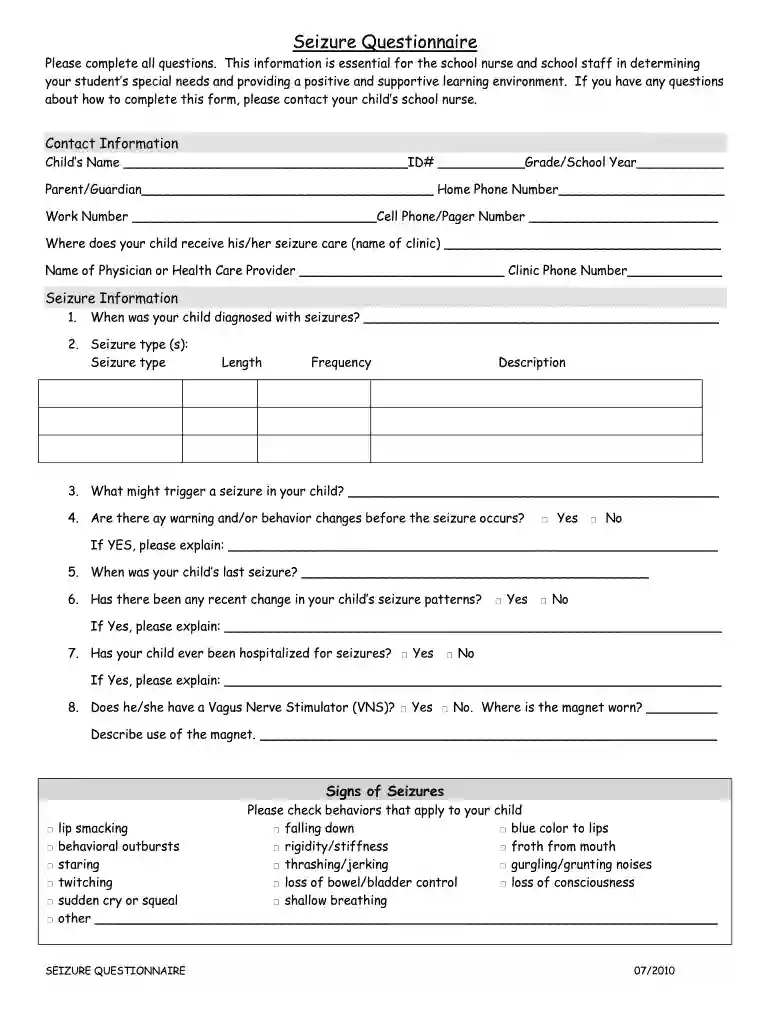
The Seizure Questionnaire - qpsorg is a comprehensive document designed to gather critical information about a child's seizure condition for educational and safety purposes. Primarily used by school nurses and staff, this form provides essential data that supports emergency response planning and accommodates the unique needs of each child within the school environment. Key sections include details about the seizures, potential triggers, first-aid procedures, contact information, medication regimens, and any special considerations that need to be accounted for during school activities.
Critical Data Collection
- Contact Information: Ensures immediate access to responsible parties in case of emergencies.
- Seizure Details: Documents seizure types, duration, and frequency to help create tailored response protocols.
- Trigger Identification: Helps prevent seizures by recognizing and monitoring potential environmental or situational triggers.
How to Use the Seizure Questionnaire - qpsorg
The questionnaire serves as both an informational and instructional guide for school personnel interacting with a child diagnosed with seizure conditions.
Step-by-Step Usage
- Obtain the Form: Accessible through school administrators or directly from a healthcare provider.
- Fill Out Thoroughly: Complete all sections accurately, ensuring particularly detailed information on medication and first aid measures.
- Submit & Review: Submit the form to the designated school official for review and integration into the child’s school records.
- Periodic Updates: Regularly update the form to reflect any changes in the child’s condition or medication.
Steps to Complete the Seizure Questionnaire - qpsorg
Completing this form requires careful attention to detail to ensure all necessary information is captured.
Detailed Completion Guide
- Preparation: Gather all relevant medical documents, including current medication lists and emergency contacts.
- Section-by-Section Entry:
- Personal Information: Input child’s name, date of birth, and parent/guardian contact details.
- Seizure Descriptions: Describe each type of seizure the child experiences, including physical manifestations and duration.
- Medication Details: List medications, dosages, and schedules.
- Verification: Double-check entries with recent medical evaluations to ensure accuracy.
Key Elements of the Seizure Questionnaire - qpsorg
Each section of the questionnaire plays a specific role in managing a child's care in a school setting.
Essential Components
- Physical Description of Seizures: Detailed insights assist teachers and nurses in identifying and responding to seizures.
- Medication Management: Ensures that all parties are informed about dosage schedules and potential side effects.
- Action Plan for Seizures: Provides a clear, concise plan for seizure management, including first aid responses and emergency contacts.
Important Terms Related to the Seizure Questionnaire - qpsorg
Understanding the terminology within the questionnaire is critical for accurate and effective communication.
Glossary of Terms
- Aura: Pre-seizure sensation or experience that may serve as a warning signal.
- Generalized Seizure: Involves both sides of the brain from the onset.
- Partial Seizure: Occurs in one specific area of the brain.
- Emergency Protocol: A predefined course of action for managing seizure occurrences in a school setting.
Legal Use of the Seizure Questionnaire - qpsorg
Adhering to legal standards ensures that data collected is handled appropriately and used to benefit the child’s safety and well-being.
Compliance and Regulations
- Data Privacy: Adheres to regulations protecting student information, such as FERPA, ensuring that all personal data is secure.
- Emergency Response: Legal guidelines for schools to have accessible, up-to-date health information for appropriate emergency action.
Examples of Using the Seizure Questionnaire - qpsorg
Real-world applications highlight the form’s utility for various stakeholders.
Case Studies
- Case 1: A school’s effective implementation of seizure response protocols led to a reduction in emergency incidents by 30%.
- Case 2: A collaborative approach with healthcare providers enhanced understanding and management of a student’s condition, fostering a seamless educational experience.
State-specific Rules for the Seizure Questionnaire - qpsorg
Awareness of localized regulations and recommendations is essential for proper compliance and execution.
Regional Variations
- California: Requires specific emergency response protocols detailed within the questionnaire.
- Texas: Mandates annual updates to all student health forms, including seizure-related information, to ensure ongoing accuracy.
Comprehensive understanding and completion of the Seizure Questionnaire - qpsorg facilitate a safer, more inclusive educational environment for children with seizure conditions, ensuring their health and academic development are adequately supported.