
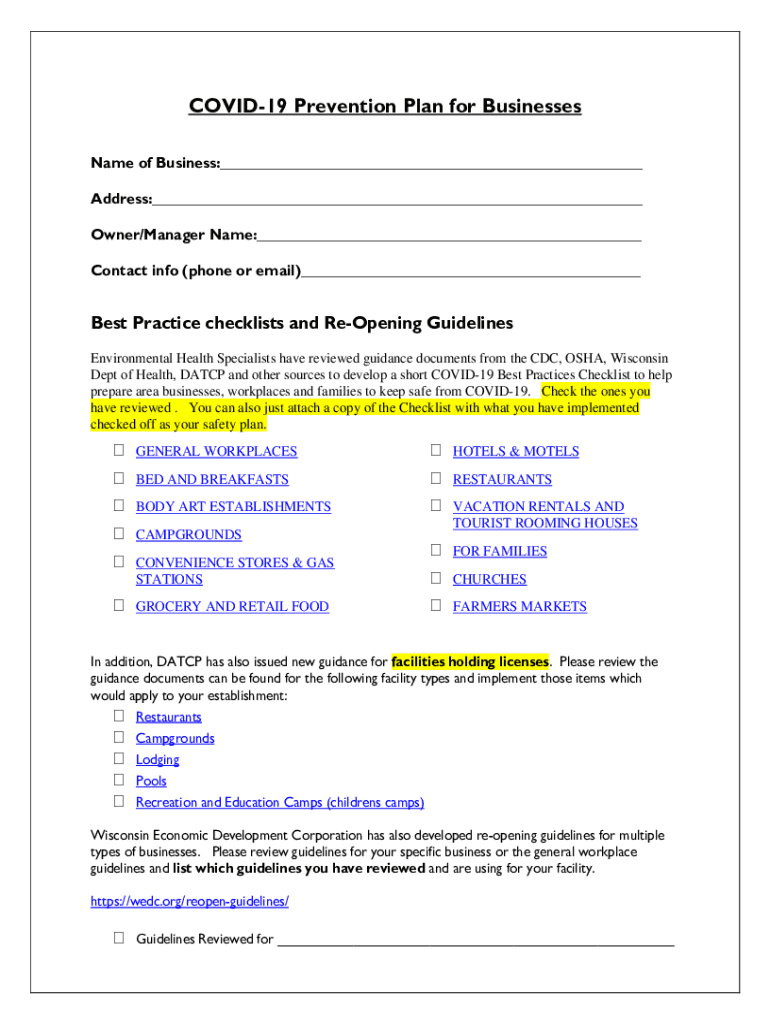







Definition & Meaning
The "COVID-19 Prevention Plan" serves as a comprehensive guideline for businesses to mitigate the risks associated with the spread of COVID-19. Primarily focused on safeguarding the health of employees and customers, it includes protocols for maintaining hygiene, enforcing physical distancing, and enhancing workplace safety. The plan is structured to ensure businesses adhere to health regulations and can be used as part of annual compliance checks within certain jurisdictions. By implementing a robust prevention strategy, companies aim to maintain operational continuity while minimizing transmission risks.
Key Elements of the COVID-19 Prevention Plan
The plan is divided into five critical categories that form the backbone of effective prevention strategies:
-
Employee Health and Hygiene: This includes guidelines on regular handwashing, wearing masks, and health screenings for early detection of symptoms. Businesses are advised to establish protocols that promote a healthy work environment.
-
Physical Distancing Measures: Employers should restructure workspaces to maintain recommended distances between individuals, implement staggered shifts, and limit the number of employees and customers in enclosed spaces.
-
Public Protection Initiatives: Measures such as installing protective barriers, providing hand sanitizers, and posting health notices to inform customers about safety practices fall under this category.
-
Environmental Controls: The plan suggests improved ventilation systems, routine disinfection of surfaces, and the use of high-efficiency air filters to reduce airborne contaminants.
-
Cleaning Procedures: It emphasizes regular cleaning protocols, with particular attention to high-touch areas such as door handles, restrooms, and shared equipment to maintain a sanitized environment.
Steps to Complete the COVID-19 Prevention Plan
-
Assessment of Current Practices: Review existing procedures and evaluate their effectiveness in preventing COVID-19 transmission.
-
Develop Protocols: Based on assessment findings, develop clear and actionable protocols addressing each key element of the plan.
-
Training and Communication: Conduct training sessions for employees to ensure they understand and can implement new safety measures. Use various communication channels to reach all team members efficiently.
-
Implementation: Gradually integrate the new practices into daily operations, making adjustments as necessary to ensure smooth execution.
-
Monitoring and Evaluation: Regularly monitor the effectiveness of the plan and gather feedback from employees. Make adjustments to protocols in response to new health guidelines or identified weaknesses.
Who Typically Uses the COVID-19 Prevention Plan
This plan is intended for a wide range of businesses, especially those in hospitality, retail, education, and services that involve close physical interactions. It is also applicable in manufacturing and warehouse environments where maintaining operational continuity is essential. Employees at all levels, from management to frontline workers, play a role in implementing and adhering to these guidelines. Health and safety officers within organizations are typically responsible for overseeing the plan's execution and ensuring compliance.


Important Terms Related to COVID-19 Prevention Plan
- Hygiene Protocols: Standardized practices to maintain cleanliness and reduce the spread of viruses.
- Social Distancing: Measures taken to avoid close contact with others to minimize virus transmission.
- Personal Protective Equipment (PPE): Items like masks and gloves used to protect individuals from exposure.
- Contact Tracing: The process of identifying and notifying individuals who may have been exposed to an infected person.
- Quarantine and Isolation: Methods to separate and restrict the movement of sick or potentially exposed individuals to prevent the spread of COVID-19.
Legal Use of the COVID-19 Prevention Plan
The implementation of a COVID-19 Prevention Plan aligns with public health mandates and occupational safety regulations across the United States. Failure to comply with these regulations can result in fines and business closures, making adherence to the plan not only a health imperative but a legal requirement. The plan helps businesses demonstrate due diligence in protecting both employees and clients, potentially decreasing liability in case of outbreaks traced back to the workplace.
Examples of Using the COVID-19 Prevention Plan
- A retail store rearranges shelves and display cases to allow for six feet between customers, marks floors with distance indicators, and employs dedicated cleaning staff for hourly sanitization.
- A restaurant implements reservation systems to control customer flow, installs plexiglass barriers between booths, and trains staff on new health protocols.
- An office building adopts a hybrid work model, organizing separate days for onsite attendance, limiting room occupancy, and coordinating virtual meetings to reduce in-person contact.
Benefits for Business Types from the COVID-19 Prevention Plan
Different industries can gain specific advantages by adopting a robust prevention plan:
- Retail and Hospitality: Enhances customer confidence and encourages repeat business by visibly prioritizing health and safety measures.
- Manufacturing: Maintains production levels by protecting essential workers from outbreaks that could disrupt operations.
- Education: Supports safe reopening strategies that gain parental, faculty, and student trust.
- Healthcare: Ensures that medical facilities remain clean and safe for both staff and patients, reducing hospital-acquired infections.
State-Specific Rules for the COVID-19 Prevention Plan
While the plan provides a general structure for handling COVID-19 risks, specific implementation may vary by state. States such as California and New York may have unique mandates requiring businesses to submit their prevention plans for approval or face penalties for non-compliance. Employers should regularly consult state health department updates to ensure their plans meet local requirements and adapt to changing legal circumstances.




