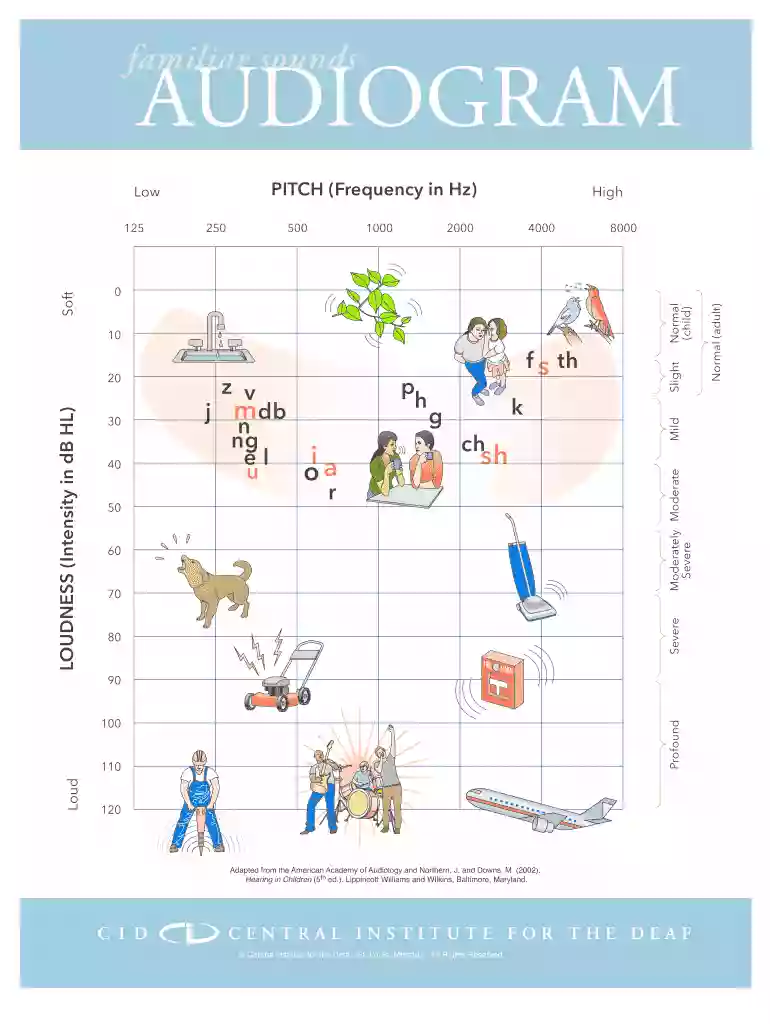
Definition and Importance of the Familiar Sounds Audiogram
The familiar sounds audiogram is a visual tool used to illustrate various pitches and loudness levels of sounds that are commonly encountered in daily life. It categorizes sound intensity on a scale that ranges from normal hearing to profound hearing loss, providing crucial insights into how different frequencies are perceived by individuals with varying degrees of hearing ability. This type of audiogram is particularly valuable in education, audiology, and hearing health discussions, as it helps bridge the gap between abstract audiometric data and practical understanding.
Key Features of the Familiar Sounds Audiogram
- Sound Representation: The audiogram features familiar sounds, including speech and environmental noise, shown across a frequency range.
- Intensity Levels: It measures sound intensity, charting levels from quiet whispers to loud noises, which helps users understand their hearing capabilities.
- Visual Aid: Typically, the familiar sounds audiogram includes icons or pictures representing different sounds, making it user-friendly and accessible, especially for children and those unfamiliar with technical audiology terms.
Utilization of the Familiar Sounds Audiogram
The familiar sounds audiogram can be effectively used in various scenarios to enhance understanding and communication regarding hearing health.
Educational Tool
- For Children: Educators often use the audiogram to teach children about sounds they encounter daily, helping to familiarize them with important auditory cues.
- In Audiology Practices: Audiologists use the audiogram to explain hearing loss to patients, providing a clear visual context for their assessments.
Supporting Hearing Rehabilitation
- Hearing Aids: When fitting hearing aids, clinicians utilize the familiar sounds audiogram to tailor amplification for specific frequencies, ensuring both comfort and functionality for the user.
- Tinnitus Management: For those experiencing tinnitus, the audiogram can illustrate which sounds may exacerbate or alleviate their symptoms, guiding management strategies.
Obtaining the Familiar Sounds Audiogram
Acquiring a familiar sounds audiogram can be achieved through several avenues, accessible to both professionals and laypersons alike.
Online Resources
- Clinics and Audiologists: Many audiology clinics provide printable audiograms of familiar sounds on their websites. This allows personalized downloads for educational or medical purposes.
- Educational Institutions: Some schools and hearing organizations develop and distribute their own versions, making them available for teachers and parents.
PDF Versions
- Standard Formats: Familiar sounds audiograms are often available in PDF format, which enables easy distribution and printing for use at home or in the classroom. These resources provide an excellent way to stimulate discussions regarding hearing health.
Understanding the Structure of the Familiar Sounds Audiogram
The familiar sounds audiogram is typically structured with specific elements that enhance its utility and clarity.
Frequency and Decibel Levels
- X-Axis: The horizontal axis of the audiogram represents frequencies measured in hertz (Hz), ranging from low to high pitches.
- Y-Axis: The vertical axis aligns with sound intensity measured in decibels (dB), showing how loud or soft sounds are experienced at different frequencies.
Representation of Sounds
- Icons and Labels: Sounds such as a dog's bark, a doorbell, human speech, etc., are visually represented, often with accompanying labels to specify the type of sound and its audibility levels.
- Color Coding: Many audiograms employ different colors to distinguish between sound types, further aiding comprehension, especially for those with limited hearing experience.
Practical Applications of the Familiar Sounds Audiogram
The familiar sounds audiogram aids in a variety of practical applications, enriching both educational contexts and clinical settings.
Speech Banana Concept
- Speech Banana: A critical element in understanding the familiar sounds audiogram is the concept of the "speech banana." This area highlights where commonly spoken phonemes exist within the frequency and intensity range, illustrating the importance of those sounds for effective communication.
- Hearing Assessments: It assists audiologists in determining the specific sounds a patient may have difficulty hearing based on their audiometric profile.
Interactive Learning Tools
- Engagement: Interactive audiograms can be created for educational purposes, allowing users to explore various sound intensities and frequencies.
- Assessment Tools: Teachers can incorporate quizzes around familiar sounds, using the audiogram to evaluate student comprehension and retention regarding sound identification.
Technological Adaptations of the Familiar Sounds Audiogram
Digital adaptations of the familiar sounds audiogram are becoming increasingly prevalent, signaling a shift toward modernized evaluations.
Audio Playback Features
- Interactive Software: Using software that allows users to hear sounds corresponding to different frequencies and intensities helps reinforce the auditory experience.
- Mobile Applications: Several applications have been developed, enabling users to interact with familiar sounds audiograms on mobile devices, increasing accessibility for children and parents alike.
Integration with Telehealth
- Remote Consultations: The familiar sounds audiogram can be integrated into telehealth frameworks, enabling remote education and support for patients and families, particularly in rural areas with limited access to audiology services.
- Tele-therapy Solutions: Audiologists can use online platforms to work through audiograms during virtual appointments, ensuring clients receive tailored guidance regardless of location.