




01. Edit your form online
Type text, add images, blackout confidential details, add comments, highlights and more.

Type text, add images, blackout confidential details, add comments, highlights and more.

Draw your signature, type it, upload its image, or use your mobile device as a signature pad.

Send it via email, link, or fax. You can also download it, export it or print it out.
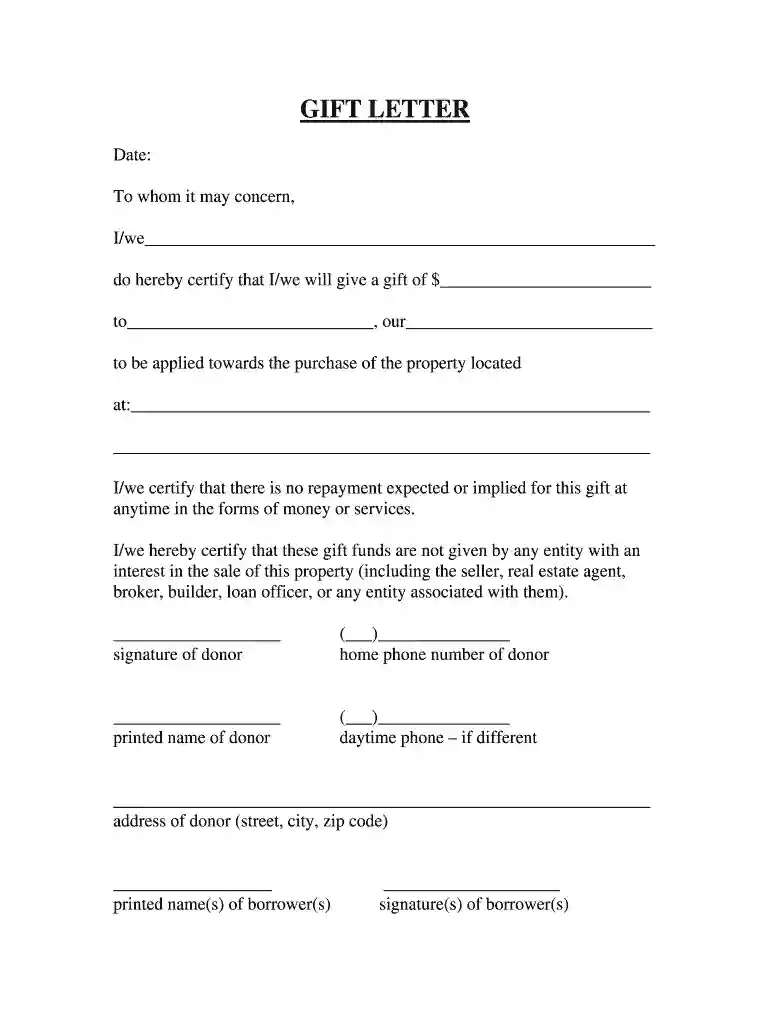
The "Sample-Gift-Letter - Know Your Bank" is a formal document utilized primarily in real estate transactions in the United States. It certifies that a donor provides a certain monetary gift to a borrower, often to assist with the down payment for purchasing a property. The letter confirms that the donor does not expect repayment, ensuring that funds are not a disguised loan, which could affect the borrower's loan eligibility. This document includes critical details about the donor, the recipient, and the property involved, making it an essential tool for upholding transparency and compliance with banking and lender regulations.
When drafting a Sample-Gift-Letter, it should contain several core elements to meet banking standards:
These elements ensure the letter meets the necessary legal and financial requirements to satisfy lenders and assure the integrity of the transaction.
To effectively utilize a Sample-Gift-Letter, follow these steps:
Following these steps helps ensure smooth processing during loan approvals, reducing potential for setbacks or misunderstandings.
The Sample-Gift-Letter serves several legal functions:
Several terms are vital in understanding the Sample-Gift-Letter:
Understanding these terms enhances clarity and ensures all parties comprehend the document's function and implications.
While the Sample-Gift-Letter itself is not submitted to the IRS, it should align with federal gift tax requirements:
It is prudent for both donors and recipients to consult with tax professionals to understand potential tax implications and ensure compliance with IRS guidelines.
Though primarily a federal requirement, some states may have specific stipulations concerning gift letters:
Checking with state regulatory authorities or legal professionals ensures adherence to any additional regional requirements, mitigating risks of non-compliance.
To ensure the letter is completed accurately, follow these detailed steps:
Adhering to these steps aids in crafting a precise and acceptable document, facilitating a trouble-free lending process.
At DocHub, your data security is our priority. We follow HIPAA, SOC2, GDPR, and other standards, so you can work on your documents with confidence.
This letter is verification that the customer named above, [name of account holder], has an account with [name of bank] with a current and available balance
Your holding period in virtual currency received as a gift includes the time that the virtual currency was held by the person from whom you received the gift.
Dec 2, 2024 A gift card cannot expire until at least five years from the date it was activated. The law also places general limitations on fees.Read more


