




Here's how it works
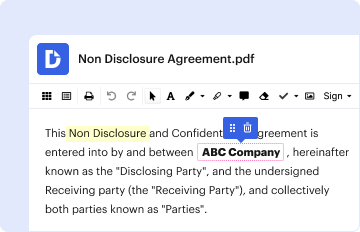
01. Edit your nj notice of appeal form online
Type text, add images, blackout confidential details, add comments, highlights and more.
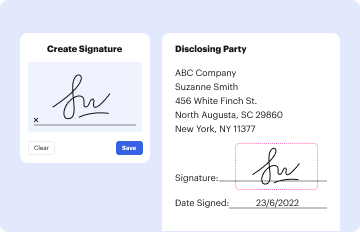
02. Sign it in a few clicks
Draw your signature, type it, upload its image, or use your mobile device as a signature pad.

03. Share your form with others
Send nj appellate division forms via email, link, or fax. You can also download it, export it or print it out.
How to use or fill out nj appeal rights form with our platform

- Click ‘Get Form’ to open the nj appeal rights form in the editor.
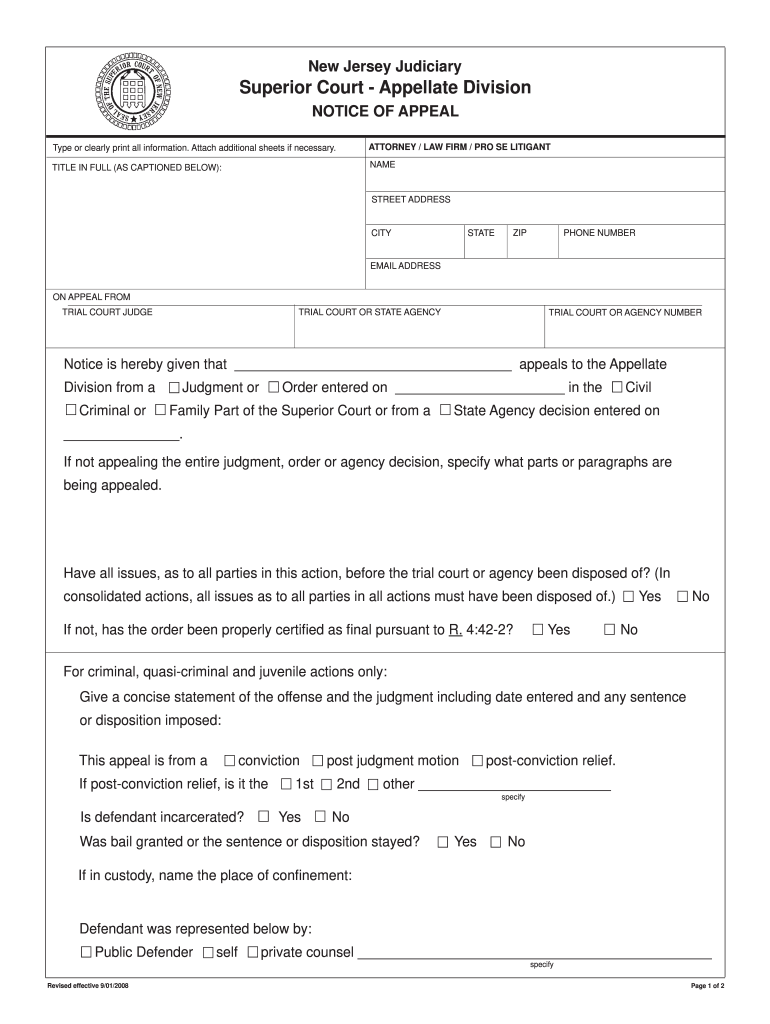
- Begin by filling in your personal information in the 'ATTORNEY / LAW FIRM / PRO SE LITIGANT' section. Clearly print your name, address, phone number, and email address.
- Indicate the trial court or state agency you are appealing from, including the judge's name and case number.
- Specify whether you are appealing a criminal judgment, order, or a decision from a state agency. If not appealing the entire judgment, detail which parts are being contested.
- Answer the questions regarding whether all issues have been disposed of and if the order has been certified as final.
- For criminal cases, provide a concise statement of the offense and any relevant judgments or sentences imposed.
- Complete any additional sections regarding representation and service of notice as required by the form.
- Finally, certify that your statements are true and sign the document before submission.
Start using our platform today to easily complete your nj appeal rights form online for free!
Fill out nj appeal rights form online
It's free
It's free
See more nj appeal rights form versions
We've got more versions of the nj appeal rights form form. Select the right nj appeal rights form version from the list and start editing it straight away!
| Versions | Form popularity | Fillable & printable |
|---|---|---|
| 2008 | 4.5 Satisfied (43 Votes) |
Got questions?
We have answers to the most popular questions from our customers. If you can't find an answer to your question, please contact us.
Contact us
On what grounds can an appeal be denied?
The appeal may be denied if you cannot show that the lower court made a legal mistake. Some of these mistakes include a violation of your rights, a biased trial judge or denial of counsel. It is worth noting that appellate courts have broad discretion in deciding whether to hear an appeal.
What are the grounds for appeal in New Jersey?
Legal Errors in Trial Proceedings Legal errors are the most common grounds for appeal and may include mishandling evidence, improper jury instructions, or incorrectly applying New Jersey criminal law. For example, if evidence critical to your defense was excluded unfairly, it could be grounds for appeal.
What are good grounds for appeal?
You can only appeal if you have proper legal grounds for example, if you can show that the decision was wrong because of a serious mistake or because the procedure was not followed properly.
What are the 5 steps of the appeal process?
After a Decision is Issued Step 1: File the Notice of Appeal. Step 2: Pay the filing fee. Step 3: Determine if/when additional information must be provided to the appeals court as part of opening your case. Step 4: Order the trial transcripts. Step 5: Confirm that the record has been transferred to the appellate court.
What types of issues can be appealed?
Appeals Civil Case. Either side may appeal the verdict. Criminal Case. The defendant may appeal a guilty verdict, but the government may not appeal if a defendant is found not guilty. Bankruptcy Case. An appeal of a ruling by a bankruptcy judge may be taken to the district court. Other Types of Appeals.
Security and compliance
At DocHub, your data security is our priority. We follow HIPAA, SOC2, GDPR, and other standards, so you can work on your documents with confidence.
Learn more


People also ask
What is the rule 2 2 4 in New Jersey?
Rule 2:2-4 provides that leave to appeal from an interlocutory order may be granted in the interest of justice. R. 2:2-4. Whether to grant leave is within the Appellate Divisions discretion and is exercised sparingly.
How much does it cost to file an appeal in NJ?
Fees Notice of petition for certification$ 250 Notice of appeal $ 250 Motion that opens a case $ 50 Respondents first motion, if filed $ 50 Motion for reconsideration $ 501 more row
What are appeal rights?
An appeal of right is one that the higher court must hear, if the losing party demands it, while a discretionary appeal is one that the higher court may, but does not have to, consider.