




01. Edit your change in lease terms addendum to residential lease online
Type text, add images, blackout confidential details, add comments, highlights and more.

Type text, add images, blackout confidential details, add comments, highlights and more.

Draw your signature, type it, upload its image, or use your mobile device as a signature pad.

Send par residential lease via email, link, or fax. You can also download it, export it or print it out.
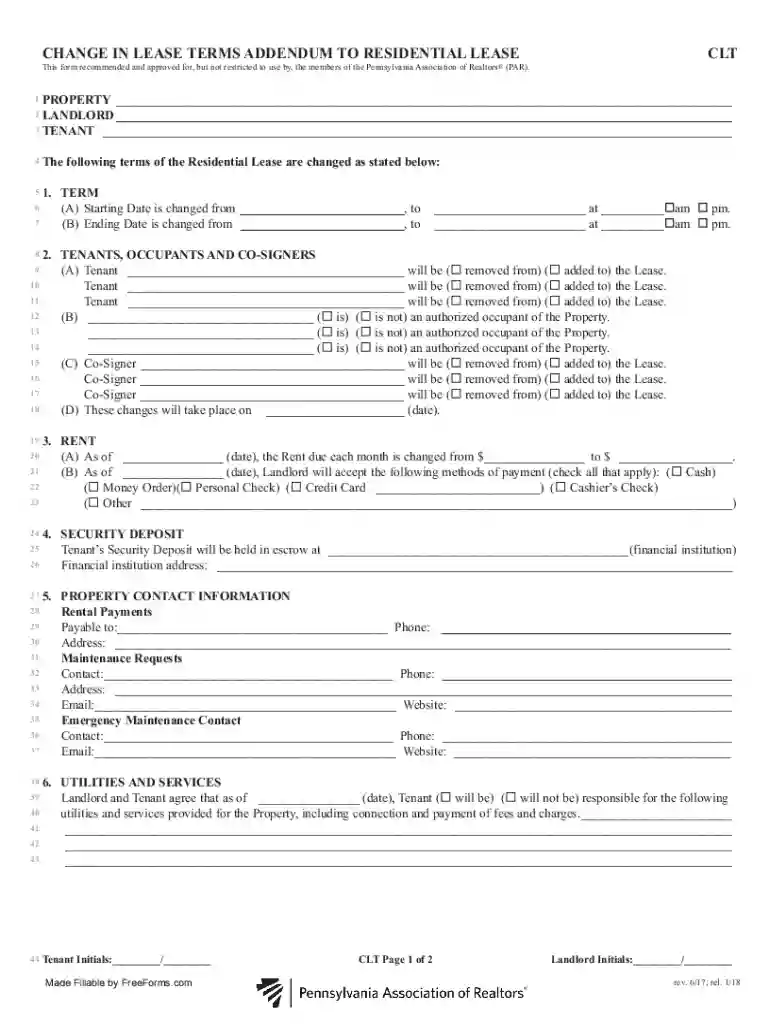
The Change in Lease Terms Addendum to Residential Lease is a legal document that amends specific terms outlined in a residential lease agreement. This addendum is essential for landlords and tenants who wish to modify critical elements of their lease without drafting an entirely new agreement. Typical modifications include:
By utilizing this addendum, parties can ensure that all other terms of the original lease remain effective and intact while addressing necessary changes in a straightforward manner.
Using the Change in Lease Terms Addendum involves a few straightforward steps. Here’s how to properly execute the form:
Identify Changes: Determine what modifications are needed in the original lease. This could involve updating dates, amounts, names, or other essential details.
Complete the Addendum: Fill out the addendum form, ensuring that all changes are clearly and accurately documented. Include specifics such as the old terms and the new proposed changes.
Signatures: Both parties—landlord and tenant—must review the changes and sign the document to indicate their agreement. It’s advisable to have the signatures witnessed or notarized for extra legal security.
Distribute Copies: After signing, provide copies to all parties involved. Keep a copy for your records to refer back to if any disputes arise later.
Utilizing this process ensures a legal and efficient way to amend a lease while maintaining clarity and transparency between both parties.
Completing the Change in Lease Terms Addendum requires careful attention to detail. Follow these steps:
Download the Form: Obtain the Pennsylvania Association of Realtors form. This can typically be downloaded from their website or obtained through your real estate agent.
Enter Lease Information: Input the original lease date, tenant names, address, and other pertinent information that appears in the existing lease.
Specify Changes: Clearly list the changes being made to the lease terms. Use specific language to avoid confusion. For example:
Review: Go through the completed document with all involved parties to ensure accuracy and agreement on the changes.
Sign and Date: All parties must sign and date the addendum. This finalizes the changes legally.
Store the Document: Keep the signed document with the original lease for easy access.
Completing these steps will ensure clarity and prevent potential conflicts in the future.
Understanding key terminology associated with the Change in Lease Terms Addendum is crucial for anyone involved in leasing. Here are important terms:
Lease Agreement: A legal contract between landlord and tenant detailing the conditions of leasing a property.
Addendum: An additional document that modifies the original lease agreement, agreeing to changes without rewriting the entire lease.
Renewal: Extending the lease agreement for an additional term.
Security Deposit: A sum of money held by the landlord to cover potential damages or unpaid rent.
Tenant: The individual(s) renting the property in question.
Grasping these terms will help parties navigate their lease more effectively.
The Change in Lease Terms Addendum is typically utilized by:
Landlords: Property owners who need to amend details in a lease to accommodate changes in the rental agreement.
Tenants: Renters seeking modifications for personal or financial reasons, such as a change in income or personal circumstances.
Property Managers: Individuals who manage rental properties on behalf of landlords may also use the addendum to update agreements under their management.
Real Estate Agents: Professionals may assist clients in navigating lease changes effectively, ensuring that legal and procedural aspects are properly addressed.
Understanding who uses this addendum can aid in recognizing its importance and benefits for various stakeholders in the rental process.


We've got more versions of the change in lease terms addendum to residential lease form. Select the right change in lease terms addendum to residential lease version from the list and start editing it straight away!
At DocHub, your data security is our priority. We follow HIPAA, SOC2, GDPR, and other standards, so you can work on your documents with confidence.
Bring an action to recover the whole balance of the rent and charges due for the unexpired lease term, including reasonable attorneys fees and costs;. dRead more
This form recommended and approved for, Pennsylvania Association of Realtors (PAR). 293 Change of Lease Terms Addendum (PAR Form CLT)


