







Understanding the Quality Accreditation Checklist
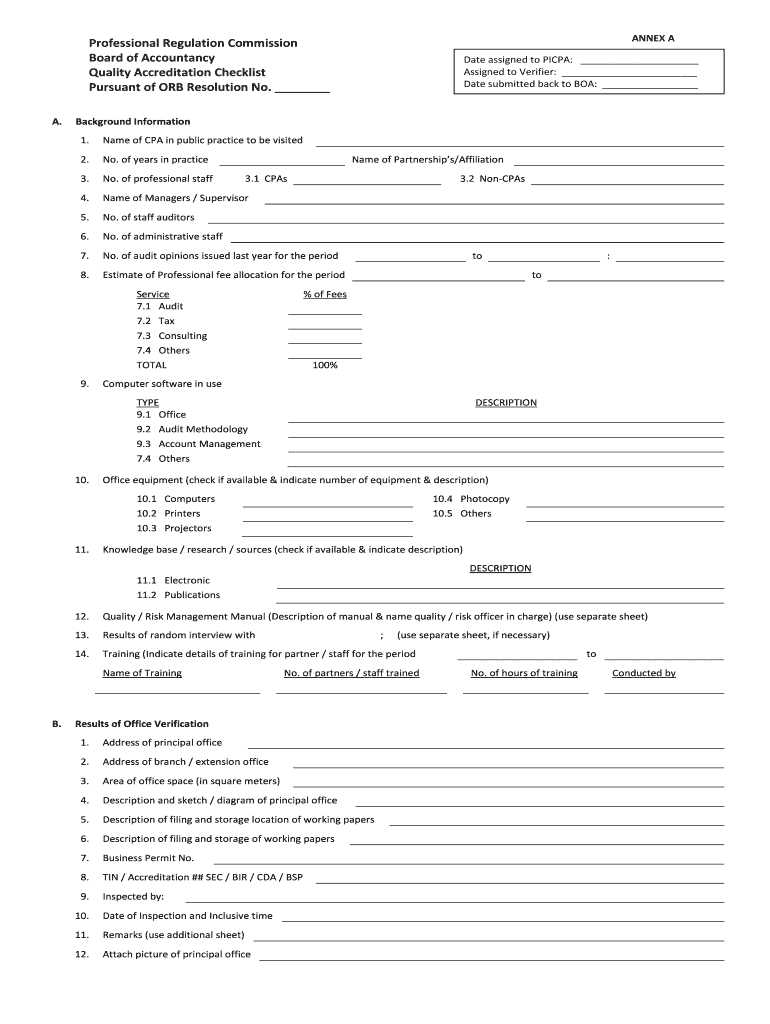
The Quality Accreditation Checklist is an essential tool for evaluating compliance and excellence within various firms, particularly those requiring certification like CPA firms. This checklist serves to provide a systematic framework for assessing critical aspects of a firm’s operations.
Purpose of the Quality Accreditation Checklist
The primary aim of the quality accreditation checklist is to establish clear standards that organizations must meet to achieve accreditation. Its use promotes best practices within the industry, helping businesses ensure they are providing high-quality services or products. The checklist functions as a guide, ensuring that every aspect of the organization aligns with the required standards for quality assurance.
- Enhancing Service Delivery: By adhering to the checklist, firms can improve their service delivery, ensuring clients receive top-notch quality consistently.
- Benchmarking Standards: It assists firms in benchmarking their processes against industry standards, identifying potential gaps, and positioning themselves competitively.
Key Sections of the Quality Accreditation Checklist
To maximize the efficiency of the quality accreditation process, the checklist typically includes several key sections. Each section targets specific areas that need evaluation:
-
Background Information on the Firm: This section includes crucial details about the firm, such as its history, mission, and core values. Understanding this aspect helps assess how well the firm aligns with accreditation purpose.
-
Staff Qualifications and Training: Evaluating staff qualifications and the training provided ensures that the personnel involved are equipped with the necessary skills and knowledge to meet quality standards.
-
Services Offered: A thorough examination of services ensures that firms provide adequate and appropriate services to their clientele, complying with necessary quality standards.
-
Quality Management Practices: This section outlines the systems and processes in place to monitor and enhance quality. It typically includes procedures for continuous improvement and quality control measures.
-
Office Equipment and Software Utilization: Assessing the tools and technology implemented by the firm demonstrates its commitment to maintaining a modern and effective work environment.
-
Verification Inspection Results: Documenting prior verification inspections provides insights into a firm’s historical compliance with quality standards, highlighting strengths and areas for improvement.
Completing the Quality Accreditation Checklist
Completing each section of the quality accreditation checklist is a structured process that typically involves several steps:
-
Gather Required Documentation: Firms should start by collecting all necessary documentation and evidence supporting their practices. This might include training records, staff credentials, and quality assessment reports.
-
Conduct Internal Reviews: Before submitting the checklist, an internal review of processes and standards is vital. This helps identify gaps and ensures all criteria are met.
-
Engage Stakeholders: Involving key stakeholders such as staff and supervisors can provide valuable insights and ensure comprehensive responses to each checklist item.
-
Submit for Review: Once completed, the checklist should be submitted along with any requisite supporting documents for external evaluation by the accreditation body.
-
Respond to Feedback: Post-review, firms must be prepared to answer questions and possibly make adjustments to comply with any areas of concern raised by the evaluating body.
Legal and Regulatory Implications
Quality accreditation carries significant legal and regulatory implications; therefore, firms must ensure compliance with all relevant standards and laws. This includes understanding local, state, and federal regulations regarding the services they provide.
-
Compliance Requirements: Checklists should reflect all relevant compliance requirements to avoid possible legal repercussions and ensure service longevity.
-
Accreditation Standards: Understanding the standards required for successful accreditation can save time and enhance the chances of a successful outcome.
Importance of Continuous Improvement
Firms must view the quality accreditation checklist as a living document that promotes continuous improvement. Regularly updating and reviewing the checklist not only helps maintain accreditation but also aligns the firm's practices with evolving industry standards.
-
Self-Assessment Encouraged: Firms are encouraged to use the checklist as a tool for continuous self-assessment, helping them stay prepared for future evaluations.
-
Feedback Mechanisms: Implementing feedback mechanisms allows firms to adapt quickly and enhance quality assurance practices effectively.
By properly implementing the quality accreditation checklist, organizations can foster an environment of trust and excellence, benefitting both the firm and its clients.




