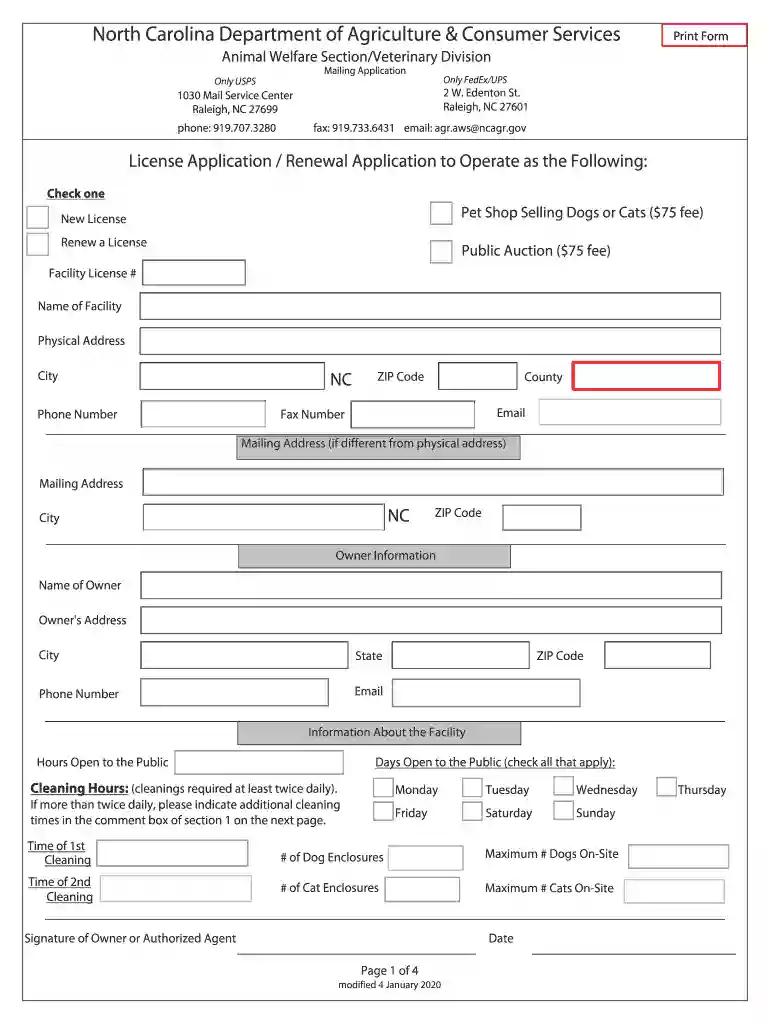
SUBCHAPTER 52J - ANIMAL WELFARE SECTION SECTION 2026

Get Form
SUBCHAPTER 52J - ANIMAL WELFARE SECTION SECTION Preview on Page 1

Here's how it works

01. Edit your form online
Type text, add images, blackout confidential details, add comments, highlights and more.

02. Sign it in a few clicks
Draw your signature, type it, upload its image, or use your mobile device as a signature pad.

03. Share your form with others
Send it via email, link, or fax. You can also download it, export it or print it out.

How to use or fill out SUBCHAPTER 52J - ANIMAL WELFARE SECTION SECTION with our platform

Form edit decoration
9.5
Ease of Setup
DocHub User Ratings on G2
9.0
Ease of Use
DocHub User Ratings on G2
  1. Click ‘Get Form’ to open it in the editor.
  2. Begin by selecting the type of application you are submitting: either a new license or a renewal for a pet shop or public auction. Ensure you check the appropriate box.
  3. Fill in the facility details, including the name, physical address, and contact information. Make sure all fields are completed accurately.
  4. Provide owner information, including name, address, and contact details. This section is crucial for identification purposes.
  5. Document your facility's operational details such as days and hours open to the public, cleaning schedules, and maximum capacity for dogs and cats.
  6. Complete the Annual Program of Veterinary Care section by detailing your procedures for animal care and compliance with veterinary regulations.
  7. Review all entries for accuracy before signing. Ensure that both the owner and veterinarian sign where required.

Start using our platform today to streamline your form completion process for free!

be ready to get more

Complete this form in 5 minutes or less

Get form

Got questions?

We have answers to the most popular questions from our customers. If you can't find an answer to your question, please contact us.
Contact us
The 5 welfare needs Feed a suitable diet. Allow the animal to be able to exhibit normal behaviour patterns. Allow any need it has to be housed with, or apart from, other animals. Be protected from pain, suffering, injury and disease.
Compromised animals are defined as: an animal with reduced capacity to withstand the stress of living or transportation due to injury, fatigue, infirmity, poor health, distress, very young or old age, impending birth, or any other cause.
What does this mean for those responsible for animals? need for a suitable environment. need for a suitable diet. need to be able to exhibit normal behaviour patterns. need to be housed with, or apart, from other animals. need to be protected from pain, suffering, injury and disease.
(1)A person commits an offence if he does not take such steps as are reasonable in all the circumstances to ensure that the needs of an animal for which he is responsible are met to the extent required by good practice. (e)its need to be protected from pain, suffering, injury and disease.
The 1977 North Carolina General Assembly enacted an Animal Welfare Act to ensure that animals, as items of commerce, are provided humane care and treatment by regulating the transportation, sale, purchase, housing, care, handling and treatment of animals by persons or organizations engaged in transporting, buying or

Security and compliance

At DocHub, your data security is our priority. We follow HIPAA, SOC2, GDPR, and other standards, so you can work on your documents with confidence.

Learn more
ccpa2
pci-dss
gdpr-compliance
hipaa
soc-compliance
be ready to get more

Complete this form in 5 minutes or less

Get form

People also ask

7Administration of poisons etc. (b)causes any poisonous or injurious drug or substance to be taken by a protected animal, knowing it to be poisonous or injurious.
52 Conditions for grant of warrant he has failed to allow entry to the premises on being requested to do so by an inspector or a constable; (c) he has been informed of the decision to apply for a warrant. (b) notice of intention to apply for a warrant has been left in a conspicuous place on the premises.
The key benefits of the Act include: a duty of care for all protected animals. it allows action to be taken to prevent suffering as opposed to waiting until suffering has occurred. it provides robust powers to deal with animal fighting, including dog fights.

Related links