



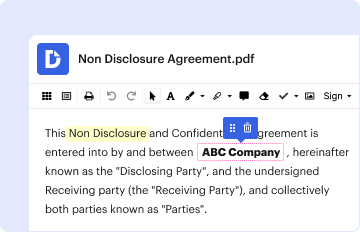
01. Edit your statutory declaration uk template online
Type text, add images, blackout confidential details, add comments, highlights and more.

Type text, add images, blackout confidential details, add comments, highlights and more.
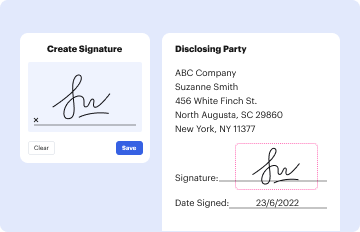
Draw your signature, type it, upload its image, or use your mobile device as a signature pad.
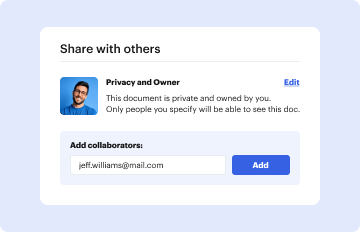
Send statutory declaration form uk template via email, link, or fax. You can also download it, export it or print it out.
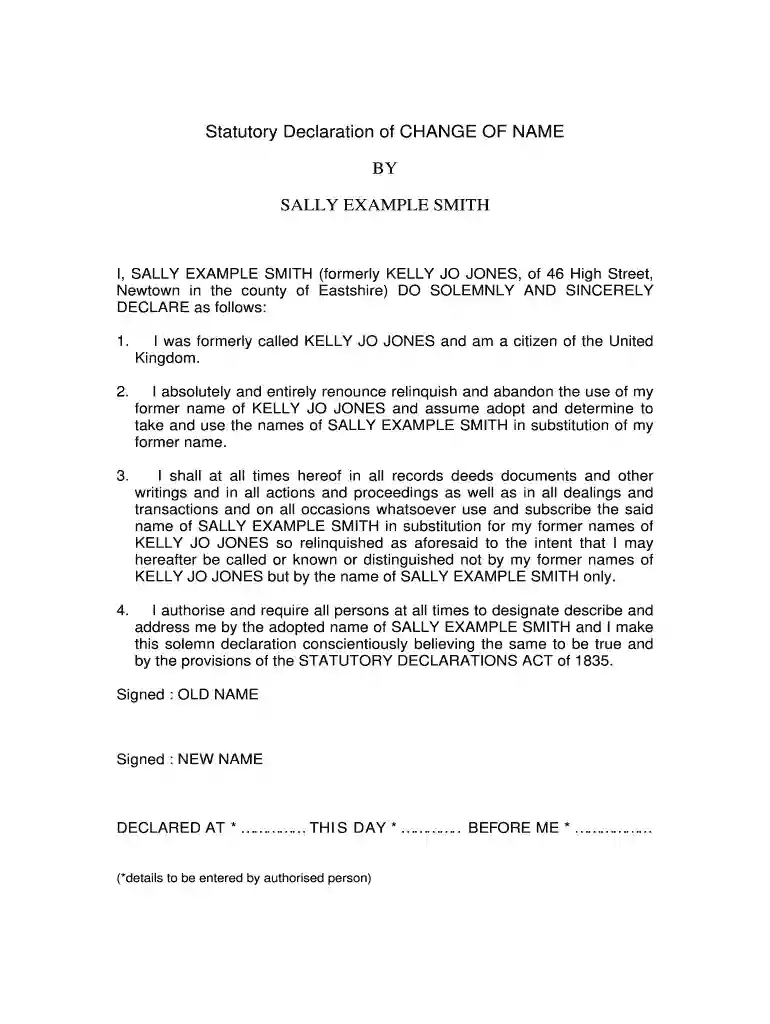
A statutory declaration of change of name is a formal legal document used to declare a change from one name to another for all legal and personal purposes. This declaration serves as an official record of a person's intent to renounce their previous name and adopt a new one. Typically, this document is required in contexts such as applying for a passport, changing bank accounts, or updating legal documents. By providing a statutory declaration, individuals can clearly establish their name change to relevant authorities and organizations.
Creating a statutory declaration of change of name involves specific steps to ensure its validity. Following the proper process helps to prevent future legal complications.
Draft the Declaration: Begin with the individual’s current name, the new name being adopted, and a statement that clearly outlines the intention behind the name change. It should include personal details such as the date of birth and previous names if applicable.
Review Legal Requirements: Each state may have specific requirements for completing a statutory declaration. It's important to verify what additional information or documentation may be needed.
Sign the Document: The individual must sign the declaration in the presence of a notary public or another authorized officer. This step attests to the truthfulness of the declaration.
File the Declaration if Necessary: Some jurisdictions require that the declaration be filed with a local government office or court. Checking local laws can clarify if filing is necessary.
Keep Copies: Once completed, it’s advisable to keep multiple copies of the declaration for personal records and future use.
The statutory declaration must contain specific elements to be legally sound. These components help identify the individual and confirm the intention behind the name change.
Various real-life scenarios illustrate the application of a statutory declaration of change of name, providing better context for its use.
Once a statutory declaration is made and the name is legally changed, there are several important tasks that may follow to ensure integration into daily life.
Be vigilant about ensuring that the name change is recognized by all relevant authorities to avoid confusion or legal disputes regarding identity. Keep in mind that discrepancies in documentation can lead to complications when dealing with legal matters or financial institutions.
At DocHub, your data security is our priority. We follow HIPAA, SOC2, GDPR, and other standards, so you can work on your documents with confidence.
Statutory Declaration signed by a magistrate The UK has several ways to change a legally change a forename, middle name or surname:
This declaration shall be executed by the spouse of a deceased eligible individual as statutory heir in accordance with section 105(a)(7) of the Civil LibertiesRead more
PURPOSE An Affidavit Regarding a Change of Name may be submitted with an application for a U.S. passport when the name which is used by the applicant is (1).Read more


