




01. Edit your etrade com docupload online
Type text, add images, blackout confidential details, add comments, highlights and more.

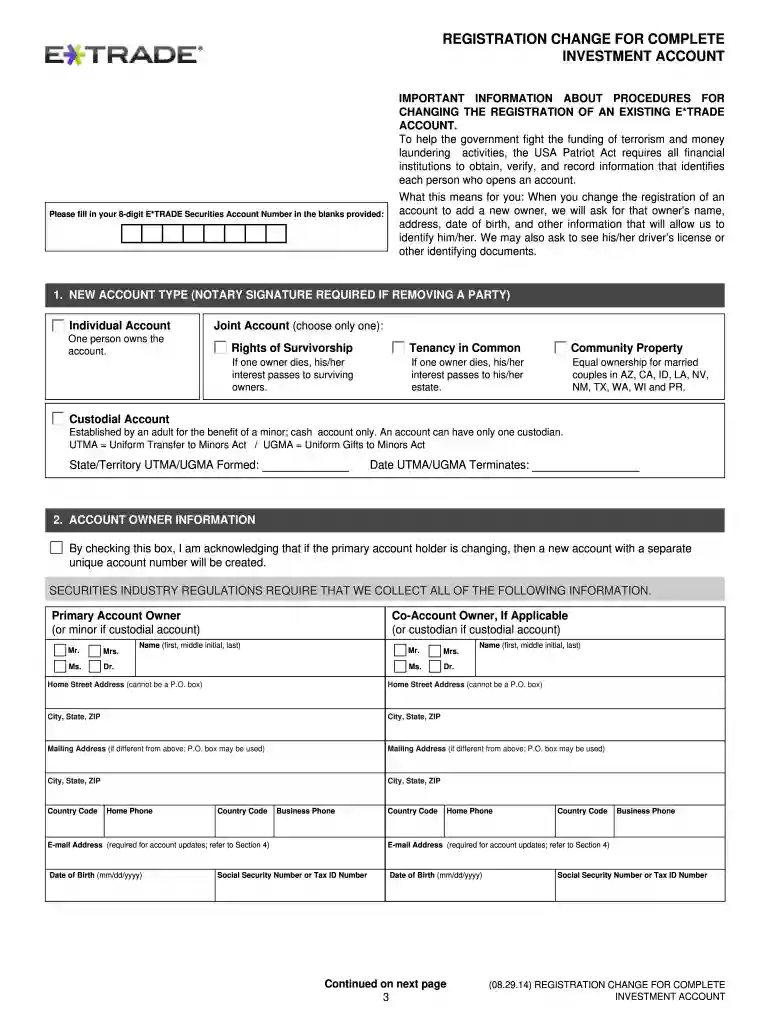
Type text, add images, blackout confidential details, add comments, highlights and more.

Draw your signature, type it, upload its image, or use your mobile device as a signature pad.

Send etrade login via email, link, or fax. You can also download it, export it or print it out.
E trade online trade registration refers to the process of officially creating and establishing a trading account with ETRADE, a leading financial services company that provides electronic trading of financial assets. This registration process allows users to access a range of investment options, including stocks, bonds, options, and mutual funds. By completing the registration, users can manage their investment portfolio online, utilizing ETRADE's user-friendly platform for buying and selling securities.
The registration typically involves providing personal and financial information, verifying identity, and agreeing to the terms and conditions set forth by E*TRADE. Successful completion of this process opens up opportunities for individuals to trade and invest in financial markets at their discretion.
The registration process with E*TRADE is designed to be straightforward. Following these steps ensures that users can confidently set up their accounts.
By carefully following these steps, users can ensure a smooth registration experience, minimizing potential issues during the process.
When registering for an E*TRADE account, certain documents are necessary to verify identity and provide regulatory compliance. Users should prepare the following:
Having these documents ready can expedite the registration process and help prevent delays.
E*TRADE's services appeal to a broad range of individuals, including:
This diverse user base demonstrates the platform's versatility in catering to various financial needs and investment strategies.
Understanding the legal aspects surrounding E*TRADE online trade registration is essential. The registration adheres to compliance with the following regulations:
Adhering to these legal frameworks helps to foster a trustworthy trading environment, promoting user confidence.
Practical scenarios include:
These examples illustrate the diverse ways registered users can engage with the financial markets through E*TRADE, promoting strategic investment.
The process involves several key steps and typically takes a few days for approval, depending on various factors:
Staying informed about the application process and understanding the timeframes involved can help users plan their trading activities appropriately.
At DocHub, your data security is our priority. We follow HIPAA, SOC2, GDPR, and other standards, so you can work on your documents with confidence.
by RH Weber 2007 Cited by 42 Tbe functioning of e-trade highly depends on transaction security (stable technological infra- structure) and on a reliable transborder legal framework.Read more
ACCESS provides the capability for registered E-Filers to submit documents to the record of an AD/CVD proceeding, search for and view all Public Documents andRead more


