
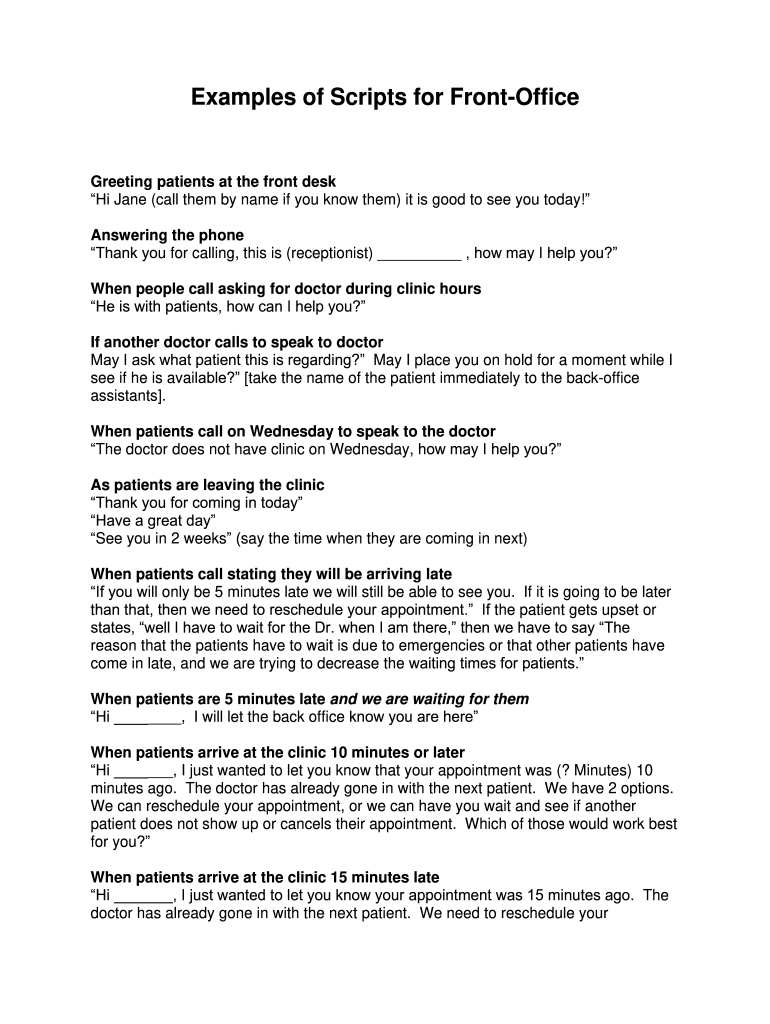







Definition & Meaning of Receptionist Script Sample
A receptionist script sample refers to a predefined set of guidelines or dialogues used by receptionists to communicate effectively with visitors and callers. These scripts help ensure that interactions are consistent, professional, and aligned with the organization’s procedures. The scripts can cover various scenarios, such as greeting visitors, answering phone calls, scheduling appointments, and handling inquiries. The primary goal is to enhance the customer experience by providing clear communication and establishing a welcoming environment.
Key Components of a Receptionist Script
- Greeting: An initial warm and professional welcome to callers and visitors.
- Information Gathering: Questions to collect necessary details, such as the visitor's name, purpose, or who they are visiting.
- Transfer or Redirecting Calls: Guidelines on how to transfer calls to the appropriate department or staff member.
- Appointment Scheduling: Procedures for checking availability and confirming appointments.
- Resolving Inquiries: Scripts for responding to common questions or directing the visitor to the right resources.
These components fit into various industry contexts, such as medical offices, hotels, and corporate environments, each tailored to the specific needs of the organization.
How to Use the Receptionist Script Sample Effectively
Utilizing a receptionist script sample can significantly improve the efficiency and effectiveness of front-office communication. To implement a script effectively:
- Familiarization: Receptionists should thoroughly read and understand the script to become comfortable with its contents.
- Role-Playing: Regular practice through role-playing scenarios can help receptionists become adept, especially in handling difficult situations.
- Customization: Tailoring the script to reflect the organization’s specific needs and tone helps maintain authenticity in interactions.
- Feedback Collection: Encourage receptionists to provide feedback on the script, identifying areas for improvement or additional scenarios that may not be addressed.
- Continuous Training: Periodic training sessions can help reinforce the script's content and introduce updates based on operational changes or new policies.
By following these steps, receptionists can foster effective communication that enhances customer satisfaction and operational efficiency.
Examples of Using the Receptionist Script Sample
Receptionist script samples can vary significantly based on the industry and the specific duties of the receptionist. Here are several examples showcasing how these scripts can be used in different scenarios:
Medical Receptionist Script Example
- Greeting Patients: "Good morning! Thank you for calling [Clinic Name]. This is [Your Name]. How can I assist you today?"
- Appointment Scheduling: "I’d be happy to help you schedule an appointment. May I have your name and the reason for your visit?"
Hotel Receptionist Script Example
- Checking in Guests: "Welcome to [Hotel Name]! Can I please have your name for the reservation?"
- Handling Inquiries: "Yes, our breakfast hours are from 6:30 AM to 10:00 AM. Is there anything else I can help you with during your stay?"
Corporate Receptionist Script Example
- Guiding Visitors: "Hello! Welcome to [Company Name]. Who are you visiting today?"
- Directing Calls: "I'd be happy to connect you with [Name]. One moment, please."
These examples illustrate how tailored scripts can facilitate smooth interactions in various environments while ensuring a consistent and professional approach to communication.
Important Terms Related to Receptionist Script Sample
Understanding key terminology is essential to effectively use a receptionist script sample. The following are some fundamental terms:
- Call Transfer: The process of redirecting a phone call from one extension to another.
- Appointment Management: The scheduling and coordination of visits to ensure effective use of time and resources.
- Customer Relationship Management (CRM): Systems or software used to manage interactions with clients and customers.
- Scripts: Predefined dialogues guiding communication in specific scenarios.
- Professional Etiquette: The expected behavior and communication style in a business setting.
Grasping these terms enhances comprehension of the script's application and the overall communication process.
Who Typically Uses the Receptionist Script Sample
Receptionist script samples are widely used across various sectors, depending on the nature of the business and the role of the receptionist. Common users include:
- Medical and Dental Offices: For greeting patients and managing appointments.
- Hotels and Hospitality Businesses: To check in guests and respond to inquiries.
- Corporate Offices: For managing calls, directing guests, and providing information to employees and clients.
- Real Estate Offices: To facilitate initial conversations with potential clients and book property tours.
- Legal Practices: For answering calls related to consultations and managing the scheduling of meetings.
Each of these sectors has unique requirements that dictate the specifics of the scripts to ensure relevancy and efficiency.


Steps to Complete the Receptionist Script Sample
Completing a receptionist script sample involves several structured steps to ensure it meets the needs of the organization and is functional for day-to-day operations:
- Identify Key Scenarios: Determine common situations that receptionists encounter, such as phone inquiries, visitations, or appointment scheduling.
- Draft Template Responses: Create scripts that address each identified scene, using clear and professional language.
- Review for Clarity and Brevity: Ensure each script is concise, avoiding overly complex terminology.
- Test the Scripts: Conduct trial runs with staff to gather insights on the practicality and effectiveness of the scripts.
- Revise as Necessary: Incorporate feedback and make adjustments to enhance clarity, tone, and effectiveness.
- Implement Training Sessions: Provide training on the new scripts to all relevant staff, ensuring everyone is comfortable and prepared.
This systematic approach helps in developing a robust receptionist script sample that is valuable for enhancing customer interactions.




