




01. Edit your tenancy agreement england and wales f301 pdf online
Type text, add images, blackout confidential details, add comments, highlights and more.

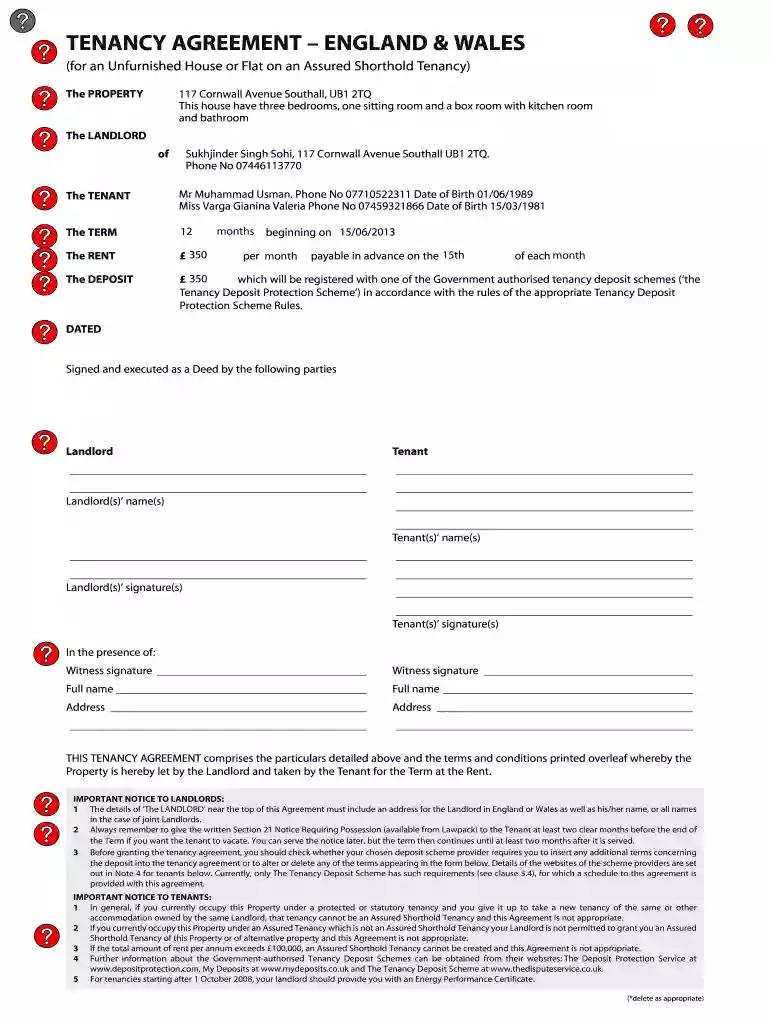
Type text, add images, blackout confidential details, add comments, highlights and more.

Draw your signature, type it, upload its image, or use your mobile device as a signature pad.

Send tenancy agreement england and wales pdf free download via email, link, or fax. You can also download it, export it or print it out.
A tenancy agreement in England and Wales is a legally binding contract between a landlord and tenant that outlines the terms under which a property is rented. This document is essential for protecting the rights of both parties and clarifies their obligations throughout the rental period. Typically, tenancy agreements fall under two main categories: Assured Shorthold Tenancies (AST) and Assured Tenancies, with ASTs being the most common type for residential rentals.
Key components often included in a tenancy agreement are:
Understanding these elements is crucial for all parties involved to ensure compliance with legal standards and avoid disputes.
Obtaining a tenancy agreement in England and Wales can be done through several methods. Whether you're a landlord or a tenant, various resources can provide a suitable document in PDF format.
Online Templates: Websites that focus on legal documents often have printable PDF templates available for download. These templates can be customized to meet individual needs.
Legal Professionals: Engaging a solicitor is a reliable method to ensure the agreement is legally sound. They can provide a bespoke tenancy agreement tailored to specific requirements.
Local Authorities: Some councils offer tenancy agreements or guidelines, particularly for social housing situations.
Property Management Firms: If you are renting through an agency, they typically provide a tenancy agreement as part of their services.
Standardized Forms: Certain organizations may offer standardized tenancy forms that meet legal requirements, including the Assured Shorthold Tenancy agreement.
It is recommended to confirm that the source of the tenancy agreement complies with current regulations to avoid any legal pitfalls.
Completing a tenancy agreement involves several steps, ensuring that all necessary information is accurately captured. Below is a comprehensive guide to navigate the process:
Download the Template: Acquire the tenancy agreement PDF from a reliable source. Ensure it aligns with your specific needs (e.g., AST or Assured Tenancy).
Fill in Property Information: Clearly state the property address, including room numbers if applicable, and describe whether the property is furnished or unfurnished.
Enter Tenant and Landlord Details: Provide full names and contact information for both the landlord and all tenants involved.
Specify Tenancy Duration: Clearly outline the start date and the end date of the tenancy. If it is a rolling tenancy, specify notice periods for vacating.
State the Rent Terms: Fill in the agreed rental amount, the frequency of payments (monthly or weekly), and the payment due date. Include information about acceptable payment methods.
Deposit Breakdown: Indicate the amount of the security deposit, how it will be protected (e.g., a government-approved scheme), and conditions for its return.
Obligations and Responsibilities: Clearly outline the responsibilities of both the landlord (maintenance, repairs) and tenants (keeping the property clean, notifying landlords of issues).
Signatures: Ensure that all parties sign the agreement, dating it to mark the official start of the contract.
By following these steps meticulously, both parties can avoid misunderstandings and ensure a smoother rental experience.
Familiarity with common terminology related to tenancy agreements is crucial for understanding rights and responsibilities. Here are key terms often referenced:
Assured Shorthold Tenancy: The most common type of residential tenancy in England and Wales, allowing landlords to regain possession of their property after a fixed term easily.
Tenancy Deposit Protection (TDP): A legal requirement for landlords to protect tenant deposits in a government-approved scheme, ensuring return upon agreement completion.
Notice Period: The time frame specified in the agreement that must be adhered to when a party wishes to terminate the lease.
Inventory: A detailed list of the property's contents and their condition, usually created at the start of the tenancy to avoid disputes over damages.
Guarantor: An individual who agrees to cover rent payments if a tenant defaults; often necessary for tenants with insufficient credit history or income.
Understanding these terms will significantly benefit both landlords and tenants, facilitating clearer negotiations and expectations.
A well-structured tenancy agreement should encompass essential elements that protect the interests of both landlords and tenants. Key elements to include are:
Property Description: Detailed information regarding the rental unit, including boundaries and amenities.
Tenancy Dates: Clearly defined start and end dates, along with specific conditions for renewal or termination.
Rent Details: Comprehensive information regarding the rent amount, payment intervals, and methods accepted.
Utilities and Services: Clarity on which utilities (e.g., electricity, water, internet) are included in the rent and which are the tenant's responsibility.
Repair and Maintenance Obligations: Responsibilities concerning property maintenance, repairs, and who to contact regarding issues.
Governing Law: Statement indicating that the agreement falls under the jurisdiction of England and Wales, ensuring both parties understand the applicable laws.
By incorporating these elements, the tenancy agreement serves as a thorough guide to expectations, helping to minimize disputes.
Practical examples of how tenancy agreements function can clarify their use in different contexts. Below are scenarios that demonstrate common applications:
Standard Residential Lease: A landlord rents out a two-bedroom flat in London. The tenancy agreement includes details specifying that rent is due monthly, with a security deposit held under a TDP scheme.
Student Accommodation: A student renting a room in a shared house in Cardiff may have a tenancy agreement that allows for shorter-term contracts, adjusting rental amounts during academic breaks.
Family Renting a House: A family relocating from another region may enter into a tenancy agreement detailing their responsibilities regarding garden maintenance and the procedures to follow for repairs.
These examples illustrate the versatility and specificity that tenancy agreements can provide in various renting situations. Understanding these contexts will aid both landlords and tenants in effectively utilizing their agreements.
Tenancy agreements in England and Wales are governed by several legal regulations that ensure fairness and clarity in rental relationships. Key legal aspects include:
Housing Act 1988: This establishes the framework for assured and assured shorthold tenancies, outlining the rights of tenants while also setting boundaries for landlords.
Deposit Protection Legislation: Mandates that landlords securely hold tenant deposits in a government-approved scheme, offering protection against unfair retention of funds at the end of a tenancy.
Consumer Rights Act 2015: Emphasizes clarity in contracts, requiring tenancy agreements to be written in plain English to ensure tenants fully understand their rights and obligations.
Landlord and Tenant Act 1985: Addresses landlord obligations for property maintenance and the provision of services, detailing tenants' rights for asserting repair demands.
Understanding these legal frameworks is vital for ensuring that both landlords and tenants act within the law, minimizing risks and enhancing protection for both parties.
These components collectively enhance comprehension of tenancy agreements within the context of England and Wales, facilitating smoother rental experiences while ensuring legal compliance.
At DocHub, your data security is our priority. We follow HIPAA, SOC2, GDPR, and other standards, so you can work on your documents with confidence.


Law of England and Wales. Including the United Kingdom as a whole and the common-law system (Anglo-American law) in general. Bibliography.Read more
4 days ago You can find free UK tenancy agreement templates in PDF format from official government websites like GOV.UK, reputable legal sites, and housingRead more
This WELL Building Standard version 1 (WELL v1) constitutes proprietary information of the International WELL. Building Institute pbc (IWBI).Read more


