




01. Edit your cash shortage write up example online
Type text, add images, blackout confidential details, add comments, highlights and more.

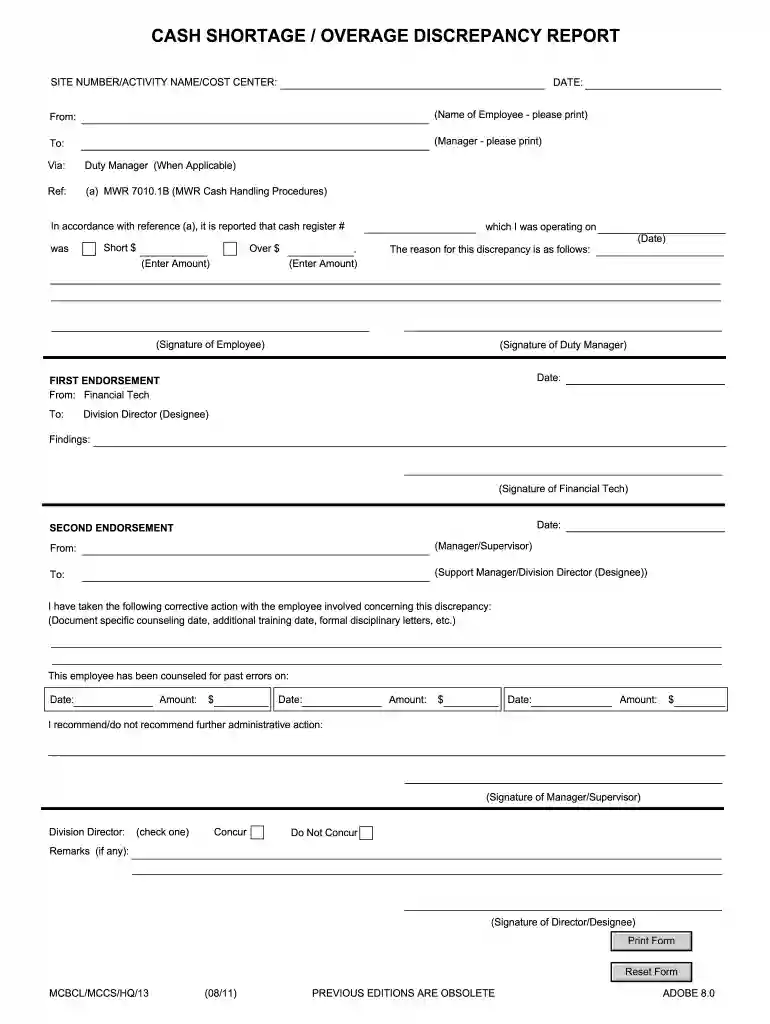
Type text, add images, blackout confidential details, add comments, highlights and more.

Draw your signature, type it, upload its image, or use your mobile device as a signature pad.

Send cash shortage report sample via email, link, or fax. You can also download it, export it or print it out.
A cash shortage refers to a situation where the actual cash available in a cash register or cash drawer is less than the expected or recorded amount. This discrepancy can arise due to various factors, including errors in cash handling, miscalculations, theft, or misreporting. Understanding the definition is critical for businesses as it directly impacts their financial health and operational integrity.
The reasons behind cash shortages can be varied and may include:
Reporting a cash shortage involves following a structured approach to ensure all discrepancies are documented. The process typically includes:
A comprehensive cash discrepancy report is essential for clear communication and accurate record-keeping. Key elements typically include:
Understanding the scenarios that frequently lead to cash shortages can aid in prevention:
Businesses should focus on:
Composing an explanation letter for cash shortages is vital when addressing stakeholders or upper management. The letter should include:
While handling cash shortages, it is important to be aware of legal compliance regarding financial reporting and employee accountability. Companies must ensure:
This comprehensive approach to cash shortages not only assists in resolving current discrepancies but also works toward mitigating future occurrences.
We've got more versions of the cash shortage write up example form. Select the right cash shortage write up example version from the list and start editing it straight away!
| Versions | Form popularity | Fillable & printable |
|---|---|---|
| 2011 | 4.8 Satisfied (120 Votes) |
At DocHub, your data security is our priority. We follow HIPAA, SOC2, GDPR, and other standards, so you can work on your documents with confidence.
(1) Prior period amounts have been revised to reflect the cash flow amounts reported in the Companys Annual Report on Form 10-K for the year ended December 31,Read more
Jun 4, 2012 The Division of Local Government Audit has prepared the enclosed schedules of cash shortages and other thefts and judicial actions reportedRead more
Feb 16, 2022 Individual shortages or overages of $20 or more or cumulative annual shortages or overages of $40 or more must be reported immediately toRead more


