







Understanding the Shelltime 4 Charter Party Agreement
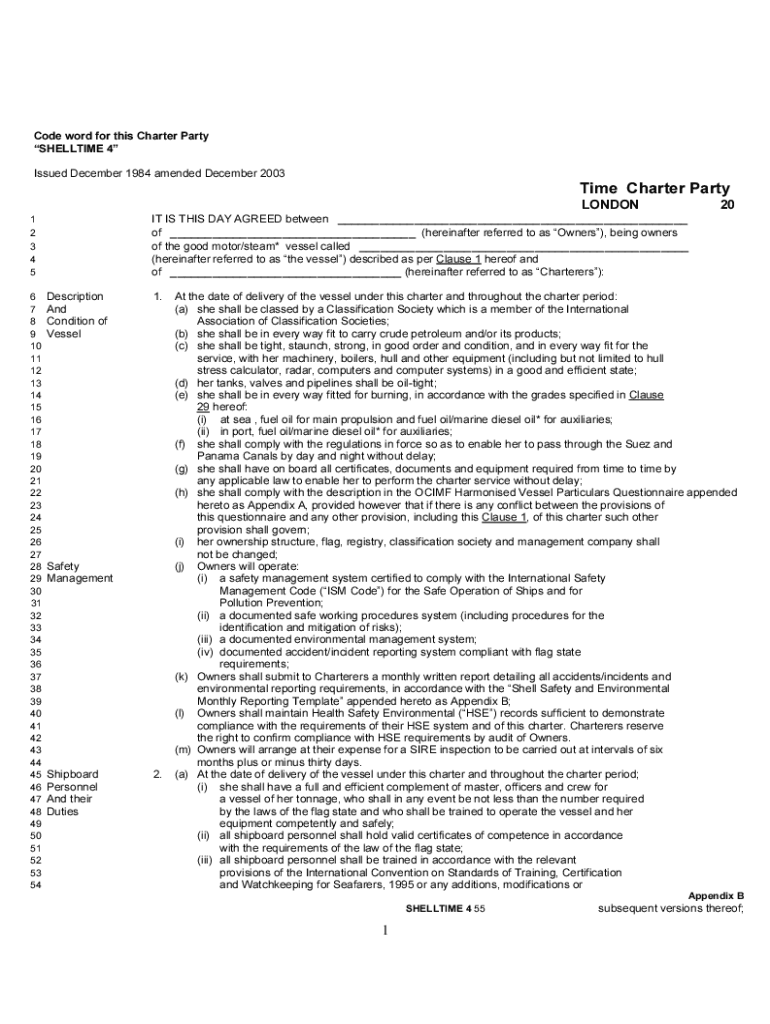
The Shelltime 4 charter party agreement is a comprehensive document fundamental to the maritime industry. Issued in December 1984 and amended in December 2003, it outlines the terms under which vessel Owners agree to charter their vessel to Charterers. The agreement serves to protect the interests of both parties, ensuring clarity and compliance with industry regulations.
Key Provisions of the Shelltime 4 Agreement
The Shelltime 4 document specifies several critical provisions:
- Vessel Condition: It outlines the expected condition of the vessel at the start of the charter and the responsibilities of the Owners in maintaining that condition throughout the duration of the charter.
- Safety Management: The agreement emphasizes adherence to safety standards and regulations, crucial for the protection of crew and cargo.
- Crew Requirements: This section details the qualifications and responsibilities expected from the vessel's crew, ensuring that the charter aligns with industry practices.
- Operational Costs: Responsibilities for fuel, maintenance, and other operational costs are clearly delineated, outlining which party bears these expenses.
- Payment Details: It specifies payment procedures and timelines to ensure that all financial obligations are transparent and agreed upon.
- Inspections and Compliance: Procedures for inspections and regulatory compliance are detailed, ensuring the vessel remains compliant with maritime law throughout the charter term.
Liability and Insurance Considerations
The Shelltime 4 agreement addresses significant liability issues and outlines insurance requirements essential for mitigating risks during the charter. Key elements include:
- Indemnification Clauses: These clauses protect one party from losses incurred due to the negligence of the other party, a vital component for risk management.
- Insurance Obligations: The document may specify minimum insurance coverage requirements, ensuring that both parties are financially protected against potential liabilities during the charter period.
- Emergency Protocols: Procedures for handling emergencies, such as accidents or equipment failures, are included to provide clear action steps for both parties.
Incorporating Modern Technology in Maritime Agreements
Modern advancements in technology have influenced how agreements like Shelltime 4 are managed and executed. Digital document platforms, such as DocHub, facilitate the editing, signing, and sharing of such agreements seamlessly. Key benefits include:
- Ease of Access: Users can manage documents from any device without needing specialized software, enabling more efficient workflows.
- Enhanced Security: Digital signatures and encrypted document transfers enhance security compared to traditional paper methods.
- Real-Time Collaboration: Multiple users can collaborate on the document simultaneously, speeding up the review and approval process.
The Importance of Signature Provisions
Legally binding signatures are essential in the Shelltime 4 agreement, ensuring that both parties acknowledge and accept the terms. Various methods for signing may include:
- Digital Signatures: Allowing parties to sign electronically streamlines the process and ensures compliance with legal standards under the ESIGN Act.
- Handwritten Signatures: Some may prefer traditional methods; therefore, providing the option to upload images of handwritten signatures can be valuable.
- Signature Sequence: If multiple signers are required, the document can specify the sequence in which parties must sign, thereby organizing the signing process efficiently.
Practical Applications of Shelltime 4
Real-world applications of the Shelltime 4 agreement vary but often occur in charter agreements for bulk carriers, tankers, and container vessels. Understanding its clauses can help parties effectively negotiate terms and avoid disputes. Examples include:
- Bulk Cargo Transportation: Chartering a vessel for transporting raw materials, where adherence to specified maintenance conditions is critical for cargo safety.
- Time Charters: Engaging vessels over fixed periods can influence financial planning, emphasizing the importance of precise payment terms outlined in the Shelltime 4 agreement.
- Frequent Inspections: Industries reliant on strict compliance for safety may require regular inspections, making the contractual obligations clear to both vessel Owners and Charterers.
The Shelltime 4 charter party agreement serves as a vital reference for parties engaged in maritime contracts, promoting clarity and facilitating smoother business operations within this intricate industry. Understanding its various components ensures that all parties are prepared to meet their obligations under U.S. maritime law.




