







Definition and Importance of Academic WIGs
The Academic WIG, or Wildly Important Goal, is a focused approach designed to help students or educational organizations prioritize their most crucial objectives within an academic framework. In an era of information overload and competing priorities, defining a clear WIG can assist students and educators in channeling their efforts towards impactful outcomes. The essence of an Academic WIG lies in its ability to clarify goals that significantly influence academic performance and personal development.
An Academic WIG typically includes:
- Specificity: The goal must be clear and unambiguous.
- Measurable Outcomes: It should have criteria that allow for assessment of progress.
- Significance: The goal should have a meaningful impact on overall academic success.
For example, a high school student might establish an Academic WIG to improve their mathematics grade by ten percent over the semester. This goal is specific (improvement in mathematics), measurable (a ten percent increase), and significant (potential to affect overall academic performance).
Elements of a Successful Academic WIG Template
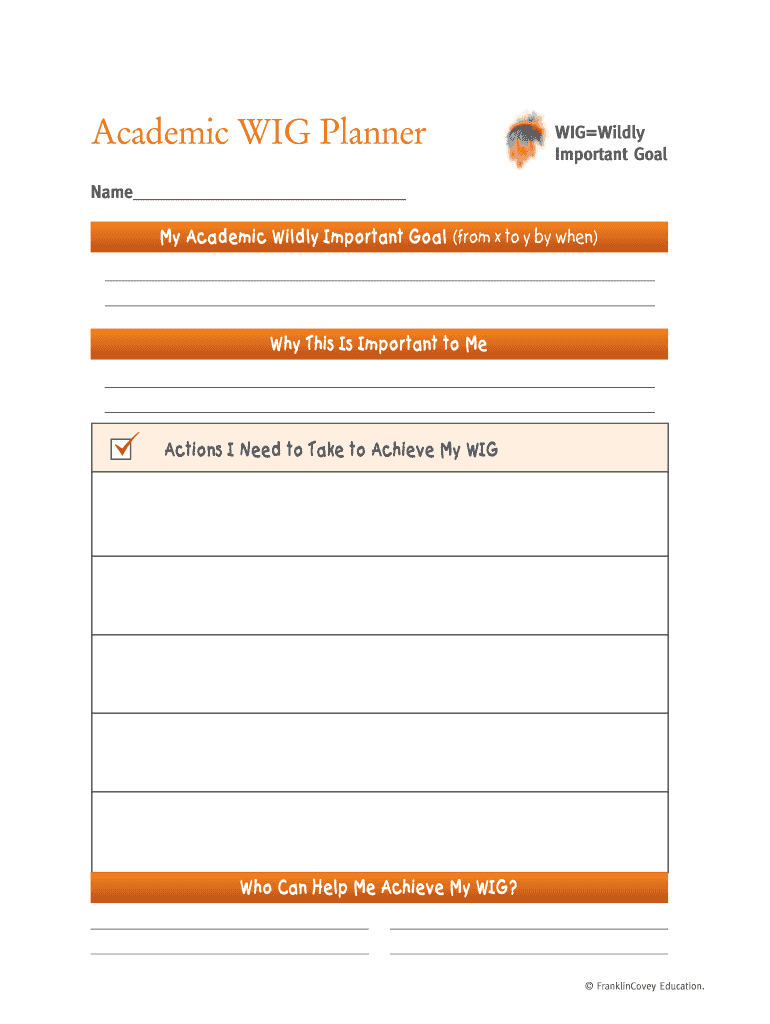
To effectively establish an Academic WIG, a structured template can help in organizing thoughts and plans. A well-designed Academic WIG template will encompass several critical components:
- Goal Definition: Clearly articulate the goal in one or two sentences.
- Reason for Importance: Explain why this goal is vital for your academic success.
- Action Steps: List specific actions required to achieve the goal.
- Resource Identification: Identify who or what can assist in accomplishing the goal, such as teachers, tutors, or study materials.
- Timeline: Establish deadlines or milestones to monitor progress.
Using the previous example, the template might look as follows:
- Goal: Increase my math grade by ten percent.
- Importance: A higher grade will improve my overall GPA and open up college options.
- Action Steps:
- Attend all math classes.
- Meet with a tutor twice a week.
- Complete all homework on time.
- Resources: Math tutor, online resources, study groups.
- Timeline: Assess grade monthly to ensure I am on track.
Steps for Implementing an Academic WIG
The implementation of an Academic WIG involves a systematic approach. Following these steps ensures that the goal remains prioritized and achievable:
- Identify Your WIG: Use the template to clarify your wildly important goal.
- Communicate: Share your goal with trusted individuals, such as teachers or family members, to create an accountability structure.
- Develop an Action Plan: Break down the steps necessary to achieve the WIG into manageable tasks that can be taken weekly or monthly.
- Monitor Progress: Regularly review your performance against your timeline and actions to ensure you remain focused.
- Adjust as Necessary: If you find that progress is slow or barriers arise, be open to modifying your action plan.
For instance, if the student experiences difficulty with a specific math concept, they may need to adjust the action plan to include additional resources or practice.
Examples of Wildly Important Goals in Academia
Here are some practical examples of Academic WIGs that various students might pursue:
- College Preparation: A senior aiming to increase their SAT score by two hundred points within three months to enhance college admission chances.
- Course Completion: A graduate student targeting the completion of a major research project by the end of the year to satisfy graduation requirements.
- Skill Development: A student aiming to enhance their public speaking skills through participation in two local debate competitions over the semester.
These examples demonstrate how Academic WIGs can span across different educational levels and priorities, tailoring specific goals based on individual circumstances.
Benefits of Using an Academic WIG Template
The use of an Academic WIG template offers multiple benefits for students and educators alike:
- Enhanced Focus: By concentrating on a limited number of significant goals, individuals can channel their energy where it counts the most.
- Clarity in Actions: The structured nature of a template provides clear guidance on necessary actions, reducing confusion and procrastination.
- Increased Accountability: Sharing the goals and action plans increases accountability through the involvement of peers and family members.
In practical scenarios, a student who establishes a WIG and actively engages with an accountability partner, such as a mentor or fellow student, is more likely to stay committed to their goals.
Resources for Tracking Academic WIG Progress
Maintaining a systematic approach to tracking progress is crucial for achieving academic goals. Utilizing various resources can facilitate this process:
- Digital Tools: Platforms such as Google Sheets or project management software can organize tasks and deadlines effectively.
- Journals and Planners: A dedicated academic planner or journal helps in documenting daily progress and reflections.
- Regular Check-Ins: Scheduling regular intervals for personal reflection or discussions with educators can further enhance commitment to the WIG.
For example, a student may keep a digital log of their study hours and coursework completion, allowing them to visualize their dedication and identify areas needing improvement.




