
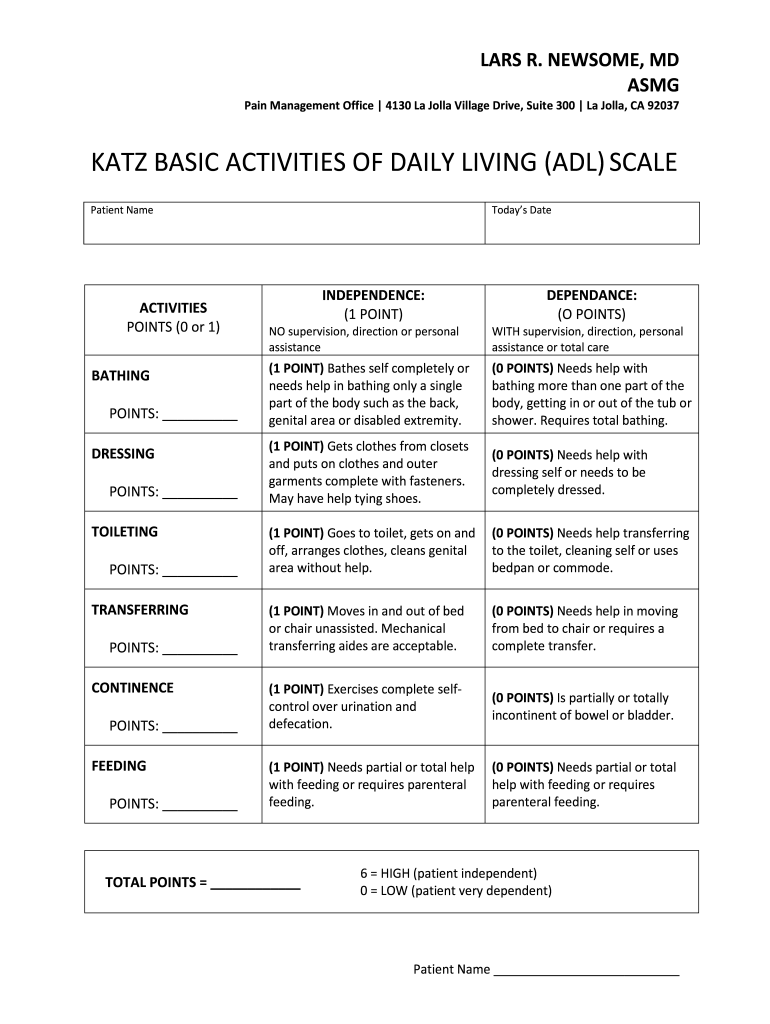







Definition and Meaning of the Katz ADLs Scale
The Katz ADLs scale is a widely used assessment tool designed to evaluate an individual's ability to perform basic activities of daily living (ADLs). This scale is essential for determining a person's level of independence in crucial self-care functions, such as bathing, dressing, toileting, transferring, continence, and feeding. Each activity is scored based on the level of assistance required, providing a standardized method to gauge overall independence.
- Bathing assesses the ability to wash oneself in a bathtub or shower.
- Dressing measures the capability to select appropriate clothing and dress without assistance.
- Toileting examines the ability to use the toilet and maintain hygiene.
- Transferring evaluates how well an individual can move in and out of bed or a chair.
- Continence gauges the ability to control bladder and bowel functions.
- Feeding measures the capacity to feed oneself without help.
The total score derived from these activities reflects the individual’s functional capability and helps health care providers make informed decisions regarding care plans, services, and interventions.
How to Use the Katz ADLs Scale
Utilizing the Katz ADLs scale involves a straightforward process that health care professionals can follow to assess an individual’s functional status. This structured approach ensures clarity and consistency in evaluating the ability to perform daily living activities.
- Preparation: Gather necessary information about the individual’s health history, current living situation, and any prior assessments.
- Direct Observation: Observe the individual performing each of the six ADLs when possible. This provides a real-world context for assessment.
- Scoring: After evaluating each activity, assign scores based on the individual's level of independence. Typically, a score of one is given if the individual can perform the activity independently and zero if they cannot.
- Total Calculation: Sum the scores from all activities to derive a total Katz ADLs score, ranging from zero to six.
- Interpretation: Analyze the total score to determine the individual's level of independence. A higher score indicates greater independence and less need for assistance.
This assessment should be repeated periodically to track changes in an individual's functional abilities over time.
Steps to Complete the Katz ADLs Scale
Completing the Katz ADLs scale involves several methodical steps that ensure thorough evaluation of an individual's functional capabilities. This structured format requires health professionals to adhere closely to the outlined process.
- Identify the Individual: Ensure that the right person is being assessed, typically older adults or individuals with disabilities.
- Explain the Process: Inform the individual about the purpose of the assessment and how it will be conducted to foster cooperation.
- Conduct the Assessment: Methodically assess each of the six activities:
- Observe the individual performing bathing, dressing, toileting, transferring, continence, and feeding.
- If observation is not feasible, gather information through interviews with caregivers or family members.
- Score Each Activity: Use the following scoring system:
- Score one (1) for independence.
- Score zero (0) for dependence.
- Calculate the Total Score: Add the scores from all activities to derive the total score.
- Documentation: Record the findings clearly, noting any relevant observations that could inform future assessments or care plans.
Following these steps ensures that the Katz ADLs scale is used effectively to gauge an individual’s level of independence.
Important Terms Related to the Katz ADLs Scale
Understanding terminology associated with the Katz ADLs scale enhances clarity in both assessment and interpretation. Familiarity with these terms facilitates effective communication among health care providers and patients.
- Activities of Daily Living (ADLs): Basic self-care tasks essential for living independently.
- Katz Index: Another name for the Katz ADLs scale, reflecting its origin as developed by Dr. Sidney Katz.
- Scoring: The method of evaluating each activity's performance level.
- Independence: The capacity to perform daily activities without assistance.
- Dependence: The need for help to perform certain self-care tasks.
- Functional Assessment: The process of evaluating an individual’s ability to perform ADLs.
These terms are crucial for health care providers when discussing assessments, care plans, and patient interactions regarding daily living skills.
Examples of Using the Katz ADLs Scale
The Katz ADLs scale is applied in various clinical and home settings to evaluate the functional ability of individuals. Real-life scenarios illustrate the practical application of this assessment tool.
- Geriatric Assessments: In nursing homes, staff routinely use the Katz ADLs scale to determine residents' needs for assistance in personal care. For instance, an elderly resident who scores low on dressing may be identified for additional support or adaptive clothing.
- Home Care Evaluations: Home health aides utilize the Katz scale to assess new clients. If a client struggles with transferring, the agency might recommend mobility aids or additional caregiver support to enhance independence.
- Rehabilitation Settings: Physical therapists employ the Katz ADLs scale to measure progress in patients recovering from surgery or illness. Improvements in the total score over time can indicate effective rehabilitation strategies.
- Discharge Planning: Hospitals often incorporate the Katz scale into discharge planning. Patients with low scores may require home health services or adaptive equipment to promote safety and independence upon returning home.
These examples highlight the versatility of the Katz ADLs scale in diverse contexts, emphasizing its significance in assessment and care planning.
Legal Use of the Katz ADLs Scale
The Katz ADLs scale not only serves as a functional assessment tool but also holds legal implications in various contexts, particularly in health care and elder law. Understanding the legal aspects surrounding its use is essential for compliance and ethical practice.
- Documentation Requirements: Health care providers must accurately document the Katz ADLs assessment results in patient records to ensure compliance with legal standards and to support reimbursement claims from insurance providers.
- Care Plans: Incorporating the Katz scale in care plans can aid in establishing the appropriate level of care and ensuring that all needs are addressed legally and ethically.
- Liability Considerations: Accurate assessments protect health care providers from potential liability issues. In cases where individuals are mistreated or neglected due to inaccurate assessments, documentation of the Katz ADLs scale can provide critical evidence in legal proceedings.
- Insurance and Funding: The Katz ADLs scale often influences eligibility for long-term care insurance benefits and government funding programs. Proper use and documentation of the scale can enhance access to necessary supports and services.
Understanding the legal implications surrounding the use of the Katz ADLs scale emphasizes the importance of thorough and accurate assessments in various professional contexts.




