
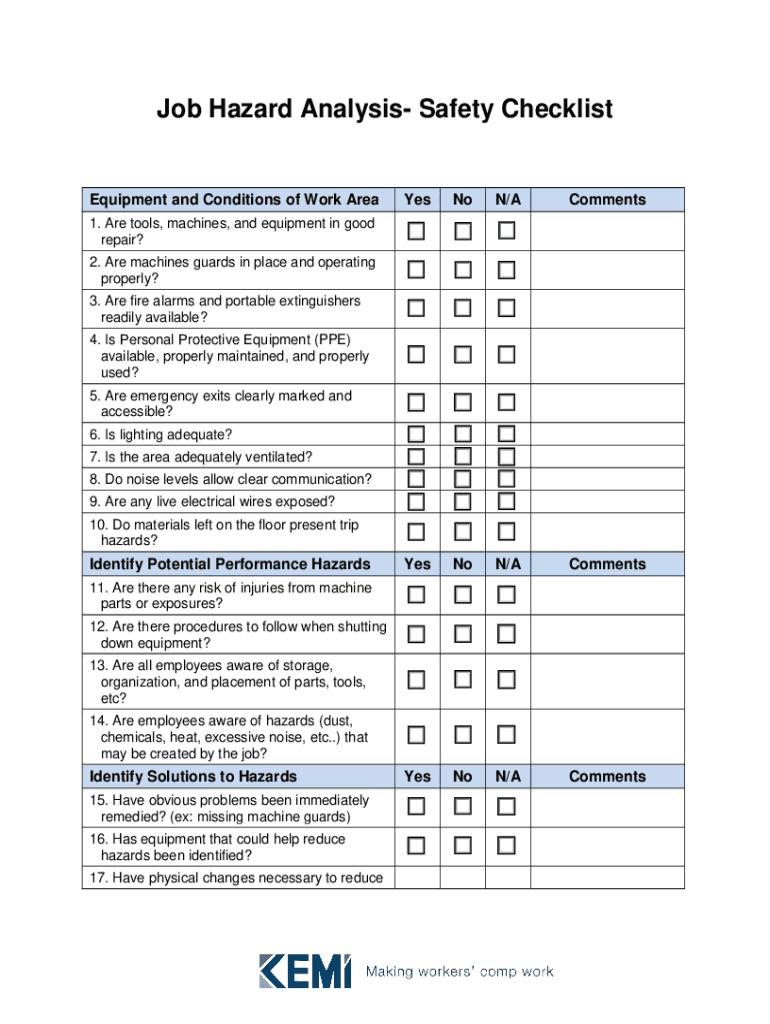







Definition and Meaning of Job Hazard Analysis Checklist
The Job Hazard Analysis Checklist is a systematic tool used to identify and evaluate potential hazards in the workplace. By focusing on specific tasks, this checklist helps assess the safety conditions of a work area. It is designed to enhance safety protocols by determining what hazards exist, their potential impact, and the necessary measures to mitigate those risks. A well-structured job hazard analysis (JHA) can guide the implementation of effective safety practices and promote a safer working environment.
Users of a job hazard analysis checklist typically include safety officers, supervisors, and employees across various sectors, such as construction, manufacturing, and healthcare. The checklist addresses various topics like equipment maintenance, personal protective equipment (PPE), emergency preparedness, and the management of performance hazards. Each item on the checklist serves to facilitate a thorough review of safety measures in place and to highlight areas needing attention.
How to Use the Job Hazard Analysis Checklist
Utilizing the Job Hazard Analysis Checklist involves several key steps to ensure an effective evaluation of workplace safety. Begin by selecting the specific job or task that needs assessment. Once the task is chosen, follow these steps:
- Identify Potential Hazards: Go through the checklist section by section, noting potential hazards such as falls, equipment malfunctions, exposure to harmful substances, or ergonomic risks.
- Assess Risk Levels: For each identified hazard, evaluate its potential severity and likelihood of occurrence. This helps prioritize which hazards require immediate attention.
- Implement Control Measures: Recommend appropriate control measures for each identified hazard. These may include engineering controls, administrative controls, PPE, or training requirements.
- Document Findings: Record the results of the analysis, including identified hazards, recommended actions, and responsible individuals for implementing safety measures.
- Review and Update: Regularly revisit the checklist to ensure it reflects current practices and conditions. Continual updates help maintain an effective safety program.
The checklist is designed for flexibility and can be customized according to specific job requirements and company policies.
Steps to Complete the Job Hazard Analysis Checklist
Completing the Job Hazard Analysis Checklist requires a systematic approach to ensure comprehensive coverage. The following steps outline the process:
- Gather Required Information: Collect all necessary documentation related to the job, including the task description, safety protocols, and previous analysis reports.
- Conduct a Walk-through: Observe the work environment to gain insight into the tasks performed. This allows for identifying hazards that may not be documented.
- Engage Employees: Involve workers who perform the tasks regularly. Their firsthand experience can offer valuable insights into hazards and potential solutions.
- Analyze Each Job Task: Break down the job into steps and assess risks associated with each step. This granular approach helps uncover specific hazards that may be overlooked during a broader assessment.
- Determine Control Measures: For each identified hazard, recommend control measures. Consider the hierarchy of controls, starting with elimination and moving down to PPE as a last resort.
- Finalize and Distribute the Checklist: Complete the JHA checklist and distribute it to relevant stakeholders. Ensure that all workers understand the findings and action items.
Key Elements of the Job Hazard Analysis Checklist
Understanding the key elements of the Job Hazard Analysis Checklist is crucial for its effective implementation. The main components include:
- Job Description: Provides a clear overview of the task being analyzed.
- Hazard Identification: Lists potential hazards in the workplace, including physical, chemical, biological, and ergonomic risks.
- Risk Assessment: Evaluates and categorizes hazards based on severity and likelihood.
- Control Measures: Details recommended practices and procedures to mitigate identified risks.
- Employee Training: Outlines necessary training programs to ensure employees are aware of safety practices.
- Follow-up Actions: Specifies actions to be taken after the analysis, including timelines and responsible parties.
A focus on each of these elements ensures that the Job Hazard Analysis Checklist serves as a robust resource for advancing workplace safety.
Important Terms Related to Job Hazard Analysis Checklist
Familiarity with specific terminology related to the Job Hazard Analysis Checklist enhances its effective use. Key terms include:
- Hazard: A condition that has the potential to cause harm.
- Risk: The likelihood that a hazard will cause harm and the potential severity of that harm.
- Control Measures: Strategies or practices implemented to reduce or eliminate risk.
- PPE (Personal Protective Equipment): Equipment worn to reduce exposure to hazards that can cause injury or illness.
- Job Safety Analysis (JSA): A process similar to JHA, focusing on identifying hazards related to specific jobs within the workplace.
Understanding these terms helps ensure clarity and precision in completing and implementing the Job Hazard Analysis Checklist.




