Decisional balance worksheet 2026

Get Form
decisional balance worksheet Preview on Page 1

Here's how it works

01. Edit your decisional balance worksheet online
Type text, add images, blackout confidential details, add comments, highlights and more.

02. Sign it in a few clicks
Draw your signature, type it, upload its image, or use your mobile device as a signature pad.

03. Share your form with others
Send decisional balance worksheet pdf via email, link, or fax. You can also download it, export it or print it out.

Definition and Meaning of the Decisional Balance Worksheet

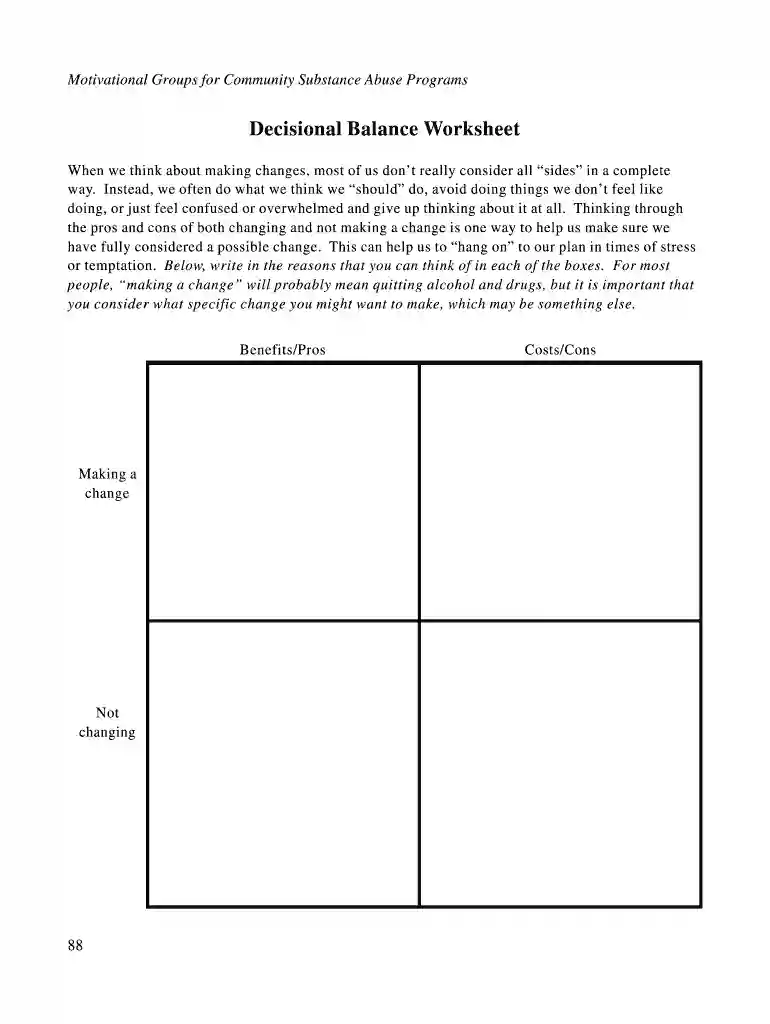
A decisional balance worksheet is a structured tool that helps individuals evaluate the advantages and disadvantages of making a specific change in their lives. This worksheet is particularly effective in contexts related to behavioral change, such as addressing substance use, improving health habits, or enhancing personal and professional goals. The concept is rooted in motivational interviewing, whereby individuals are prompted to think critically about their choices, weighing the benefits of change against the costs of remaining in their current situation.

The worksheet typically includes two primary sections: one for listing the pros of making the change and another for outlining the cons. By systematically assessing these factors, users can gain clarity on their motivations, enabling them to make more informed decisions. This process can also facilitate discussions in therapeutic settings, providing a visual representation of the individual's thoughts and feelings about the proposed change.

How to Use the Decisional Balance Worksheet

Utilizing the decisional balance worksheet involves several straightforward steps that facilitate thoughtful reflection. This process can be beneficial for individuals, therapists, and coaches seeking clarity on behavioral changes.

  1. Identify the Change: Begin by clearly stating the specific behavior or decision you are contemplating. This could be as simple as deciding to eat healthier or more complex, such as considering a major career shift.

  2. Complete the Pros and Cons Sections:

    • Pros: List all the reasons why making this change would be beneficial. Consider both short-term and long-term benefits, including emotional, physical, and social aspects.
    • Cons: Similarly, document the potential drawbacks of making this change. This could include things like fear of failure, potential loss of social connections, or difficulties in initial adjustments.
  3. Evaluate Your Findings: Once both sections are filled out, assess the weight of both lists. Which side has more compelling reasons? Are there any unexpected insights from your evaluation?

  4. Seek Feedback: If applicable, discussing your findings with a therapist or coach can provide additional perspectives and clarify any concerns.

By following these steps, individuals can better understand their motivations and the implications of their decisions.

Steps to Complete the Decisional Balance Worksheet

Completing a decisional balance worksheet involves a structured approach that ensures comprehensive evaluation. Follow these steps for effective use of the worksheet:

  1. Prepare Your Setting: Find a quiet space where you feel comfortable reflecting on your thoughts without distractions.

  2. Define Your Goals:

    • Write down what you hope to achieve by making this change.
    • Understand the parameters of your decision-making process.
  3. List Your Pros:

    • Write down reasons that highlight the benefits of taking action. Include personal feelings, advantages in lifestyle, health improvements, and social benefits.
    • Use bullet points for clarity.
  4. List Your Cons:

    • Document the concerns and risks associated with the change. Consider emotional, financial, and social factors that may influence your decision.
    • Be as honest as possible to ensure an accurate reflection of your feelings and beliefs.
  5. Analyze Your Lists:

    • Compare the weight of each list. If the cons appear to outweigh the pros significantly, consider what changes need to occur to facilitate a healthier balance.
    • Reflect on any insights you've gained during this process.
  6. Decide and Plan Next Steps:

    • Use the insights gathered to decide if you will move forward with the change.
    • If yes, outline the first steps you will take and any resources or support you might need.

Important Terms Related to the Decisional Balance Worksheet

Understanding key terms associated with the decisional balance worksheet can enhance clarity and facilitate more effective use of the tool:

  • Motivational Interviewing: A counseling approach that helps individuals find the motivation to make positive decisions and accomplish their goals.
  • Pros and Cons: The fundamental components of the worksheet, representing the positive aspects and drawbacks of a decision or behavior change.
  • Behavioral Change: The process of altering a specific behavior, often requiring motivation, planning, and support.
  • Self-Reflection: The ability to assess one's own thoughts, feelings, and behaviors, which is essential for using the decisional balance worksheet effectively.
  • Therapist Aid: A resource or tool that mental health professionals might use to assist clients in navigating their thoughts and decisions.

By familiarizing oneself with these terms, users can better engage with the decisional balance worksheet and improve their chances of making informed, conscious decisions.

Examples of Using the Decisional Balance Worksheet

Practical examples illustrate how the decisional balance worksheet can support decision-making in various contexts:

  • Substance Use: An individual contemplating sobriety may use the worksheet to compare the benefits of a healthier lifestyle against the comfort of old habits. Benefits could include improved health and personal relationships, while drawbacks might involve fear of withdrawal and loss of social circles.

  • Career Change: A professional considering a transition to a new field could list the advantages of pursuing a passion, such as greater job satisfaction and fulfillment, alongside the potential risks like financial instability and the need for retraining.

  • Health Goals: Someone looking to improve their fitness might weigh the health benefits, such as increased energy and reduced stress, against the time commitment and potential discomfort of starting a new workout routine.

These examples demonstrate the versatility of the decisional balance worksheet and how it can guide individuals through complex decision-making processes, considering both emotional and practical implications.

be ready to get more

Complete this form in 5 minutes or less

Get form

Got questions?

We have answers to the most popular questions from our customers. If you can't find an answer to your question, please contact us.
Contact us
Step by step: Define the decision: Clarify the decision that needs to be made, and identify the available options. Create the balance sheet: Draw a table or use a flip chart to create a two-column balance sheet. Build the two lists: Brainstorm and list all the potential pros and cons associated with each option. Decision Balance Sheet - Organizational Excellence sc.edu about resources facilitation decision sc.edu about resources facilitation decision
Weighing the pros and cons of changing happens all the timefor example, when changing jobs or deciding to move or get married. One thing that helps people when thinking of changing is to list in one place the benefits and costs of changing or continuing their current behavior. Client Handout 3.1 - Decisional Balance Exercise Nova Southeastern University gsc forms clienthan Nova Southeastern University gsc forms clienthan PDF
The Decisional Balance scale is a 20-item self-report measure that assesses an individuals pros and cons of drinking alcohol and other health behaviors.
The decisional balance is a frequently used motivational strategy, particularly when clients are displaying ambivalence regarding their substance use, and as a useful way of determining their stage of change in regard to their substance use. Decisional balance (good and not so good aspects) Comorbidity Guidelines additional-strategies Comorbidity Guidelines additional-strategies
Decisional Balancing Weighing the pros and cons of changing happens all the time. Examples include changing jobs or deciding to move or get married. You can do the same thing with the costs of changing on one side, and the benefits of changing on the other side. decisional balance | peia PEIA wellnesstools WMP ED-decisi PEIA wellnesstools WMP ED-decisi

Security and compliance

At DocHub, your data security is our priority. We follow HIPAA, SOC2, GDPR, and other standards, so you can work on your documents with confidence.

Learn more
ccpa2
pci-dss
gdpr-compliance
hipaa
soc-compliance

People also ask

It is often used in working with ambivalence in people who are engaged in behaviours that are harmful to their health (for example, problematic substance use or excessive eating), as part of psychological approaches such as those based on the transtheoretical model of change, and in certain circumstances in Decisional balance sheet - Wikipedia wikipedia.org wiki Decisionalbalancesheet wikipedia.org wiki Decisionalbalancesheet
The Decisional Balance technique is used within the framework of Motivational Interviewing to: Elicit Change Talk: By exploring the pros and cons of change, the MI process identifies change talk when it is present, and encourages the individual to articulate their reasons for considering change. Understanding Decisional Balance in Coaching Practice Spencer Institute Blog Spencer Institute Blog
o Consider the costs and benefits of the choices you can make. Also, consider what obstacles might get in the way once a choice is made. o Remember, it is common to have mixed feelings when making decisions. o You are the one who must decide what it will take to tip the scale in favor of changing.

decision balance sheet