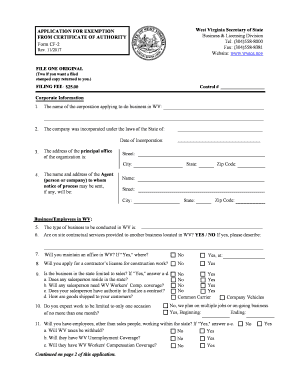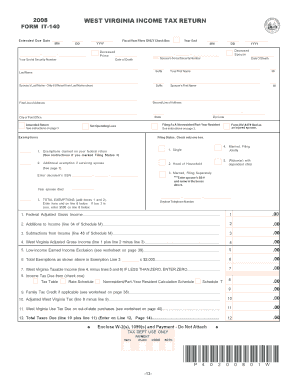
Part 2 - Exceptions to the Addition to Tax 2026

Get Form
mo 2220 form Preview on Page 1

Here's how it works

01. Edit your mo 2220 form online
Type text, add images, blackout confidential details, add comments, highlights and more.
02. Sign it in a few clicks
Draw your signature, type it, upload its image, or use your mobile device as a signature pad.
03. Share your form with others
Send it via email, link, or fax. You can also download it, export it or print it out.

How to use or fill out Part 2 - Exceptions to the Addition to Tax with DocHub

Form edit decoration
9.5
Ease of Setup
DocHub User Ratings on G2
9.0
Ease of Use
DocHub User Ratings on G2
  1. Click ‘Get Form’ to open it in the editor.
  2. Begin by reviewing Line 1, where you will enter either 90% of your current year's tax or 100% of the previous year's tax, whichever is smaller. Ensure that this amount is not less than $250.
  3. Proceed to Lines 2 through 8, entering the installment due dates and calculating any payments made by those dates. This will help you determine if there are any underpayments.
  4. For each exception listed in Lines 10 through 14, carefully evaluate your situation against the criteria provided. Enter amounts as applicable based on your calculations from Part 4 if claiming Exception 2, 3, or 5.
  5. Once all relevant fields are filled out, review your entries for accuracy before saving or exporting your completed form.

Start using our platform today for free to streamline your document editing and ensure accurate completion of your tax forms!

See more Part 2 - Exceptions to the Addition to Tax versions

We've got more versions of the Part 2 - Exceptions to the Addition to Tax form. Select the right Part 2 - Exceptions to the Addition to Tax version from the list and start editing it straight away!
Versions Form popularity Fillable & printable
2023 4.7 Satisfied (58 Votes)
2022 4.8 Satisfied (57 Votes)
2021 4.1 Satisfied (57 Votes)
2020 4.9 Satisfied (39 Votes)
2019 4.5 Satisfied (57 Votes)
2018 4.8 Satisfied (56 Votes)
2017 4.9 Satisfied (41 Votes)
be ready to get more

Complete this form in 5 minutes or less

Get form

Got questions?

We have answers to the most popular questions from our customers. If you can't find an answer to your question, please contact us.
Contact us
If the amount of income tax withheld from your salary or pension is not enough, or if you receive income such as interest, dividends, alimony, self-employment income, capital gains, prizes and awards, you may have to make estimated tax payments.
Use RMDs to Pay Estimated Income Taxes Other income, such as interest, dividends, capital gains, pensions and social security may be taxable and income tax withholding is not required. Taxes are still due, so, instead, taxpayers are required to make quarterly estimated tax payments.
Generally, the amounts an individual withdraws from an IRA or retirement plan before reaching age 59 are called early or premature distributions. Individuals must pay an additional 10% early withdrawal tax unless an exception applies.
Tax withholding and estimated tax Federal income tax withholding is required for distributions from IRAs unless you elect out of withholding on the distribution. If you elect out of withholding, you may have to make estimated tax payments.
Regardless of your age, you will need to file a Form 1040 and show the amount of the IRA withdrawal. Since you took the withdrawal before you reached age 59 1/2, unless you met one of the exceptions, you will need to pay an additional 10% tax on early distributions on your Form 1040.

Security and compliance

At DocHub, your data security is our priority. We follow HIPAA, SOC2, GDPR, and other standards, so you can work on your documents with confidence.

Learn more
ccpa2
pci-dss
gdpr-compliance
hipaa
soc-compliance

People also ask

If its a traditional IRA, SEP IRA, Simple IRA, or SARSEP IRA, you will owe taxes at your current tax rate on the amount you withdraw. For example, if you are in the 22% tax bracket, your withdrawal will be taxed at your 22% marginal tax rate.
Distributions before you are age 59 1/2 are called Early Distributions. The 10% additional tax applies to the part of the distribution that you have to include in gross income. It is in addition to any regular income tax on that amount.

Related links