




01. Edit your letter banning someone from a business online
Type text, add images, blackout confidential details, add comments, highlights and more.

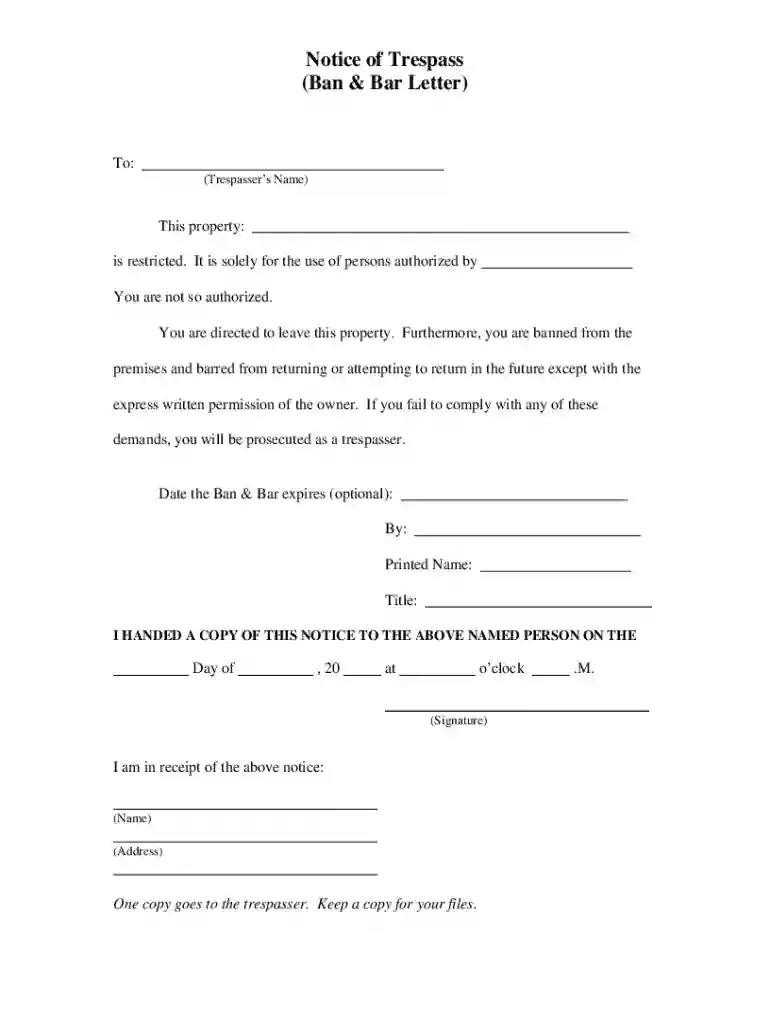
Type text, add images, blackout confidential details, add comments, highlights and more.

Draw your signature, type it, upload its image, or use your mobile device as a signature pad.

Send sample request letter to ban a person via email, link, or fax. You can also download it, export it or print it out.
A ban letter template is a formal document used by property owners or businesses to notify individuals that they are prohibited from entering premises. This letter serves as an official warning and can be utilized in various situations, such as addressing disruptive behavior, preventing trespassing, or maintaining safety and security. The template standardizes the content, ensuring important information is included, providing clear communication of the ban to the individual involved.
A well-structured ban letter should include several essential components, ensuring it is comprehensive and legally sound. Below are critical elements to include:
Creating a ban letter using a template involves several straightforward steps, ensuring all relevant information is accurately captured:
Various individuals and organizations find ban letters useful. Common users include:


When utilizing a ban letter, it is crucial to ensure adherence to applicable laws and regulations. Legal considerations include the following:
Proper understanding and implementation of a ban letter can protect your rights while effectively communicating boundaries to individuals.
We've got more versions of the letter banning someone from a business form. Select the right letter banning someone from a business version from the list and start editing it straight away!
| Versions | Form popularity | Fillable & printable |
|---|---|---|
| 2010 | 4.8 Satisfied (229 Votes) |
At DocHub, your data security is our priority. We follow HIPAA, SOC2, GDPR, and other standards, so you can work on your documents with confidence.
As a result of your recent behavior (listed below) at the NCWorks Career Center, you are hereby banned from NCWorks Career Center for Read more
Send the letter directly to the office, department or individuals involved in the situation. Simply sending the letter to the ombudsman is not appropriate.Read more
This page lists instances where logos have been spoofed or referenced in other media. All examples mentioned here should be widely recognized andRead more


