Can NY Residents Claim Tax Credits for Connecticut PET? 2026

Get Form
Can NY Residents Claim Tax Credits for Connecticut PET? Preview on Page 1

Here's how it works

01. Edit your form online
Type text, add images, blackout confidential details, add comments, highlights and more.

02. Sign it in a few clicks
Draw your signature, type it, upload its image, or use your mobile device as a signature pad.

03. Share your form with others
Send it via email, link, or fax. You can also download it, export it or print it out.

How to use or fill out Can NY Residents Claim Tax Credits for Connecticut PET? with our platform

Form edit decoration
9.5
Ease of Setup
DocHub User Ratings on G2
9.0
Ease of Use
DocHub User Ratings on G2
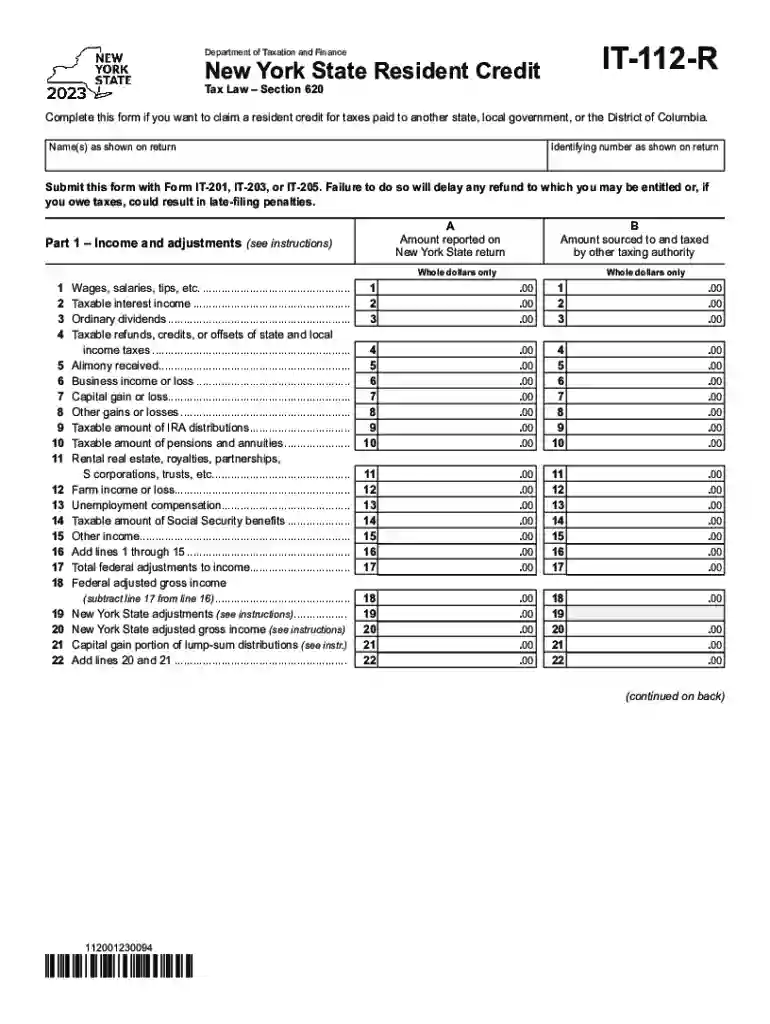
  1. Click ‘Get Form’ to open the Can NY Residents Claim Tax Credits for Connecticut PET? in the editor.
  2. Begin by entering your name(s) and identifying number as shown on your tax return at the top of the form.
  3. In Part 1, provide your income details. Fill in each line from wages to other income, ensuring you only enter whole dollars.
  4. Proceed to Part 2 to compute your resident credit. Enter the two-letter abbreviation of the state where taxes were paid and the corresponding locality name if applicable.
  5. Complete lines 24 through 30, detailing tax amounts imposed and calculating your credit based on instructions provided.
  6. Finally, review Part 4 for any additional information required from your return filed with another state, ensuring all fields are accurately filled before submission.

Start using our platform today to fill out your tax forms online for free!

See more Can NY Residents Claim Tax Credits for Connecticut PET? versions

We've got more versions of the Can NY Residents Claim Tax Credits for Connecticut PET? form. Select the right Can NY Residents Claim Tax Credits for Connecticut PET? version from the list and start editing it straight away!
Versions Form popularity Fillable & printable
2023 4.5 Satisfied (55 Votes)
2022 4.6 Satisfied (46 Votes)
2021 4.8 Satisfied (113 Votes)
2020 4.3 Satisfied (40 Votes)
be ready to get more

Complete this form in 5 minutes or less

Get form

Got questions?

We have answers to the most popular questions from our customers. If you can't find an answer to your question, please contact us.
Contact us
Taxes Paid to Another State: To qualify for the credit, you must have actually paid income taxes to another state. This is typically documented through the states tax return or tax payment records. If you havent paid taxes to another state, theres no need to file Form IT-112-R.
A Connecticut Resident is an individual that is domiciled in Connecticut for the entire tax year. If you maintained a permanent place of abode in Connecticut and spent more than 183 days in the state, you are also considered to be a resident.
The law imposes a 6.99 percent tax on partnerships, LLCs, and S corporations. The tax is imposed on either the entitys entire Connecticut-sourced taxable income or an alternative tax base, which reduces taxable income by the percentage of nonresident ownership.
The credit for taxes paid to another state is a nonrefundable credit that is automatically calculated in your account when you add a Nonresident return to your already created Resident New York return if you pay taxes to both New York and another state.
Tax deductions for moving expenses For most taxpayers, moving expenses are no longer deductible, meaning you can no longer claim this deduction on your federal return.

Security and compliance

At DocHub, your data security is our priority. We follow HIPAA, SOC2, GDPR, and other standards, so you can work on your documents with confidence.

Learn more
ccpa2
pci-dss
gdpr-compliance
hipaa
soc-compliance

People also ask

If you are a nonresident or a part‑year resident, your tax liability is computed based upon the greater of your Connecticut adjusted gross income or your total income from Connecticut sources. You must calculate the tax in the same manner as a resident individual.
When more than one state taxes the same income, you can claim a credit for taxes paid to the other state. The other state is usually the nonresident state. When you create a Resident state return and a Non-Resident state return, the program will calculate the credit for taxes paid to another state, if applicable.

Related links