



01. Edit your motion to set aside default judgment tennessee online
Type text, add images, blackout confidential details, add comments, highlights and more.

Type text, add images, blackout confidential details, add comments, highlights and more.
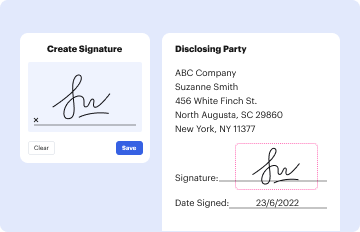
Draw your signature, type it, upload its image, or use your mobile device as a signature pad.

Send motion for default judgment sample tennessee via email, link, or fax. You can also download it, export it or print it out.
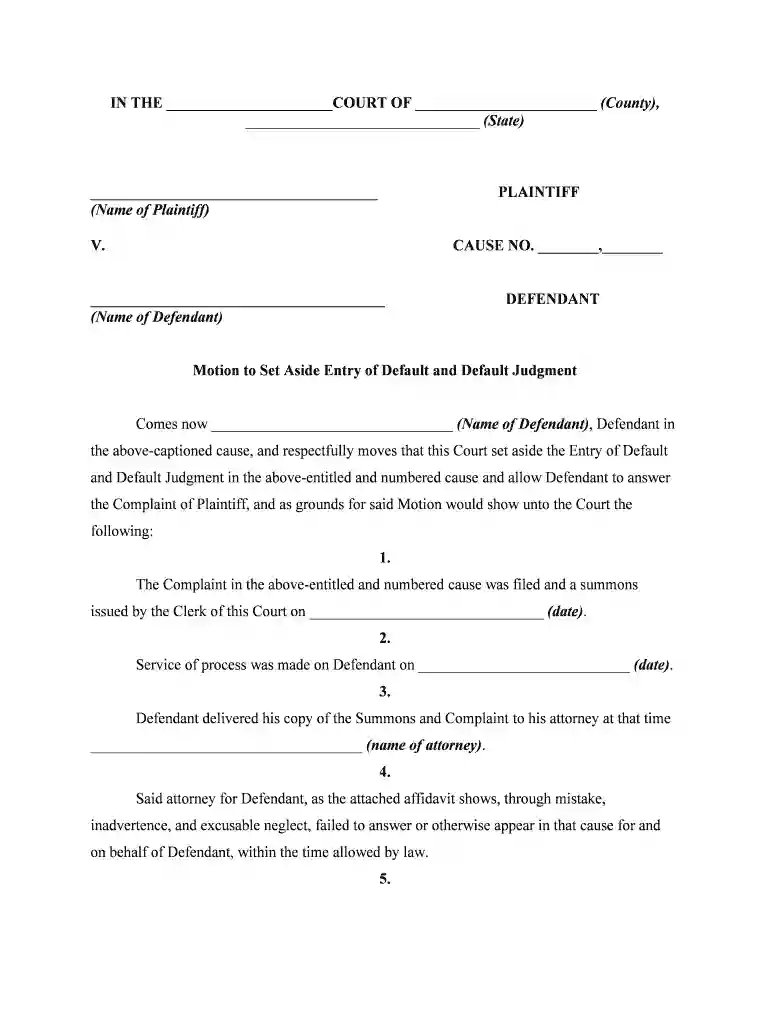
A motion to set aside default judgment in Tennessee is a legal request made by a defendant after a court has entered a default judgment against them. The request seeks to have the judgment annulled, allowing the defendant to present their case. It is often grounded on the argument that the defendant did not receive adequate notice of the legal proceedings or was unable to respond to the complaint due to reasonable circumstances.
The structure of a motion to set aside default judgment typically includes several key elements:
Each section should be well-researched and thoroughly substantiated with applicable laws and precedents.
Filing a motion to set aside a default judgment involves a series of specific steps. It is essential to complete each step carefully to ensure the motion is properly submitted:
Several valid justifications exist for defendants seeking to set aside a default judgment in Tennessee:
It's critical to support these reasons with concrete evidence to persuade the court.
Not every request to set aside a default judgment may be granted. Courts generally look for:


Familiarity with key legal terms is crucial when preparing a motion to set aside default judgment:
Understanding these terms can enhance the clarity and focus of your motion.
Different scenarios may prompt individuals or entities to file a motion to set aside default judgment:
These examples illustrate the varied circumstances under which a motion may be applicable.
In Tennessee, the motion can typically be submitted through:
Ensuring compliance with local filing procedures can significantly affect the outcome of your motion.
At DocHub, your data security is our priority. We follow HIPAA, SOC2, GDPR, and other standards, so you can work on your documents with confidence.
by AD Bonner 2008 Plaintiffs Henry Hillenmeyer and Robert Zelle filed this Motion to Set Aside Judgment claiming that as pro se Plaintiffs they had a right to
by A Leeson 2004 Cited by 48 Respondents should be aware that notwithstanding any other provision of law, no person shall be subject to any penalty for failing to comply with a collectionRead more


