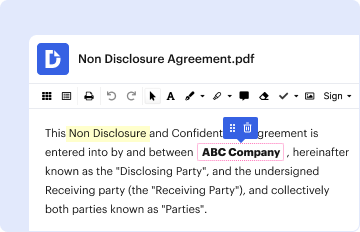
Type text, add images, blackout confidential details, add comments, highlights and more.
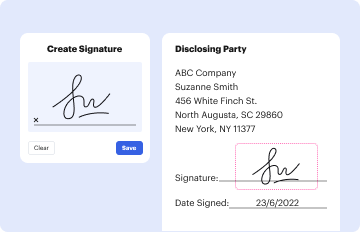
02. Sign it in a few clicks
Draw your signature, type it, upload its image, or use your mobile device as a signature pad.
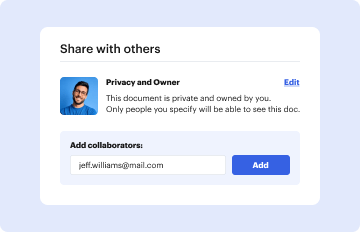
03. Share your form with others
Send it via email, link, or fax. You can also download it, export it or print it out.
How to use or fill out Making the Output Delivery System (ODS) Work for You Beginning Tutorials with DocHub
Ease of Setup
DocHub User Ratings on G2
Ease of Use
DocHub User Ratings on G2
Click ‘Get Form’ to open it in the editor.
Begin by reviewing the introduction section, which outlines the purpose of the ODS and its capabilities. Familiarize yourself with the basic concepts presented.
Move on to filling out any required fields in the tutorial, such as your name and contact information, if applicable. Use our platform's text fields for easy input.
Follow along with each section of the tutorial, utilizing our editor’s annotation tools to highlight important points or add personal notes as you learn about ODS functionalities.
Once you have completed all sections, review your inputs for accuracy. Utilize our platform’s editing features to make any necessary adjustments before finalizing your document.
Start using our platform today to enhance your learning experience with seamless document editing and form completion!
Fill out Making the Output Delivery System (ODS) Work for You Beginning Tutorials online It's free
The ODS output statement saves procedure output to a SAS data set. PROC CONTENTS produces three tables of output for a data set: attributes, engine/host information, and variables. In this example, we want the variables, but not the attributes nor the engine/host information.
What does ODS output do in SAS?
Preferences from the main SAS window. Then on the Results tab, select the Use ODS Graphics check box to enable ODS Graphics by default, or clear the check box to disable ODS Graphics by default. You can also change the default output destination (HTML or LISTING) on the Results tab.
What does an ODS listing do?
With ODS, you can create various file types including HTML, Rich Text Format (RTF), PostScript (PS), Portable Document Format (PDF), and SAS data sets. You can also take advantage of ODS features to easily convert existing SAS code so that it can create these file types.
What does ODS select do?
Specifies output objects for ODS destinations. Tip: You can maintain a selection list for one destination and an exclusion list for another.
How do I enable ODS in SAS?
Opens, manages, or closes the Listing destination.
Related links
Making the Output Delivery System (ODS) Work for You
a standard means to capture output and convert it into formatted reports, html files or SAS data sets.. This tutorial introduces basic techniques for using ODS.
This paper demonstrates how SAS programmers can use SAS Enterprise Guide as their primary interface to the. SAS system while maintaining the flexibility of
Jul 16, 2025 Exporting results to Excel, PDF, or HTML. Using ODS (Output Delivery System) for styling and formatting. Creating charts with PROC SGPLOT.
Cookie consent notice
This site uses cookies to enhance site navigation and personalize your experience.
By using this site you agree to our use of cookies as described in our Privacy Notice.
You can modify your selections by visiting our Cookie and Advertising Notice.