
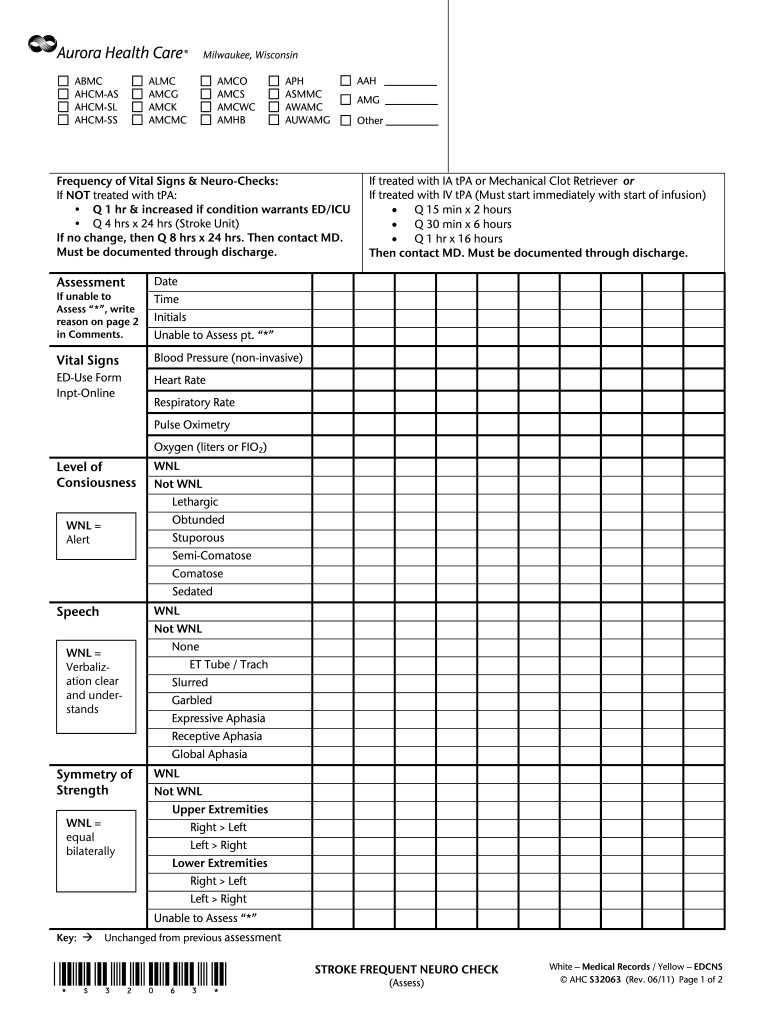







Definition and Significance of the Neuro Check Flow Sheet
The neuro check flow sheet is a systematic tool used in clinical settings to monitor neurological status and vital signs of patients, particularly those at risk for strokes or other neurological conditions. This flow sheet is essential in documenting vital parameters and neurological assessments, ensuring comprehensive patient care. Health care professionals utilize this form to track changes in a patient’s condition, guiding timely interventions if necessary.
Key components of the neuro check flow sheet include:
- Patient Identification: Basic information ensures accurate tracking of assessments and care.
- Date and Time: This helps maintain a chronological record, which is crucial in critical care situations.
- Neurological Assessment Parameters: These typically include alerts for consciousness levels, pupil response, strength symmetry, and any signs of neurological decline.
Utilizing this standardized tool enables an efficient approach to patient monitoring, aiding practitioners in recognizing potential complications rapidly and ensuring evidence-based care strategies are in place.
How to Utilize the Neuro Check Flow Sheet Effectively
To effectively use a neuro check flow sheet, medical personnel should follow a structured approach that includes the following steps:
- Preparation: Immediately upon patient admission or when neurological assessment is warranted, ensure that you have the flow sheet ready.
- Initial Assessment: Conduct a thorough neurological evaluation, focusing on:
- Level of consciousness using the Glasgow Coma Scale.
- Pupil reaction to light and accommodation.
- Motor function and symmetry.
- Recording Data: Use clear and concise language to fill in the flow sheet, documenting each assessment at consistent intervals, often every hour for at-risk patients. This precision ensures rapid identification of changes.
- Review and Update: Constantly review the filled sheets, updating findings regularly to reflect any changes in the patient’s neurological status.
- Collaboration: Share findings with the wider medical team during rounds or in handoff communications to ensure continuity of care.
By adhering to these steps, healthcare providers can maintain a thorough understanding of a patient's neurological status over time, enabling proactive interventions.
Steps to Complete the Neuro Check Flow Sheet
Completing the neuro check flow sheet involves meticulous attention to several procedural steps, which include:
-
Identify the Patient:
- Write down the patient's name, date of birth, and medical record number to prevent any mix-up.
-
Document Date and Time:
- Always include the date and time of the assessment to establish a timeline for monitoring.
-
Perform the Neurological Assessment:
- Assess and record vital signs, including:
- Blood pressure
- Heart rate
- Respiratory rate
- Temperature
- Evaluate neurological status using standardized criteria, documenting observations regarding:
- Consciousness (alert, lethargic, comatose)
- Pupillary response (equal and reactive, dilated, etc.)
- Strength (noting any deficiencies or asymmetries).
- Assess and record vital signs, including:
-
Utilize Checkboxes for Clarity:
- Mark conditions that are met or observations made; this visual clarity can expedite the review process by other healthcare personnel.
-
Provide Additional Notes:
- If specific criteria are not met or the patient's condition deteriorates, include narrative notes that detail these observations for future reference.
Through these steps, the neuro check flow sheet remains an effective tool in monitoring patient conditions, facilitating clear communication within the healthcare team.
Importance of the Neuro Check Flow Sheet in Clinical Settings
The neuro check flow sheet plays an instrumental role in clinical environments, particularly in the context of acute and critical care. Its significance includes:
- Improved Patient Safety: Regular monitoring helps in the early detection of deteriorating conditions, enabling mitigation of complications that could arise from delayed interventions.
- Standardization of Care: By using a consistent format, healthcare professionals ensure that essential assessments are not overlooked, fostering a comprehensive approach to patient monitoring.
- Enhancement of Communication: With standardized data documentation, medical teams can communicate findings quickly and effectively, reducing the chances of misunderstandings related to a patient's status.
- Legal Documentation: Well-maintained flow sheets also serve as essential legal records in case of disputes regarding patient care, providing evidence of the standard of care offered.
Consequently, the structured approach of the neuro check flow sheet not only fosters individual patient safety but also underscores the professionalism and diligence of the healthcare providers involved.
Key Elements to Know Regarding the Neuro Check Flow Sheet
Several key elements are foundational to effectively utilizing the neuro check flow sheet:
- Comprehensive Parameters: The sheet should include various parameters critical for neurological assessment, such as GCS, pupil reactions, and limb movement assessments.
- Documentation Practices: It is essential to document all findings meticulously. Regular entries facilitate monitoring of changes while serving as a legal record of care provided.
- Interdisciplinary Collaboration: The ability for multiple health professionals—nurses, physicians, and specialists—to access and understand the flow sheet fosters cohesive care and timely interventions.
- Templates and Variants: Many institutions may have adapted their versions of the neuro check flow sheet to include institution-specific guidelines or additional assessments, which can be tailored for the needs of different patient populations.
Understanding these elements maximizes the utility of the flow sheet in clinical practice, facilitating a comprehensive approach to neurological assessments.




