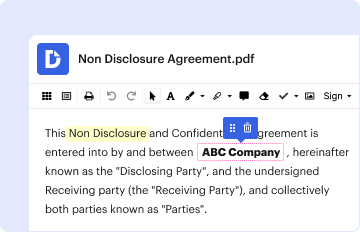
Type text, add images, blackout confidential details, add comments, highlights and more.

02. Sign it in a few clicks
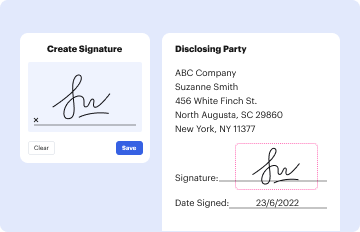
Draw your signature, type it, upload its image, or use your mobile device as a signature pad.

03. Share your form with others
Send it via email, link, or fax. You can also download it, export it or print it out.

How to use or fill out CEPA Community Trust Grant Application Final Draft2 docx with our platform
Ease of Setup
DocHub User Ratings on G2
Ease of Use
DocHub User Ratings on G2
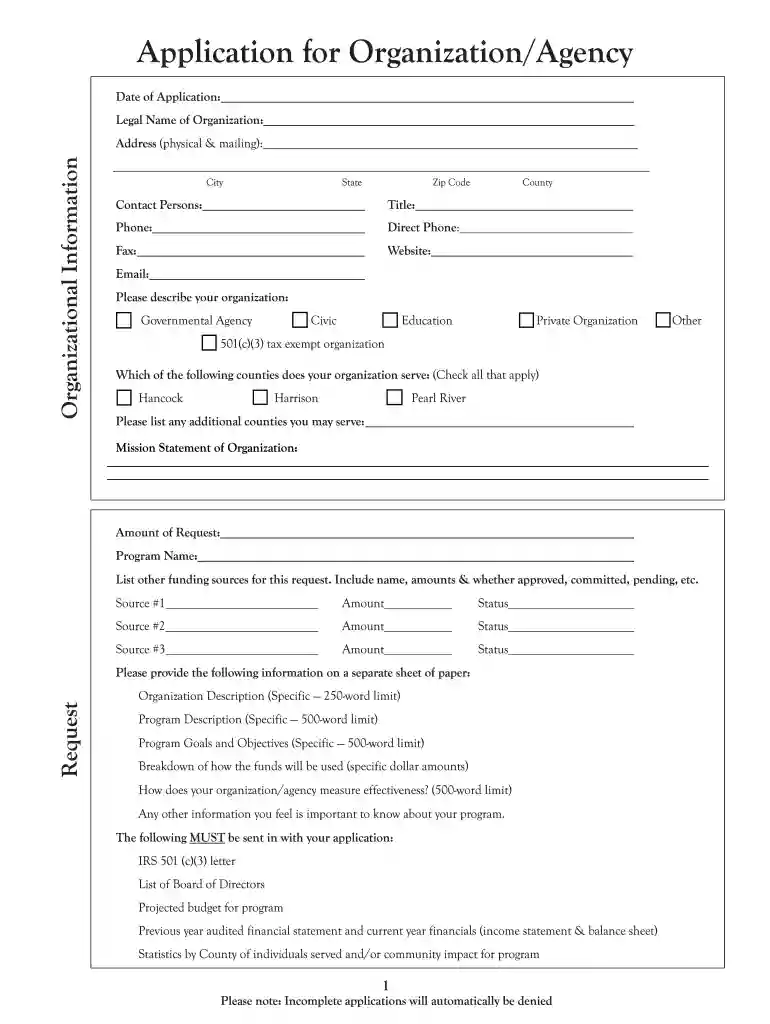
Click ‘Get Form’ to open the CEPA Community Trust Grant Application in the editor.
Begin by filling out the 'Date of Application' and 'Legal Name of Organization' fields. Ensure that all information is accurate and up-to-date.
Complete the 'Organizational Information' section, including your address, contact persons, and their respective titles and phone numbers. This information is crucial for communication.
In the 'Application Checklist', check off each item you have included with your application. This ensures completeness and helps avoid automatic denial due to missing documents.
Provide detailed descriptions in the specified sections, such as 'Organization Description', 'Program Description', and 'Program Goals and Objectives'. Use separate sheets if necessary, adhering to word limits.
Finally, review all entries for accuracy before submitting your application. Utilize our platform's features to save your progress and make edits as needed.
Start using our platform today to streamline your grant application process for free!
Fill out CEPA Community Trust Grant Application Final Draft2 docx online It's free
Buzzwords and clichs weaken your narrative, while industry jargon and acronyms make it harder to read and understand. Leave out overused terms such as innovative, cutting edge, and game-changer. Instead, use meaningful language to tell your nonprofits story in your own unique voice.
How to fill a grant application?
How to write a grant proposal Include a cover letter. A cover letter acts as an introduction to the grant proposal. Include an executive summary. Describe a statement of need. List objectives and goals. Describe methods and strategies. Detail a plan of evaluation. Include a budget. Detail organizational information.
What is the $7,000 grant money?
Understanding the $7,000 Government Grant This grant supports low-income undergraduate students to help cover tuition, fees and other school-related expenses. Eligibility is typically based on financial need.
How to fill in a grant application?
General guidelines for writing funding applications Always keep your project plan in mind. Write in plain English. Be specific about what you plan to do. Focus your application on the funders priorities. Provide evidence that your work is needed.
How do you stand out in a grant application?
Top 3 tips for writing a stand-out grant application Know your project. Can you succinctly describe what your project is all about? Get your finances in order. An organised project budget is key to grant application success. Document it!
Related Searches
$7,000 government grantChesapeake Bay Trust Grantswww.grants.gov apply online$7,000 government grant for individualsFederal government grant winners listChesapeake Bay Restoration Fund grant applicationFree grant money for bills and personal useList of government grants for individuals
Security and compliance
At DocHub, your data security is our priority. We follow HIPAA, SOC2, GDPR, and other standards, so you can work on your documents with confidence.
9 Essential Components of a Good Grant Proposal [Template Included] Proposal Summary. Provide a short overview of the entire proposal. Introduction to the Applicant. The Need/The Problem Statement. The Objectives and Outcomes. Program Plan. The Capacity. Evaluation Plan. Program Budget.
Related links
Varieties of Environmentalism Essays North and South
The book presents analyses of environmental conflicts and ideologies in four continents: North and South America, Asia and Europe. The authors present the
by E de Lira Azevdo 2022 Cited by 5 The conception of the Community Conservation Perception Index (CCPI) came from the Threat Criticality Index developed by the World Wide Fund for Nature [62].
Cookie consent notice
This site uses cookies to enhance site navigation and personalize your experience.
By using this site you agree to our use of cookies as described in our Privacy Notice.
You can modify your selections by visiting our Cookie and Advertising Notice.