
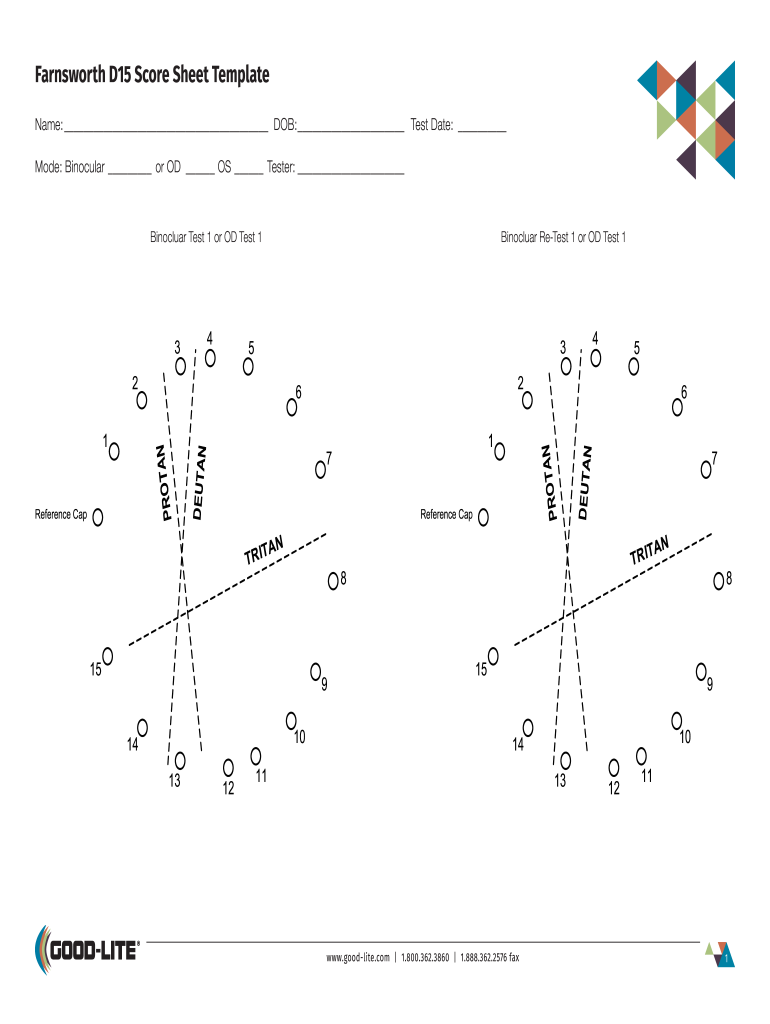







Overview of the Farnsworth D15 Scoring Sheet
The Farnsworth D15 scoring sheet is a vital tool designed to assess color vision through the Farnsworth D15 color vision test. This document records the results of the tests, detailing how individuals perceive color and identifying potential color vision deficiencies.
Components of the Farnsworth D15 Scoring Sheet
The scoring sheet comprises several essential sections:
-
Personal Information: The sheet typically includes fields for the test taker's name, date of birth, and date of the test, ensuring proper identification and record-keeping.
-
Test Mode Selection: Users can select the mode of the test (monocular or binocular), which determines the conditions under which the test is administered, affecting the scoring results.
-
Score Input Sections: There are designated areas for recording scores from various test trials. This is crucial for analyzing the individual's color vision capabilities based on their responses during the test.
-
Remarks Section: Test administrators can provide comments or observations regarding the test performance, which may be helpful for future reference or medical evaluations.
Scoring Methodology
The scoring process on the Farnsworth D15 scoring sheet follows a systematic approach:
-
Color Arrangement: Test participants are presented with a series of color caps they need to arrange in the proper order. Their responses are recorded on the sheet.
-
Score Calculation: Each arrangement corresponds to specific numerical values. The scoring sheet facilitates the calculation of these scores, indicating the degree of color differentiation ability.
-
Interpreting Scores: Scores are typically evaluated against standardized benchmarks to determine color vision status. Validity is dependent on accurate recording and transparent data entry.
Using the Farnsworth D15 Scoring Sheet
To effectively utilize the Farnsworth D15 scoring sheet:
-
Preparation: Ensure all required materials, including caps and the scoring sheet, are readily available.
-
Conduct the Test: Administer the test in a controlled environment, ensuring proper lighting for accurate color perception.
-
Recording Responses: As participants arrange colors, document their arrangements systematically according to the predefined format on the sheet.
-
Final Assessment: Once the test is completed, calculate the scores based on the recorded responses for an accurate assessment of color vision.
Legal Considerations in Usage
The utilization of the Farnsworth D15 scoring sheet is subject to specific legal and ethical guidelines:
-
Confidentiality: Safeguard personal data collected during testing, as it may qualify as sensitive health information.
-
Compliance: Ensure that color vision assessments align with relevant local, state, and federal regulations regarding medical evaluation procedures.
Common Use Cases and Stakeholders
The Farnsworth D15 scoring sheet serves a broad range of stakeholders:
-
Optometrists and Ophthalmologists: These professionals frequently use the scoring sheet to evaluate patients for potential color vision deficiencies.
-
Occupational Health Professionals: Individuals in certain fields, such as aviation and emergency services, may be required to undergo color vision testing as part of their fitness assessments.
-
Educational Institutions: Schools and universities may use this scoring sheet to identify students who require additional support in visual learning contexts.
Variants and Alternatives to the Farnsworth D15 Scoring Sheet
While the Farnsworth D15 scoring sheet is popular, several alternatives exist, including:
-
Ishihara Plates: This method tests color vision using a series of plates, each containing a number formed by colored dots.
-
Lantern Tests: These tests are often used within occupational health to evaluate an individual's ability to distinguish colors under specific lighting conditions.
Creating a Printable Farnsworth D15 Score Sheet
For ease of use, a printable version of the Farnsworth D15 scoring sheet can be prepared. This involves:
-
Template Design: Creating a simple layout with all necessary sections clearly defined.
-
Accessibility: Ensuring the format can easily be printed without distortion, allowing for usability in different settings.
The creation of these sheets in both digital and print forms can enhance their availability and streamline the testing process across various applications.




