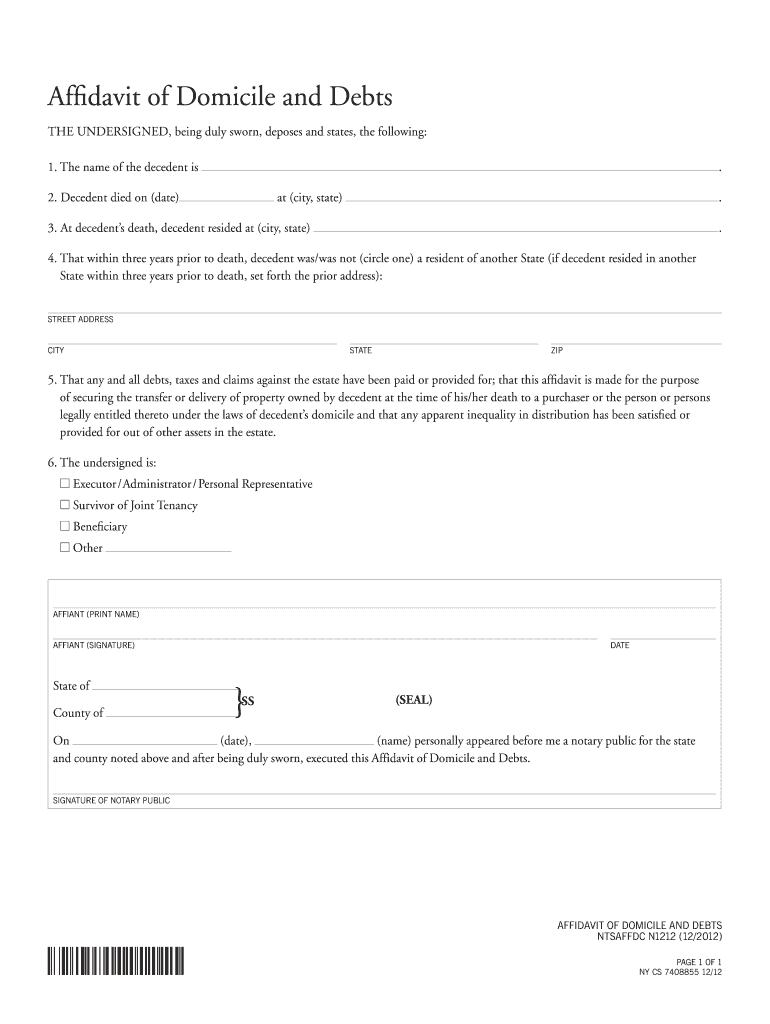







Definition & Meaning of Affidavit of Domicile and Debts
An affidavit of domicile and debts is a sworn document that serves to affirm the domicile of a deceased individual at the time of death and disclose any debts associated with the estate. This legal document is critical in the estate settlement process, primarily to assist in the transfer of assets to heirs or beneficiaries. It verifies that all debts have been settled or are accounted for, providing clarity and legal backing when transferring ownership of properties or financial accounts.
Typically, the affidavit contains the following components:
- Affiant's Information: Details of the person making the statement, often a relative or executor of the estate.
- Decedent's Information: The deceased person's name, date of birth, and date of death.
- Domicile Details: The address where the deceased lived at the time of death.
- Debt Disclosure: A thorough account of the debts or claims against the estate.
- Notarization: Ensures the document's authenticity and validity.
Steps to Complete the Affidavit of Domicile and Debts
Completing an affidavit of domicile and debts involves several steps that must be followed diligently to ensure its legal effectiveness. Here is a detailed process:
-
Gather Required Information:
- Collect the necessary details about the decedent, including their legal name, address, and date of death.
- Compile a list of all debts and obligations owed by the estate.
-
Obtain the Affidavit Form:
- Access the official Morgan Stanley affidavit of domicile form. Ensure it is the most current version to avoid legal complications.
-
Complete the Form:
- Fill in the affiant's details and the decedent's information accurately.
- Clearly outline the domicile details and the debts the estate is responsible for.
-
Review for Accuracy:
- Once completed, review the affidavit for any errors or omissions. It is crucial that all information, especially regarding debts, is accurate to prevent legal fallout.
-
Notarization:
- Find a notary public to formally witness and attest to the signing of the affidavit. This step adds credibility and may be a requirement in certain jurisdictions.
-
Submission:
- Submit the notarized affidavit to the relevant financial institution or legal body overseeing the estate's administration.
By following these steps meticulously, the process of creating and submitting the affidavit of domicile and debts will comply with legal standards.
Important Terms Related to Affidavit of Domicile and Debts
Understanding key terminology associated with the affidavit of domicile and debts can help ensure effective navigation of the estate settlement process. These terms include:
- Affidavit: A written statement confirmed by oath or affirmation for use as evidence in court.
- Domicile: The permanent legal residence of an individual, particularly where they lived at the time of death.
- Decedent: A deceased person, typically the individual whose estate is being settled.
- Executor: The person appointed to administer the estate of a deceased person, responsible for ensuring that debts and distributions are made according to the will or state law.
- Claims Against the Estate: Any debts or obligations that the deceased individually owed at the time of death.
- Notarization: The act of a public notary witnessing a signature on a document and thereby validating its authenticity.
Familiarity with these terms will aid individuals in managing the estate process more effectively and with greater confidence.
Legal Use of the Affidavit of Domicile and Debts
The affidavit of domicile and debts holds significant legal weight in the estate settlement process. It serves several essential functions, including:
- Verification of Residence: The affidavit acts as proof of the decedent's last known residence, which may affect the probate process governed by the state laws where the estate is being settled.
- Debt Disclosure: By listing all debts associated with the estate, the affidavit ensures that creditors can be appropriately notified and claims managed.
- Facilitating Transfers: Financial institutions like Morgan Stanley may require this affidavit to execute transactions or transfer account ownership, thereby helping heirs inherit assets without legal complications.
- Court Acceptance: Courts often accept this affidavit as evidence, enabling smoother probate proceedings by providing a clear picture of the estate's financial obligations and domicile.
By understanding its legal implications, individuals can better appreciate the importance of preparing a precise and truthful affidavit.
Who Typically Uses the Affidavit of Domicile and Debts?
The affidavit of domicile and debts is primarily utilized by specific parties involved in the estate settlement process, including:
- Executors and Administrators: Individuals managing the deceased's estate often prepare the affidavit to support their claims and decisions regarding asset distribution and creditor payments.
- Heirs and Beneficiaries: Individuals inheriting belongings or financial assets may need to provide this affidavit to financial institutions where the deceased held accounts.
- Attorneys: Legal representatives who guide executors or heirs through the estate settlement process may draft or advise on the completion of the affidavit.
- Financial Institutions: Companies like Morgan Stanley require this affidavit to ensure a smooth transition of account ownership following the death of an account holder.
Recognizing the typical users of this affidavit helps to delineate responsibilities and clarify roles throughout the estate administration process.