Definition and Meaning of Preschool Assessment Forms PDF
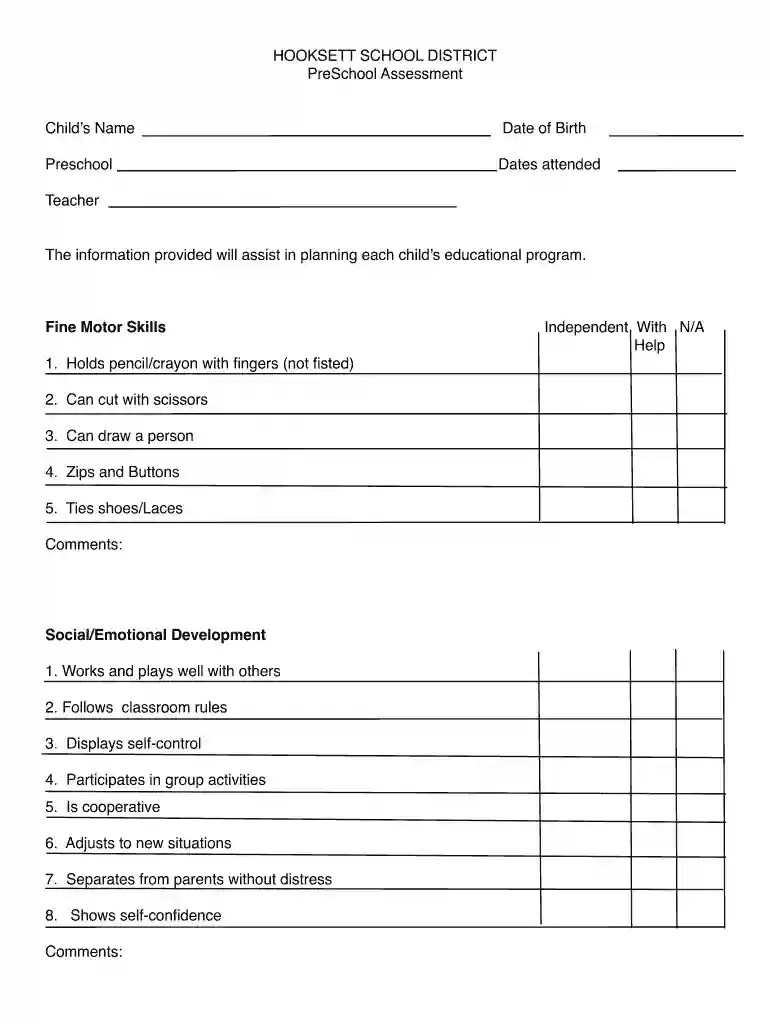
Preschool assessment forms are critical tools designed to evaluate a child's developmental milestones, skills, and readiness for kindergarten. These forms typically assess various domains such as fine motor skills, language development, cognitive skills, and social-emotional growth. The PDF format of these forms allows for easy distribution and completion, providing educators and parents with a streamlined method to collect and review essential information concerning a child's progress in early childhood education.
Key Components of Preschool Assessment Forms
- Developmental Domains: Assessments typically cover fine and gross motor skills, cognitive development, language skills, and social-emotional growth.
- Observational Data: Teachers or caregivers often provide notes based on their observations and interactions with the child, offering a qualitative measure of development.
- Parent Insights: Sections in the forms are designated for parents to share their perspectives on their child's behavior, interests, and readiness for learning.
- Rating Scales: Many forms utilize numerical scales or checklists to quantify a child's skills in various areas, facilitating easier tracking of progress over time.
How to Use the Preschool Assessment Forms PDF
Using preschool assessment forms effectively requires a methodical approach. Initially, educators or caregivers must familiarize themselves with the content and layout of the form, ensuring they understand how to navigate it properly. The completed forms serve as a foundation for planning individualized learning experiences tailored to meet a child’s specific needs.
Steps for Utilizing the Forms
- Preparation: Review the form to understand the areas of assessment covered, including any specific instructions related to filling it out.
- Gather Data: Collect necessary observational data and feedback from parents. This can be done through informal discussions or structured interviews.
- Complete the Form: Record observations and ratings on the child, ensuring to provide insights into the child's strengths and areas that may require additional support.
- Analysis: Analyze the completed assessments collectively to develop a comprehensive overview of each child's developmental status, which can facilitate targeted intervention strategies or curriculum adjustments.
- Follow-Up: Schedule meetings with parents or stakeholders to discuss findings and agree on next steps for continual development.
How to Obtain Preschool Assessment Forms PDF
Preschool assessment forms can be accessed through various channels, including educational institutions, early childhood education organizations, and online platforms specializing in educational resources.
Sources to Consider
- School District Websites: Many local school districts provide downloadable forms for parents and educators on their official websites.
- Educational Resource Platforms: Websites dedicated to early childhood education often offer free printable forms and templates tailored to different age groups and assessment needs.
- Professional Development Workshops: Attending seminars or workshops about early childhood assessments can provide access to forms and guidance on their effective use.
Steps to Complete the Preschool Assessment Forms PDF
Completing preschool assessment forms requires careful attention to detail and adherence to specific guidelines to ensure accuracy and thoroughness. Each section is typically designed to capture distinct aspects of a child's development.
Completing the Form Step-by-Step
- Personal Information: Start by filling in the child’s name, date of birth, and any relevant identification numbers.
- Developmental Sections: Move systematically through sections, entering observational data and assessment results for each developmental domain.
- Use of Rating Scales: When applicable, utilize rating scales to quantify the assessment, making sure to provide comments that elaborate on scores.
- Final Review: After completion, double-check for any missing information and ensure that the comments reflect an accurate portrayal of the child's skills and needs.
- Sign and Submit: Depending on the purpose of the assessment, either submit the form to the designated authority, or share it with parents for further discussion.
Why Use Preschool Assessment Forms PDF
Utilizing preschool assessment forms offers numerous benefits, serving not just as a tool for evaluation but also as a framework for enhancing child development through informed decision-making.
Benefits of Using Assessment Forms
- Targeted Learning: The assessments provide valuable insights that inform curriculum decisions, helping educators create individualized learning plans.
- Progress Tracking: Regular assessments enable educators and parents to track a child's progress over time, highlighting areas of growth and needed support.
- Enhanced Communication: They foster communication between teachers and parents, ensuring everyone is on the same page regarding a child's development.
- Regulatory Compliance: In some states, documentation of assessments is required for program accreditation and compliance with early childhood education standards.
Important Terms Related to Preschool Assessment Forms PDF
Understanding key terminology associated with preschool assessment forms is vital for effective usage and communication.
Common Terms to Know
- Developmental Domains: Categories of child development, such as cognitive, social-emotional, language, and physical.
- Evaluative Criteria: The specific benchmarks or standards used to assess a child's performance in various areas.
- Formative Assessment: Ongoing assessments used to monitor student learning to provide ongoing feedback that can be used by instructors to enhance their teaching.
- Summative Assessment: Assessments conducted after an instructional unit to evaluate student learning against a standard.
Examples of Using Preschool Assessment Forms PDF
Practical examples illustrate how preschool assessment forms can be implemented effectively across various scenarios in early childhood settings.
Scenarios to Consider
- Initial Screening: During a child's first week in preschool, teachers may use the form to establish a baseline of the child's current developmental stage.
- Parent-Teacher Conferences: Intelligence gathered from completed forms can inform discussions with parents about their child's progress and areas of focus moving forward.
- Curriculum Development: Analysis of multiple assessments from a group of children can lead to insights on collective learning needs, prompting adjustments in teaching strategies.
Implementing comprehensive preschool assessment forms can create meaningful educational experiences that foster children's growth and readiness for future academic endeavors.