




01. Edit your trust amendment form california online
Type text, add images, blackout confidential details, add comments, highlights and more.

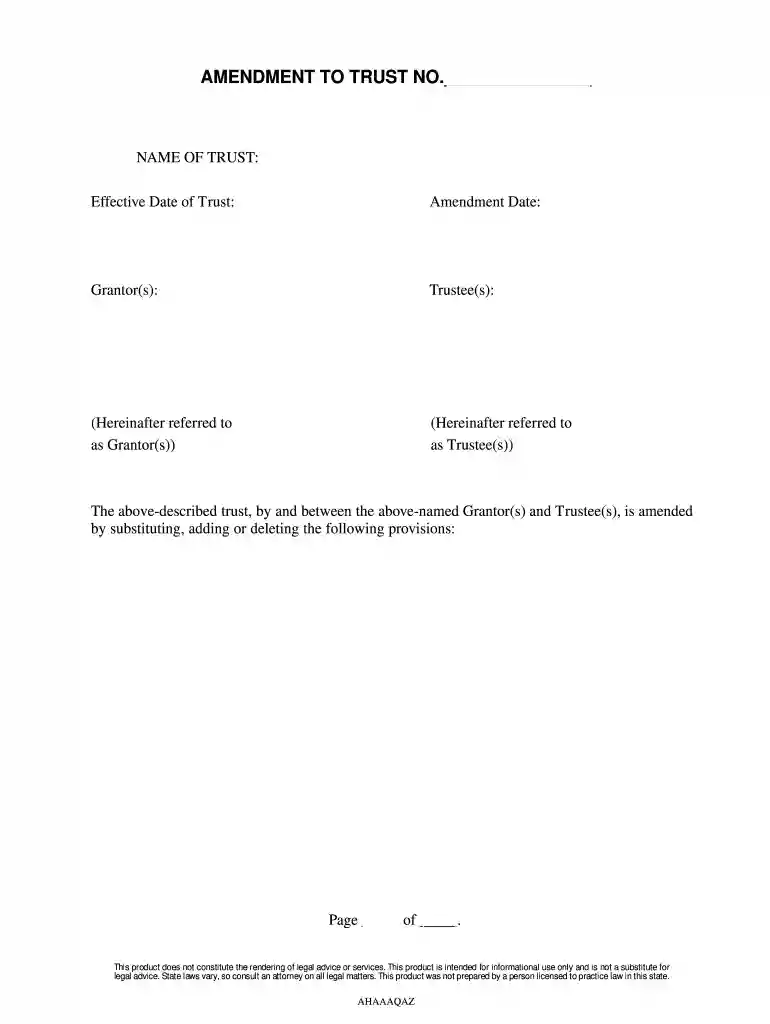
Type text, add images, blackout confidential details, add comments, highlights and more.

Draw your signature, type it, upload its image, or use your mobile device as a signature pad.

Send free living trust amendment form via email, link, or fax. You can also download it, export it or print it out.
The living trust amendment form is a legal document used in California to modify or change the terms of an existing living trust. This form allows the Grantor, the individual who created the trust, to make specific amendments concerning the management of assets, distribution of property, or appointment of trustees. The amendment can reflect changes in the Grantor's circumstances, such as marriage, divorce, the birth of children, or changes in financial situations.
Key components of the amendment form typically include:
These elements ensure clarity and legal enforceability in the modifications made to the trust.
Filling out a living trust amendment form requires careful attention to detail. Follow these steps to ensure the document is filled out correctly:
Following these steps helps ensure that the amendment is legally binding and accurately reflects the Grantor's intentions.
Before proceeding with a living trust amendment form, several considerations should be taken into account to ensure that the amendment effectively meets the Grantor's needs:
Purpose of the Amendment: Clearly define the reason for the amendment, as this will guide the changes made. Common reasons include changes in beneficiaries or modifications to asset management strategies.
Consulting Legal Counsel: Although the form is designed for use without legal assistance, consulting a trust attorney can provide valuable insights, especially if the amendment involves complex changes or significant assets.
Impacts on Taxes and Estate Planning: Changes may have tax implications or affect how the estate is managed. Understanding these aspects is crucial for effective estate planning.
State-Specific Laws: Familiarize yourself with California laws regarding trusts and amendments to ensure compliance and avoid any legal ambiguities.
The living trust amendment form can be used to implement a wide variety of changes to the original trust. Common amendments include:
Understanding the types of changes that can be made is essential for aligning the trust with the Grantor's current intentions and circumstances.
To ensure that the living trust amendment form is legally valid in California, several legal requirements must be met:
Ensuring these criteria are met supports the integrity of the legal process and minimizes the risk of future disputes.
For those looking to amend their living trust without incurring legal fees, several free resources and templates are available:
Utilizing these resources can simplify the process of amending a living trust while ensuring that all necessary elements are included.
At DocHub, your data security is our priority. We follow HIPAA, SOC2, GDPR, and other standards, so you can work on your documents with confidence.




CALIFORNIA FORM. AMENDMENT. ▻ 3. LIST THE NAME OF EACH REPORTABLE SINGLE SOURCE OF. INCOME OF $10,000 OR MORE (Attach a separate sheet if necessary.) IFRead more
Disclose each source of income and outstanding loan to the business entity or trust identified in Part 1 if your pro rata share of the gross income (includingRead more
Jun 27, 2012 An act to amend Sections 17311.5 and 17706 of the Family Code, to amend Sections 1522 and 1596.871 of the Health and Safety Code, to amend.Read more


