Understanding the Florida Affidavit of Correction
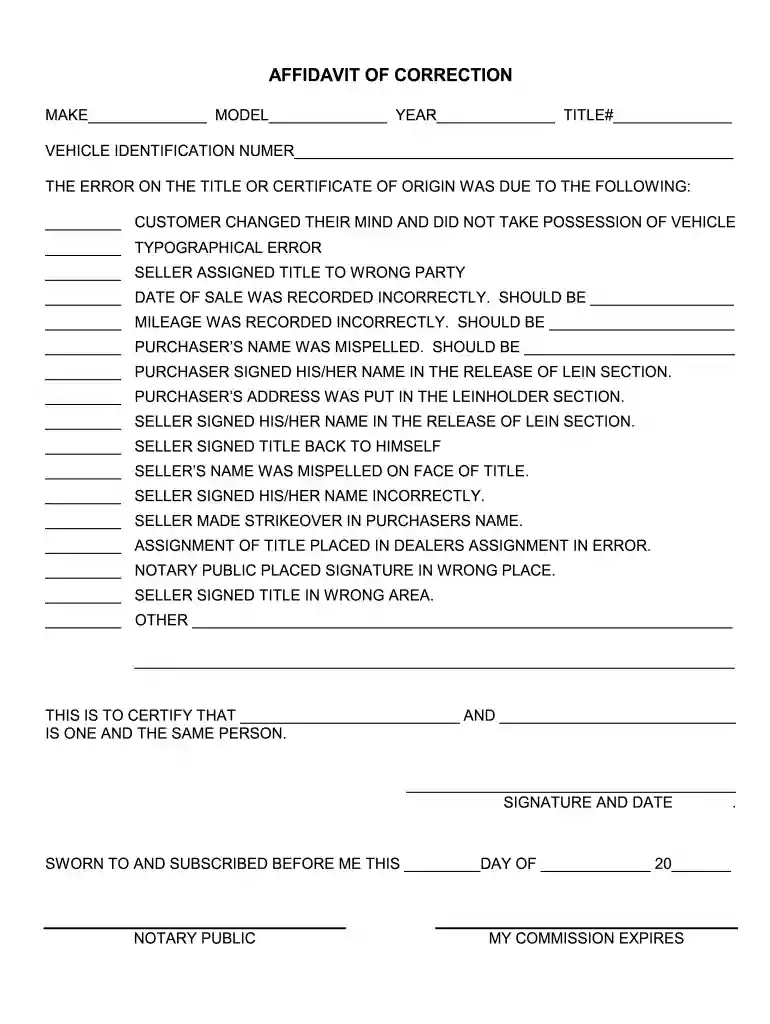
The Florida affidavit of correction serves as a formal legal document used to rectify errors on titles or certificates of origin for vehicles. It allows individuals to correct specific mistakes, such as typographical errors, incorrect names, or discrepancies in signatures. This document is essential for ensuring that the vehicle's title correctly reflects the intended information, thus protecting the rights and interests of the vehicle owner.
Key Elements of the Florida Affidavit of Correction
- Identification of Errors: The affidavit must clearly identify the errors to be corrected, specifying whether they are typographical mistakes, incorrect dates, or wrong names.
- Certification of Identity: To validate the declarations made in the affidavit, the document requires the signer to certify their identity. This ensures that the corrections are made by the rightful owner or an authorized party.
- Notarization: The affidavit must be notarized to be legally binding. This step confirms that the affidavit was signed in the presence of a notary public, which adds a layer of authenticity and trustworthiness to the document.
How to Use the Florida Affidavit of Correction
Using the Florida affidavit of correction entails several steps:
- Identify the Incorrect Information: Review the vehicle title to determine the erroneous details that need to be corrected.
- Complete the Affidavit: Fill out the affidavit with accurate information, clearly noting the errors and the correct data.
- Notarize the Document: Find a notary public to witness the signing of the affidavit, ensuring that it is properly notarized.
- Submit the Affidavit: Present the completed and notarized affidavit to the Florida Department of Highway Safety and Motor Vehicles (DHSMV) or the relevant DMV office.
Steps to Complete the Florida Affidavit of Correction
Completing the affidavit involves the following detailed steps:
- Download the Form: Obtain the Florida DMV affidavit form, typically available from the DHSMV website or local DMV offices.
- Fill in Personal Information: Include your name, address, and contact information at the top of the form.
- Detail the Errors: Clearly articulate each error on the title. For instance, if the wrong spelling of a name is the issue, indicate both the incorrect and correct spelling.
- Provide Correct Details: After identifying each error, write down the correct information next to it.
- Sign and Notarize: Sign the affidavit in front of a notary public, who will then validate your signature and stamp the document.
Important Terms Related to the Florida Affidavit of Correction
- Affidavit: A written statement confirmed by oath or affirmation, used for legal purposes.
- Notarization: The official process of witnessing a signature and verifying the signer’s identity by a notary public.
- Title: A legal document that establishes ownership of a vehicle, which contains important details about the car, including its VIN, make, model, and owner information.
Who Typically Uses the Florida Affidavit of Correction?
The affidavit is often utilized by:
- Vehicle Owners: Individuals who have discovered errors on their vehicle titles and need corrections.
- Dealerships: Car dealers may use the affidavit when there are discrepancies in paperwork related to sales and titles.
- Legal Representatives: Attorneys or legal professionals often assist clients in preparing and submitting affidavits to ensure compliance with state laws.
Legal Use of the Florida Affidavit of Correction
Legally, the affidavit of correction must be used in accordance with Florida laws governing vehicle titling. Incorrect information on a title can lead to issues with ownership claims, registration challenges, or even difficulties during the sale of a vehicle. Therefore, using the affidavit properly can safeguard the legality of title transfers and ensure clear ownership records.
Examples of Using the Florida Affidavit of Correction
Various scenarios may necessitate the use of the affidavit, such as:
- Correcting a Typographical Error: If a vehicle owner’s name is misspelled on the title, they can use the affidavit to fix this error.
- Changing an Incorrect Date: If the ownership date recorded on the title contains a mistake, the affidavit can be employed to change it to the correct date.
- Fixing Signature Issues: In cases where the title was signed by an unauthorized person, the rightful owner may need to correct the signatures listed on the document.
Required Documents for Submission
To complete the process, the following documents may be required:
- The completed Florida affidavit of correction form.
- The original vehicle title displaying the incorrect information.
- Valid identification to establish identity, such as a driver’s license or state ID.
- Any supporting documents that may be necessary to substantiate the corrections requested.
This comprehensive understanding of the Florida affidavit of correction ensures that vehicle owners can efficiently navigate the legal processes involved in correcting title errors, maintain compliance, and protect their rights as vehicle owners.