
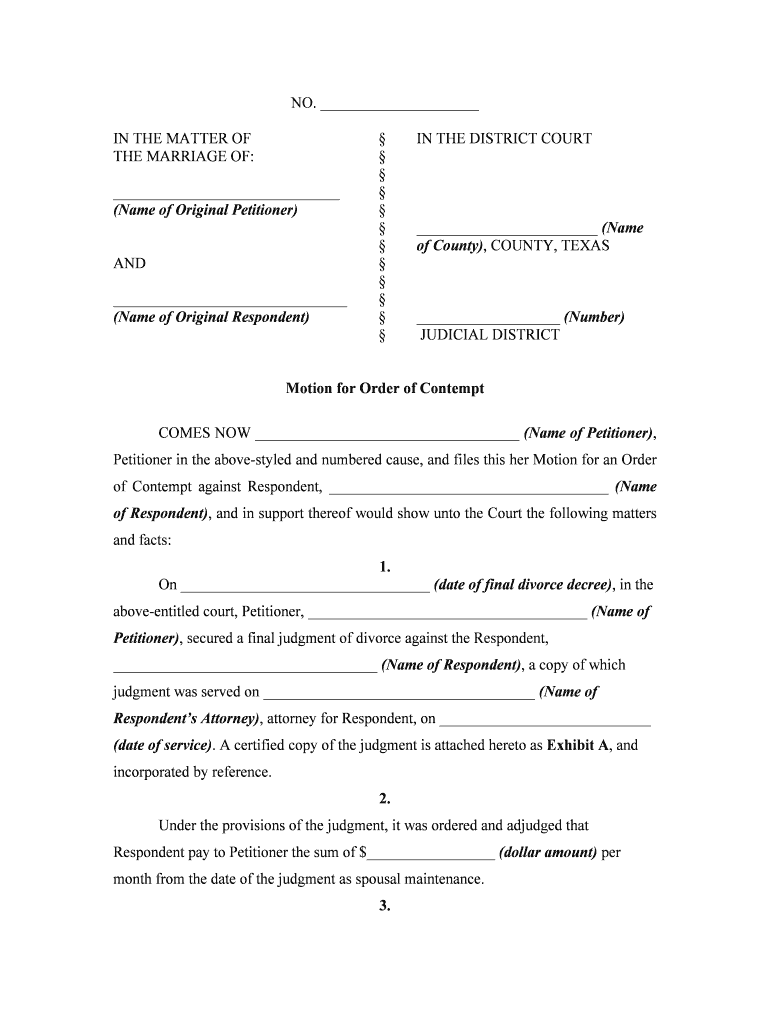







Understanding the Motion for Contempt Form in Texas
The motion for contempt form in Texas plays a crucial role in legal proceedings, particularly in family law cases. This legal document is intended for individuals seeking to enforce compliance with court orders, such as spousal maintenance or child support requirements. The form outlines the alleged non-compliance by a party (the Respondent) and requests the court to take action.
Purpose of the Motion for Contempt
The primary purpose of a motion for contempt is to compel a party to adhere to a specific court order. This could include various obligations such as:
- Child support payments
- Spousal support payments
- Child custody or visitation arrangements
When an individual fails to comply with a court order, the affected party (the Petitioner) can file this motion to seek enforcement and possibly sanction the non-compliant party.
Key Components of the Form
A motion for contempt form must include several essential components to be legally effective:
- Identification of Parties: Clearly state who the Petitioner and Respondent are, including their contact information.
- Date of the Original Court Order: Reference the specific order that is being violated.
- Details of Non-Compliance: Outline the specific actions or payments the Respondent has neglected to comply with, including dates and amounts owed.
- Request for Court Relief: Clearly articulate what the Petitioner is asking the court to do, such as imposing penalties or compelling compliance.
Steps to File a Motion for Contempt in Texas
Filing a motion for contempt involves several important steps:
- Gather Documentation: Collect all relevant documents, including the original court order and evidence of non-compliance.
- Complete the Form: Accurately fill out the motion for contempt form, ensuring all necessary details are included.
- File with the Court: Submit the completed form to the court where the original order was issued. Ensure you have copies for yourself and the Respondent.
- Serve the Respondent: Legally serve the Respondent with the motion and any accompanying documents. This may require the assistance of a process server or law enforcement.
- Attend the Hearing: Be prepared to present your case at a scheduled court hearing, including evidence of non-compliance and any witnesses if applicable.
Legal Implications of Filing
It is important to note that filing a motion for contempt is a serious matter. Parties who file this motion should ensure they have valid grounds; otherwise, they may face legal repercussions or counterclaims. The Respondent has the right to defend against the allegations, which could lead to further legal proceedings.
Examples of Court Orders Enforced by Motion for Contempt
Several situations can prompt the filing of a motion for contempt:
- A non-custodial parent failing to make monthly child support payments since a specific date.
- A party not adhering to a court-ordered visitation schedule, affecting the custodial arrangements.
- Failure to pay spousal maintenance as stipulated in a divorce settlement.
Each of these examples illustrates how a motion for contempt serves to reinforce legal obligations established by prior court rulings.
Types of Relief Available Through Contempt Motions
When a court finds a party in contempt, it may provide various forms of relief, such as:
- Compelling Compliance: Ordering the non-compliant party to fulfill their obligations.
- Monetary Sanctions: Imposing fines or requiring payment of owed amounts.
- Modification of Conditions: Altering custody or visitation arrangements if necessary.
These remedies aim not only to enforce compliance but also to restore fairness in the legal proceedings.
Frequently Asked Questions
-
What if the Respondent disagrees with the allegations?
The Respondent can respond with their defense during the hearing, and the court will determine the outcome based on provided evidence. -
Is a lawyer necessary to file this motion?
While individuals can represent themselves, consulting with a lawyer may provide valuable insights and increase the chance of a favorable outcome. -
Can motions for contempt be filed in other matters?
Yes, motions for contempt can also apply to other court orders outside family law, such as contract disputes.
Understanding the motion for contempt form in Texas is critical for individuals seeking to enforce court orders effectively. By following the necessary steps and including all required information, parties can navigate the legal process more effectively.




