
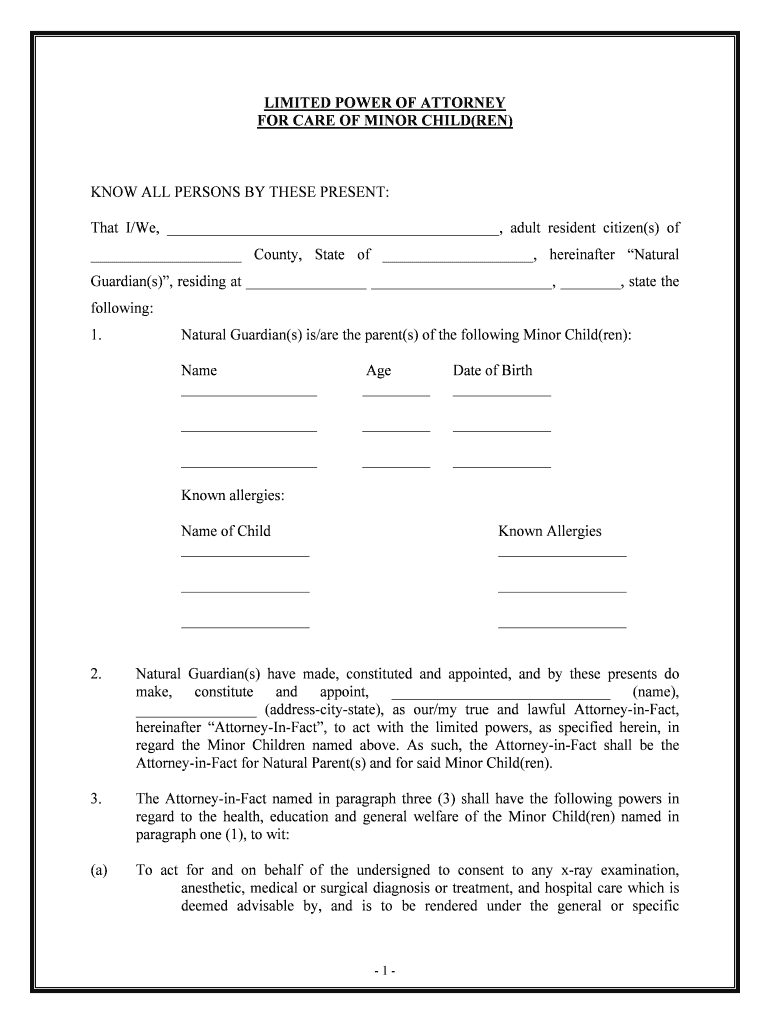







Definition and Meaning of Power of Attorney for Minor Child
A power of attorney for a minor child is a legal document that allows parents or guardians to designate an individual, known as the Attorney-in-Fact, to make important decisions regarding the child's health, education, and general welfare. This authority can encompass various aspects such as consenting to medical treatments, making educational decisions, and overseeing the child's long-term welfare. The document serves to ensure that the minor's needs are addressed, especially in situations where the parents are unavailable, such as during travel or when faced with emergencies.
In this arrangement, parents explicitly outline the powers granted to their Attorney-in-Fact. This can include specific instructions or limitations to guide decisions made on behalf of the child. The clear definition of authority helps to provide peace of mind to both parents and the appointed individual while ensuring the child's best interests remain the primary focus.
How to Use the Power of Attorney for Minor Child
Using a power of attorney for a minor child involves several steps, starting from its creation to its practical application. Once the document is executed, it can be presented to schools, hospitals, or any institution that requires proof of authority to act on the child's behalf. Here are the basic steps involved in using this document:
-
Prepare the Document: Choose an appropriate power of attorney form and complete all required sections, including the designation of the Attorney-in-Fact, the powers granted, and the duration of authority.
-
Legal Review: It may be beneficial to have the document reviewed by a legal professional to ensure compliance with state-specific laws.
-
Notarize the Document: Many states require the document to be notarized for it to be legally binding. Ensure it is signed in the presence of a notary public.
-
Distribute Copies: Provide copies of the signed document to the designated Attorney-in-Fact, healthcare providers, schools, and any other relevant parties.
-
Maintain a Record: Keep a copy of the executed document in a secure location, and inform relevant stakeholders about its existence to facilitate its effective use.
Important Terms Related to Power of Attorney for Minor Child
Understanding the terminology associated with a power of attorney for a minor child is essential for effective application and compliance. Some key terms include:
-
Attorney-in-Fact: The individual designated to act on behalf of the parents or guardians concerning the minor child’s welfare.
-
Principal: The person granting the power, typically the child's parent or legal guardian.
-
Durable Power of Attorney: A type of power of attorney that remains effective even if the principal becomes incapacitated.
-
Revocation: The process of formally canceling the power of attorney, making it no longer valid.
-
Scope of Authority: The specific powers that are granted to the Attorney-in-Fact, which can be broad or limited depending on the wishes of the principal.
Understanding these terms can help parents navigate the process more effectively and communicate clearly with involved parties.
Steps to Complete the Power of Attorney for Minor Child
Completing a power of attorney for a minor child requires careful attention to detail. Here’s a step-by-step guide to ensure the documentation is accurately executed:
-
Select the Appropriate Form: Identify and select the correct power of attorney form applicable to your state.
-
Fill Out the Document: Carefully provide the necessary information, including:
- Names and contact details of the parents and the Attorney-in-Fact
- Specific powers being granted
- Duration of the authority
-
Consult a Legal Expert: Review the document with a legal professional to ensure all state requirements are met.
-
Get the Document Notarized: Arrange for a notary public to witness and sign the document, adding an extra layer of legal validation.
-
Provide Copies: Share the notarized document with relevant stakeholders, such as schools, doctors, and the Attorney-in-Fact.
-
Review and Update Regularly: Periodically review the document to ensure the appointed individuals and powers remain relevant.
This structured approach ensures that the power of attorney is valid, effective, and aligned with the family's needs.
State-Specific Rules for Power of Attorney for Minor Child
Power of attorney regulations can vary significantly from state to state, making it critical to understand local laws. Here are some common regulations to consider:
-
Notarization Requirements: Every state has its own rules regarding whether notarization is required. Some states might also require witnesses.
-
Revocation Procedures: States have different processes for how a power of attorney can be revoked. Familiarize yourself with your state's specifics to avoid complications later.
-
Duration of Authority: Some states may impose limits on how long an attorney-in-fact can act on behalf of a minor, while others may have indefinite authority unless revoked.
-
Mandatory Language: Certain states require specific phrasing or disclosures within the power of attorney document to make it legally binding.
By being aware of these state-specific rules, parents can ensure their documents meet legal requirements and function as intended in their jurisdictions.




