




01. Edit your sewing contract online
Type text, add images, blackout confidential details, add comments, highlights and more.

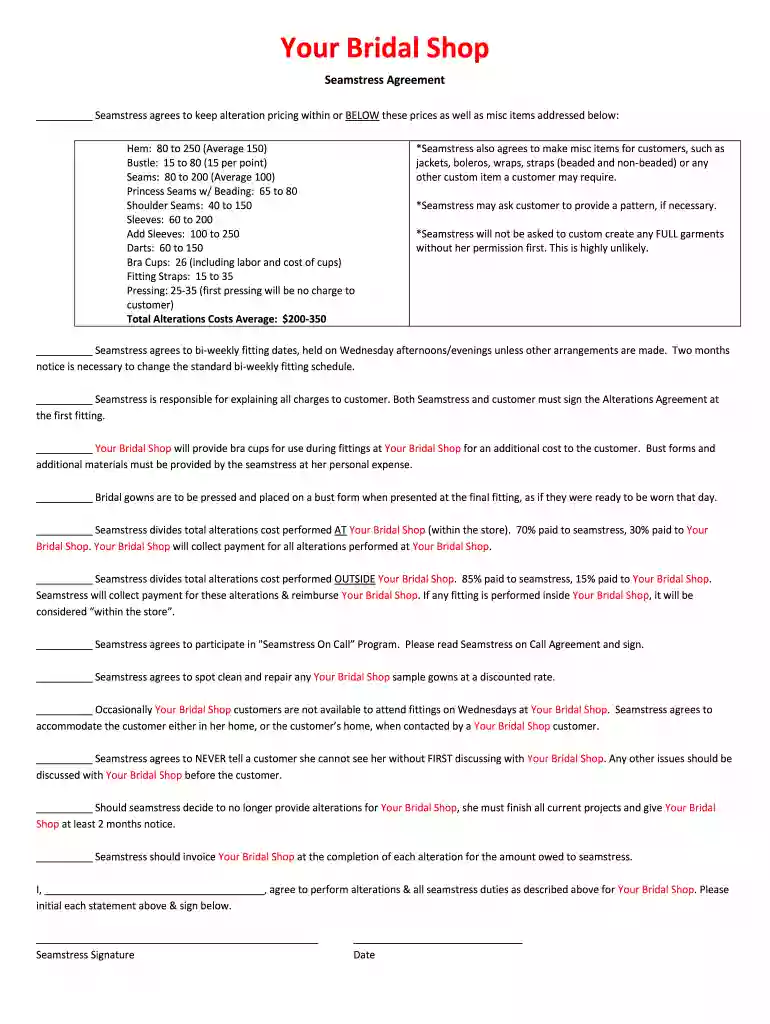
Type text, add images, blackout confidential details, add comments, highlights and more.

Draw your signature, type it, upload its image, or use your mobile device as a signature pad.

Send tailoring contract sample via email, link, or fax. You can also download it, export it or print it out.
A sample contract for tailoring is a formal agreement between a client and a tailor or seamstress, outlining the specifics of the sewing or alteration services to be provided. This type of contract serves as a protective measure for both parties, ensuring clarity in expectations, pricing, and responsibilities.
When creating a tailoring contract sample, it’s essential to include several critical elements to ensure the document is comprehensive and clear. Here are some foundational components:
Parties Involved: Clearly state the names and contact information of both the client and the tailor. This section ensures that both parties know who is entering into the agreement.
Description of Services: Detail the specific tailoring services to be provided. This may include alterations, custom designs, or specialized sewing tasks. Clearly defining the services helps prevent misunderstandings regarding the scope of work.
Pricing and Payment Terms: Include a breakdown of costs associated with the tailoring services. This should list the total price, the payment schedule (e.g., deposit and final payment), and any additional fees that might arise during the process, such as for extra materials or rush orders.
The timeframe for completing the tailoring services is a vital part of the agreement. Details should include:
Estimated Completion Date: Specify when the services will be completed. If the timeline is dependent on factors outside of the tailor's control (e.g., fabric availability), this should be noted.
Delivery Method: Describe how and when the finished garments will be delivered to the client. Options may include pickup or shipping methods.
In a tailoring contract, it is essential to delineate the responsibilities of both the tailor and the client:
Tailor Responsibilities: Outline the obligations of the tailor, such as ensuring quality craftsmanship, timely completion of work, and adherence to agreed specifications.
Client Responsibilities: Specify the client’s obligations, including providing accurate measurements, choosing fabrics, and making timely payments. This helps in setting clear expectations for both parties.
The contract should also address procedures for amendments or cancellations to ensure both parties are protected in case changes arise:
Change Requests: Describe how either party can submit a request for changes to the original agreement, along with any potential impact on pricing and timing.
Cancellation Policy: Establish terms under which either party may terminate the contract, including any penalties or reimbursement for work completed up to that point.
Finally, a well-designed tailoring contract should contain a clause on handling disputes to prevent misunderstandings from escalating:
Depending on the complexity and value of the tailoring services, incorporating legal terminology where necessary can enhance the formality of the contract. This might include:
By addressing these topics in a sample contract for tailoring, both parties can ensure that they are on the same page, which ultimately enhances trust and cooperation throughout the process.
Sign in to your DocHub account and add your tailoring agreement form to our editor using one of its upload methods - from your device, cloud storage, protected URL, or your DocHub folders if you have already managed your form before. Open our editor, click the Sign key in the top toolbar, and choose your signing method. You can upload an image of your handwritten signature, draw it, type in your name, or use a QR code as an alternative.
It is a no-brainer on a computer or via a mobile device to fill out a sample contract for sewing services with DocHub. All you need to do is open any installed internet browser on your smartphone and go to the DocHub site. Once authenticated, add your file and open it in editing mode. Use our toolbar to make your edits and save changes. Optionally, keep your file in your files or send it to a recipient on the spot.
At DocHub, your data security is our priority. We follow HIPAA, SOC2, GDPR, and other standards, so you can work on your documents with confidence.


