




01. Edit your cardiac clearance online
Type text, add images, blackout confidential details, add comments, highlights and more.

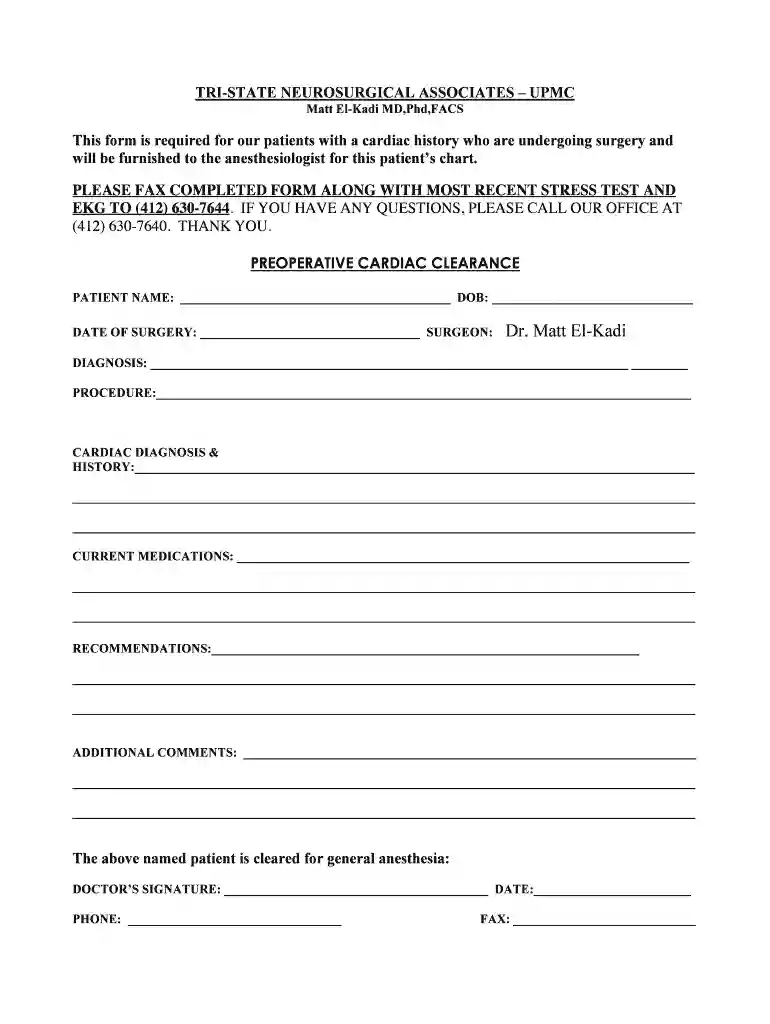
Type text, add images, blackout confidential details, add comments, highlights and more.

Draw your signature, type it, upload its image, or use your mobile device as a signature pad.

Send cardio clearance via email, link, or fax. You can also download it, export it or print it out.
The Cardiac Clearance Passdoc is a medical form designed for patients with pre-existing cardiovascular issues who are preparing for surgery or other invasive procedures. The primary purpose of this form is to ensure that individuals receive an assessment of their cardiac health by a qualified medical professional, typically a cardiologist, prior to undergoing any operation that may present risks relating to their heart conditions.
This evaluation often entails an examination of the patient’s medical history, current medications, and potentially a physical examination. The information gathered through the Cardiac Clearance Passdoc helps healthcare providers make informed decisions regarding the safety of the surgical procedure for the patient, ensuring that they are fit for the required intervention.
Risk Assessment: The form enables healthcare providers to assess the cardiovascular risks associated with surgery. It includes critical patient information, such as previous cardiac events, current health status, and any ongoing treatments.
Improved Outcomes: By identifying potential risks beforehand, healthcare professionals can take necessary precautions and mitigate complications, ultimately leading to better surgical outcomes for patients with a history of cardiac conditions.
Completing the Cardiac Clearance Passdoc involves several critical steps to ensure that all relevant patient information is accurately captured. This process enables the healthcare provider to evaluate the patient’s readiness for surgery.
Patient Information: Begin by entering the patient's basic information, including their full name, date of birth, and contact information.
Cardiac History: Provide a detailed account of the patient’s cardiac history, including past surgeries, diagnoses (such as hypertension or congestive heart failure), and any previous episodes of cardiac events.
Current Medications: Include a list of all medications the patient is currently taking, including dosages and frequency. This helps the healthcare provider understand potential interactions and how they may affect surgery.
Recommendations: The healthcare provider should record their recommendations based on the assessment, specifying whether the patient is cleared for surgery, needs further evaluation, or should undergo additional tests, such as a stress test or EKG.
Signatures: Ensure that the form is signed by both the patient and the assessing healthcare professional to validate the findings and recommendations documented.
Consultation Requirements: In some cases, obtaining the clearance may involve additional referrals to an electrophysiologist or other specialists.
Test Results: If applicable, include any recent test results that may influence the assessment, ensuring that this documentation accompanies the Passdoc.
The Cardiac Clearance Passdoc is primarily utilized by a variety of stakeholders in the medical community, including:
Surgeons: They require documentation that confirms patients are fit to undergo surgical procedures, particularly those that involve anesthesia.
Cardiologists: They assess cardiac health and determine if patients are ready for surgery, particularly those with existing heart conditions.
Anesthesiologists: Before administering anesthesia, anesthesiologists review the clearance to ensure patient safety during the procedure.
Patients Undergoing Elective Surgery: Individuals scheduled for planned surgeries, such as orthopedic or abdominal procedures.
Patients Requiring Urgent Surgery: Those who may need immediate surgical intervention due to medical emergencies, where an expedited clearance process is necessary.
The Cardiac Clearance Passdoc must adhere to relevant legal and regulatory standards to maintain its validity and ensure patient safety.
ESIGN Act Compliance: The electronic submission and signature processes must comply with the Electronic Signatures in Global and National Commerce (ESIGN) Act, ensuring that electronic signatures are legally recognized.
HIPAA Compliance: All information collected through the Cardiac Clearance Passdoc must align with the Health Insurance Portability and Accountability Act (HIPAA), safeguarding patient confidentiality and ensuring that sensitive health information is not improperly disclosed.
Informed Consent: The form can serve as part of the informed consent process, demonstrating that the healthcare provider has made an effort to evaluate the risks associated with surgery and that patients have been informed accordingly.
Professional Accountability: Healthcare providers must ensure that the information recorded in the clearance form is accurate and complete to avoid potential legal implications arising from malpractice claims or disputes.
The effectiveness of the Cardiac Clearance Passdoc hinges on several key elements that must be included to enhance patient safety and streamline the process.
Comprehensive Medical History: Detailed records of the patient's cardiac history, medications, and any relevant previous surgeries should be included.
Testing Preferences: Recommendations for any necessary pre-operative cardiac testing, such as an echocardiogram or cardiac stress test, should be noted, specifying the urgency and nature of these tests.
Follow-Up Procedures: Clear guidelines on the next steps for both the patient and medical professionals, including follow-up appointments or additional referrals, must be outlined to ensure continuity of care.
Template Consistency: Using a standardized template or form reduces confusion and enhances accuracy among different healthcare providers involved in the patient’s care.
Storage and Retrieval: Properly organizing and storing completed forms to ensure they can be easily retrieved during the surgical process can save time and avoid potential delays in care for the patient.
We've got more versions of the cardiac clearance form. Select the right cardiac clearance version from the list and start editing it straight away!
| Versions | Form popularity | Fillable & printable |
|---|---|---|
| 2010 | 4.4 Satisfied (56 Votes) |
At DocHub, your data security is our priority. We follow HIPAA, SOC2, GDPR, and other standards, so you can work on your documents with confidence.
(1) Any physiological disorder or condition, cosmetic disfigurement, or anatomical loss affecting one or more body systems, such as neurological,Read more
passport. 2. Copy of Passport(s) (Dependent[s]): Applicants must provide a copy of the current passport(s) for any and all dependents (if applicable). 3Read more


