







Definition & Meaning of the Harness and Lanyard Inspection Form
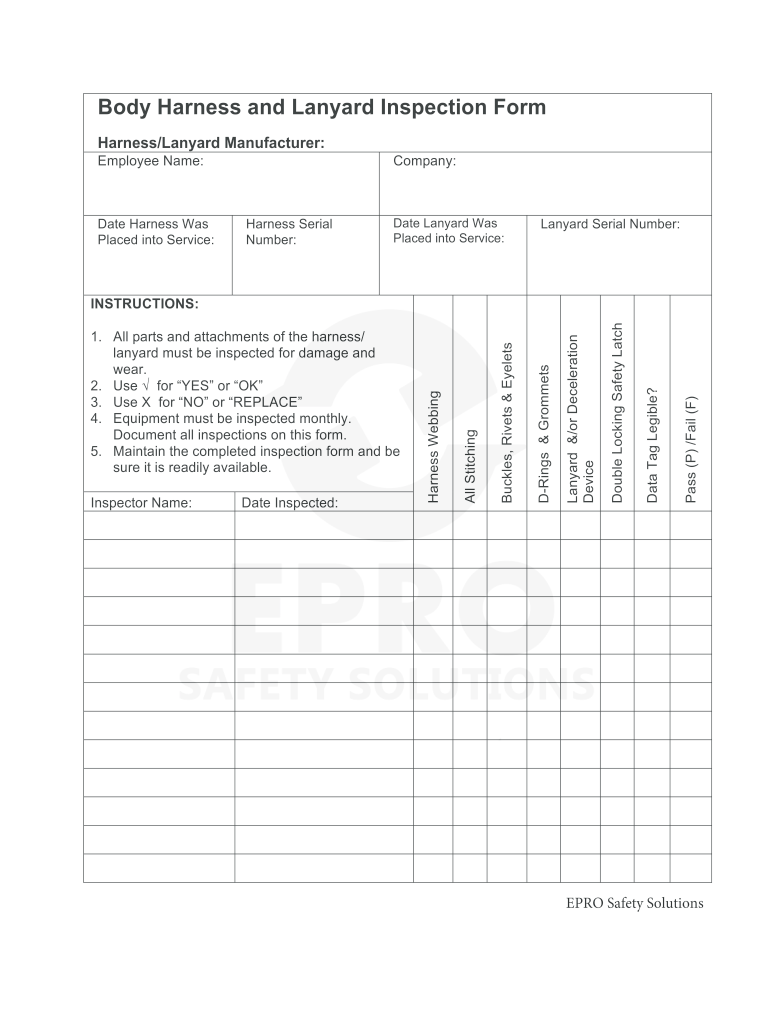
The harness and lanyard inspection form is a vital document used in the workplace to ensure safety equipment is maintained in optimal condition. It is specifically designed for recording the inspection details of safety harnesses and lanyards that are used in various industries, especially those involving fall protection in construction, manufacturing, and other high-risk environments.
This form serves multiple purposes:
- Documentation: It records key information such as the manufacturer, model, and serial numbers of the equipment, providing clear visibility for compliance and safety audits.
- Inspection Tracking: It allows safety personnel to track service dates, inspection results, and identify any needed repairs or replacements, ensuring that safety protocols are strictly followed.
- Legal Compliance: The form supports compliance with occupational safety regulations, such as those mandated by OSHA, by documenting routine inspections and maintenance efforts.
Importance of Safety Inspections
The significance of regular inspections cannot be understated. Safety harnesses and lanyards are critical for preventing serious injuries during falls, which can occur when working at heights. By utilizing a standardized harness inspection form, organizations can ensure they are upholding the highest safety standards.
How to Use the Harness and Lanyard Inspection Form
To effectively use the harness and lanyard inspection form, familiarize yourself with its sections and how to fill them out properly:
- Completing Company Information: Start by entering the company name, location, and the person conducting the inspection. This establishes accountability.
- Equipment Details: Record details for each harness and lanyard, including type, serial number, and manufacturer to ensure proper identification.
- Inspection Items: Check each component against the list provided; this may include checking for fraying, rust, or wear on connectors. Providing comments in section spaces can clarify the specific condition of equipment.
- Inspection Results: Note the results clearly, including "pass," "fail," or "needs repair", along with the date of inspection and any recommended actions.
Regular Use and Maintenance
It is advisable to complete the form on a monthly basis or whenever a safety harness or lanyard is put into use after a period of inactivity. This routine aids in maintaining a culture of safety and awareness among employees.
Steps to Complete the Harness and Lanyard Inspection Form
Completing the harness and lanyard inspection form requires a systematic approach to ensure thoroughness:
- Gather Necessary Equipment: Ensure you have the necessary harnesses, lanyards, and any tools needed for inspection.
- Inspect Each Item:
- Check for signs of wear, damage, or improper use.
- Validate that all manufacturing labels are intact and legible.
- Document Findings:
- Fill out the inspection form with the specific details noted, including any abnormalities.
- Use standard terminology to describe findings for consistent reporting.
- Determine Next Steps:
- If an item fails inspection, outline the corrective actions required and assign responsibility for addressing each issue.
- Schedule any necessary repairs or replacements.
- File and Share:
- File the completed form according to your organization’s documentation policy.
- Consider sharing the findings with relevant safety personnel to ensure transparency and foster safety improvement.
Example of Completion
For example, if a harness shows frayed edges, document this under the inspection results and indicate that immediate repairs are needed before the harness can be used again.
Key Elements of the Harness and Lanyard Inspection Form
When using the harness and lanyard inspection form, several key elements are crucial for ensuring effectiveness:
- Inspector Details: The identity of the personnel conducting the inspection.
- Equipment Information:
- Type of harness or lanyard.
- Serial number and its associated manufacturer.
- Inspection Checklist Items: A comprehensive list of components to check, such as:
- Buckles and D-rings.
- Webbing and stitching integrity.
- Signs of chemical or environmental damage.
- Results Section: Clear status reporting of each inspection item.
- Recommendations: Space for notes regarding maintenance or repairs required, ensuring actionable insights are documented.
Importance of Detail
The detail provided in this form not only assists in compliance with safety regulations but also enhances workplace safety by fostering consistent monitoring of equipment conditions.
Legal Use of the Harness and Lanyard Inspection Form
The legal use of the harness and lanyard inspection form is governed by various workplace safety regulations:
- OSHA Compliance: The form must be in alignment with OSHA guidelines, which mandate regular inspections of fall protection equipment.
- Documentation for Audits: In the event of an incident, having a well-documented form can serve as crucial evidence during investigations. This helps verify that proper safety protocols were followed.
Considerations for Legal Enforcement
Employers should also familiarize themselves with state-specific laws regarding safety harnesses and lanyards, as variations can exist based on jurisdiction. Regular training on the completion and significance of the inspection form is essential for all relevant personnel.
Who Typically Uses the Harness and Lanyard Inspection Form
The harness and lanyard inspection form is utilized by various stakeholders involved in workplace safety. Key users include:
- Safety Managers: Responsible for overseeing compliance with safety regulations and ensuring that proper documentation is available for audits.
- Construction Workers: Personnel who directly use harnesses and lanyards and must be educated on the importance of their safety equipment.
- Human Resources: HR departments may require inspection forms to maintain employee records related to safety training and certifications.
- Insurance Auditors: Professionals auditing for risk assessment and insurance purposes may request this form to evaluate safety practices.


Role in Safety Culture
Encouraging usage among these groups fosters a culture of safety that is proactive and engaging, ensuring that safety protocols are respected and maintained.
Important Terms Related to Harness and Lanyard Inspection Form
Familiarizing yourself with key terminology is beneficial for understanding the harness and lanyard inspection process:
- Fall Protection: Systems and methods used to prevent workers from falling during tasks performed at heights.
- Safety Harness: A device designed to secure the individual to a stationary object, preventing falls.
- Lanyard: A flexible line of rope or strap that secures a harness or other form of personal protection to an anchor point.
- Inspection Interval: The scheduled times at which inspections must be performed, often influenced by usage frequency.
Enhancing Understanding
Using defined terms consistently helps standardize discussions around safety practices and reinforces the significance of thorough documentation.




