







Definition & Meaning
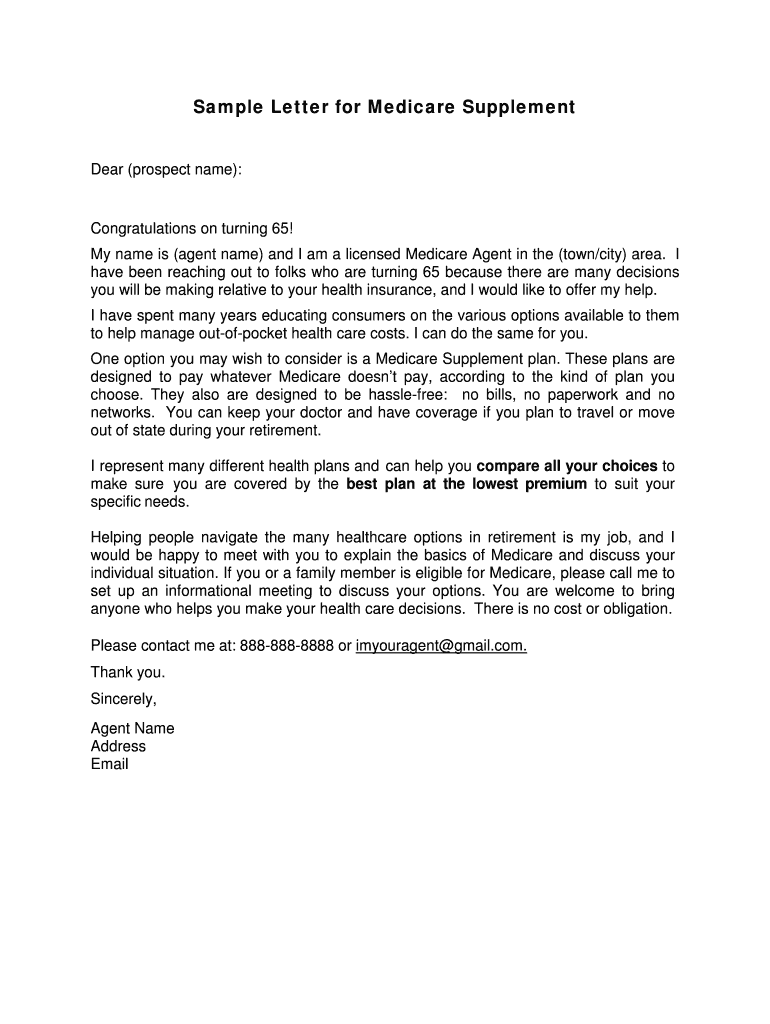
A Medicare prospecting letter is a targeted communication tool used by licensed Medicare agents to reach out to individuals who are approaching their 65th birthday. As these individuals become eligible for Medicare benefits, the letter serves as an informative guide to help them understand the various Supplement plans available. These plans are designed to aid in covering out-of-pocket costs that are not included under the standard Medicare scheme. The letter typically highlights the flexibility of choosing healthcare providers and underscores the simplicity and ease of use that come with these supplemental options. This type of correspondence acts as an introductory step for individuals entering the Medicare enrollment process, offering them clear insight into their healthcare choices.
Key Elements of the Medicare Prospecting Letter
The Medicare prospecting letter is structured to provide comprehensive information about Medicare Supplement plans while emphasizing their benefits. Essential elements of the letter include:
- Personalization: The letter should address the recipient directly, making it personal and relevant.
- Introduction to Medicare Benefits: An explanation of what Medicare Supplement plans are and how they function.
- Coverage Details: Information on covering out-of-pocket expenses not covered by standard Medicare.
- Flexibility and Choice: Discussion on the freedom to choose healthcare providers and the various plan options available.
- Call to Action for Consultation: An invitation for recipients to schedule a no-cost informational meeting.
These components are designed to create a clear and informative narrative that aids recipients in making informed decisions about their Medicare options.
How to Use the Medicare Prospecting Letter
Using the Medicare prospecting letter effectively involves several strategic steps to ensure it conveys the right message and reaches the intended audience:
- Identify the Audience: Focus on individuals who are about to turn 65, as they will soon be eligible for Medicare.
- Customize the Message: Tailor the content to address the specific needs and concerns of the recipient.
- Highlight Benefits: Clearly articulate the advantages of Medicare Supplement plans in covering additional expenses.
- Encourage Engagement: Include clear instructions for scheduling a consultation or seeking further assistance.
- Use Multiple Communication Channels: Send the letter via mail and digital platforms to maximize outreach.
By following these steps, Medicare agents can use the prospecting letter to effectively communicate with potential clients and provide essential information.
Important Terms Related to Medicare Prospecting Letter
Understanding the terminology used within the context of the Medicare prospecting letter is crucial for both agents and recipients. Key terms include:
- Medicare Part A and B: Basic components of Medicare covering hospital and medical insurance.
- Medigap: A type of Medicare Supplement Insurance that helps fill "gaps" in standard Medicare coverage.
- Out-of-Pocket Costs: Expenses for medical care that are not reimbursed by insurance.
- Enrollment Period: The timeframe during which eligible individuals can enroll in Medicare.
- Supplement Plan Premiums: Monthly payments required to maintain coverage under a Supplement plan.
Familiarity with these terms enhances the recipient's understanding of the information provided and aids in making informed decisions.
Examples of Using the Medicare Prospecting Letter
The Medicare prospecting letter is often used in various scenarios to ensure individuals approaching Medicare eligibility understand their options:
- Proactive Outreach: Reaching out to soon-to-be 65-year-olds, offering a comprehensive overview of Medicare benefits and supplementation.
- Supplemental Plan Emphasis: Providing details about the advantages of additional coverage options to enhance core Medicare benefits.
- Promoting Informational Meetings: Setting up local or online sessions where potential beneficiaries can learn more about their options and receive answers to their questions.
These examples illustrate practical applications of the letter to engage and inform potential Medicare participants.
Steps to Complete the Medicare Prospecting Letter
Completing a Medicare prospecting letter involves thorough preparation and execution:
- Draft a Personalized Introduction: Start with a personal greeting and an introduction detailing the recipient's impending Medicare eligibility.
- Elaborate on Supplement Plan Benefits: Provide an in-depth analysis of available plans and their benefits.
- Include a Call to Action: Encourage scheduling a meeting or consultation to explore options further.
- Review and Proofread: Ensure accuracy and clarity in the information provided.
- Choose Appropriate Channels: Decide on the medium for sending the letter, either physically or digitally.
Ensuring each step is meticulously followed will result in a well-rounded and effective communication piece.
Legal Use of the Medicare Prospecting Letter
The legal considerations of sending a Medicare prospecting letter are essential for maintaining compliance and trust:
- Adherence to Regulations: Ensure all communications comply with federal and state guidelines regarding Medicare marketing.
- Privacy Considerations: Handle recipient data responsibly and transparently.
- Avoidance of Misleading Information: Provide truthful and clear information to maintain credibility and avoid legal repercussions.
Understanding and applying these legal standards is crucial for agents to operate within the law and maintain trust with potential clients.
Who Typically Uses the Medicare Prospecting Letter
Medicare prospecting letters are primarily utilized by:
- Licensed Medicare Agents: Individuals or organizations specializing in helping clients navigate Medicare options.
- Insurance Companies: Firms offering Medicare Supplement plans looking to expand their client base.
- Healthcare Organizations: Entities focused on educating near-retirees about comprehensive healthcare coverage options.
These groups use the letter to connect with individuals nearing Medicare eligibility and facilitate informed healthcare decisions.






