



01. Edit your form online
Type text, add images, blackout confidential details, add comments, highlights and more.

Type text, add images, blackout confidential details, add comments, highlights and more.
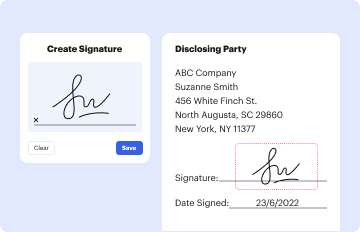
Draw your signature, type it, upload its image, or use your mobile device as a signature pad.

Send it via email, link, or fax. You can also download it, export it or print it out.
Understanding the core components of the treatment certificate format is essential for accurately completing and utilizing this form. A treatment certificate typically includes several important sections:
Personal Information: Details about the claimant, including full name, date of birth, and contact information, are essential for identification and correspondence.
Medical Details: Specific information about the injury or illness, including diagnosis, treatment administered, and medical outcomes, provides the factual basis for the report.
Work Capability Section: This part assesses the impact of the medical condition on the claimant's ability to perform work duties, potentially influencing recovery plans and workplace accommodations.
Authorization for Information Disclosure: This section permits the sharing of relevant medical information with authorized parties, ensuring transparency and compliance with legal requirements.
Signatures: The signatures of the medical practitioner, claimant, and sometimes the employer, are required to validate the form. This confirms the accuracy of the information provided and the consent for its sharing.
Filling out the treatment certificate format correctly is crucial for ensuring that the document serves its intended purpose. Follow these steps:
Gather Required Information: Collect personal, medical, and occupational details from the claimant and relevant medical records.
Fill Personal Details: Start by entering the claimant’s full name, date of birth, and contact information in the designated fields.
Enter Medical Information: Provide comprehensive medical reports, including diagnosis, treatment type, dates of treatment, and any recommendations or restrictions.
Complete Work Capability Section: Evaluate the claimant's ability to work, noting any limitations or adjustments needed for job performance.
Authorize Information Disclosure: Ensure the claimant consents to data sharing by completing the authorization section, specifying who can access the information.
Sign and Date: Obtain the necessary signatures from the medical practitioner, claimant, and employer where applicable.
Proper legal usage of the treatment certificate format ensures compliance with state and federal regulations:
Confidentiality Compliance: Adhering to HIPAA and other privacy laws is vital when handling sensitive medical information.
Validity and Authenticity: Ensuring the certificate is signed by authorized personnel confirms its legitimacy and acceptance in official contexts.
Controlled Distribution: Sharing the certificate only with authorized entities maintains legality and protects claimant privacy.
Understanding key terminology in the treatment certificate format is important for correct usage:
Claimant: The individual receiving the treatment and submitting the certificate.
Medical Attendant: The healthcare professional responsible for completing the form based on patient care details.
Authorization: A formal consent within the form granting permission for medical information release.
Claimant’s Work Capability: An evaluation of how the medical condition affects the claimant’s ability to perform their job functions.
The treatment certificate format is utilized by a variety of individuals and organizations, including:
Claimants: Patients who need to document medical treatment for insurance claims or workplace accommodations.
Medical Practitioners: Healthcare providers responsible for verifying treatment and its outcomes.
Insurance Companies: Insurers require the form to assess claims related to medical expenses or disability benefits.
Employers: Businesses use the form to understand an employee’s medical condition and how it affects their work roles and responsibilities.


The treatment certificate format is versatile and finds application in multiple scenarios:
Insurance Claim Submission: Required by insurers to document medical treatment when processing a claim for health or accident coverage.
Workplace Accommodation Requests: Employed by employees to substantiate a request for job accommodation due to medical conditions.
Legal Proceedings: Utilized as evidence of medical treatment and outcomes in personal injury lawsuits or workers' compensation claims.
Several states have unique requirements for the treatment certificate format:
California: Additional documentation might be required for Workers' Compensation claims, adhering to specific state regulations.
New York: Forms used in disability claims must align with state-specific criteria to ensure they meet local legal standards.
Texas: Verification from an in-state licensed medical practitioner might be mandatory for certain types of claims and certificates.
We've got more versions of the treatment certificate format form. Select the right treatment certificate format version from the list and start editing it straight away!
At DocHub, your data security is our priority. We follow HIPAA, SOC2, GDPR, and other standards, so you can work on your documents with confidence.
Include, as applicable, a description of relevant symptoms, the regimen of continuing treatment or the plan for continuing supervision provided by the healthRead more
While use of this form is optional, this form asks the health care provider for the information necessary for a complete and sufficient medical certification,


