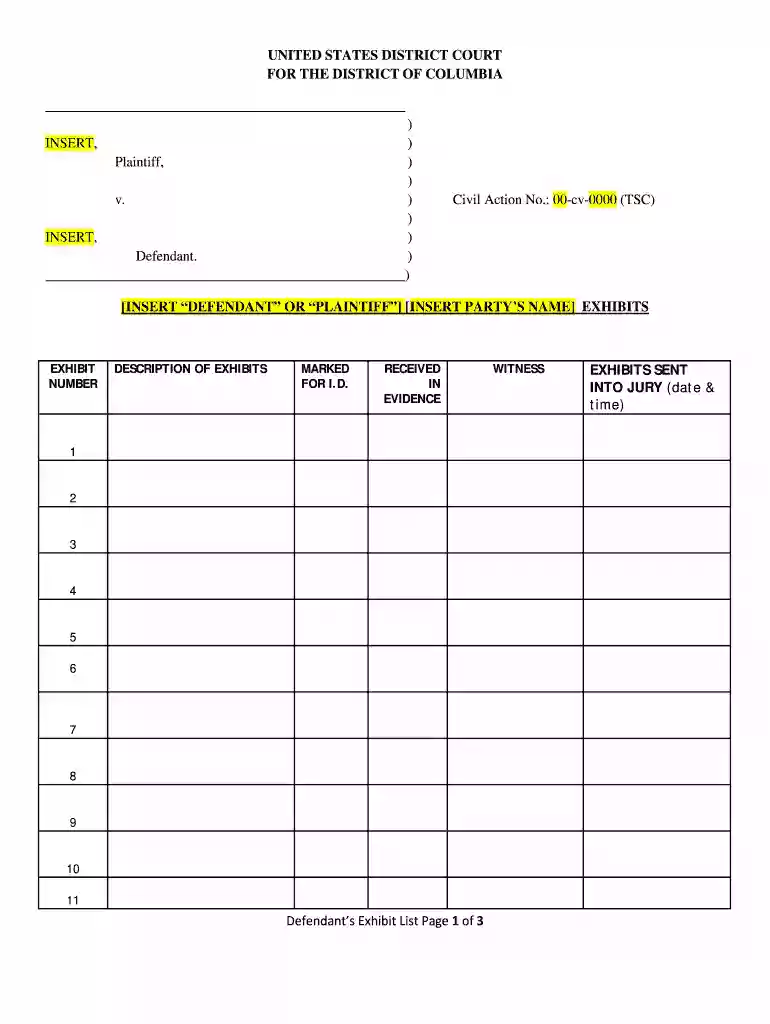
Definition & Meaning of an Exhibit List
An exhibit list is an organized document used in legal proceedings to catalog and reference various pieces of evidence or exhibits that will be presented during a trial. This list serves multiple purposes:
- Identification: Each exhibit is assigned a unique identifier, often a number or letter, that corresponds to its position in the list.
- Description: A brief description of each exhibit is provided, detailing what the evidence is and its relevance to the case.
- Evidence Type: The exhibit list categorizes evidence types, which may include documents, photographs, videos, charts, or physical objects.
- Legal Context: The exhibit list is crucial for maintaining the chain of custody and ensuring that the evidence introduced is legally admissible in court.
Exhibit lists can vary in format and requirement by jurisdiction, but they generally facilitate clear communication about what evidence will be brought before the court and assist in the efficient management of the trial process.
Key Elements of the Exhibit List Example
A well-structured exhibit list example typically includes several key elements:
- Case Information: Details such as the case name, case number, and the court in which the case is being heard.
- Exhibit Numbering System: A systematic method (e.g., Exhibit 1, Exhibit 2, etc.) to easily reference each piece of evidence.
- Exhibit Description: A concise and clear description of each exhibit's content, purpose, and relevance to the case.
- Evidence Status: Notation indicating whether the exhibit has been marked for identification, received in evidence, or contested.
- Additional Notes: Space for any specific remarks regarding the exhibit, including objections raised by opposing counsel.
These elements ensure the exhibit list is comprehensive, facilitating the introduction and discussion of evidence during court proceedings.
How to Use the Exhibit List Example
Using an exhibit list example effectively during a trial involves several steps:
- Preparation: Begin by compiling all relevant evidence that you plan to present to the court. Gather documents, images, and other materials that support your case.
- Organization: Arrange the evidence in a logical sequence that aligns with your legal strategy. Group similar items together or order them according to the timeline of events.
- Documentation: Create your exhibit list using a template or a structured format, ensuring that all major components—case information, exhibit numbers, descriptions, and comments—are included.
- Review: Ensure accuracy and completeness by reviewing the list with your legal team, confirming that all necessary exhibits have been included and that descriptions are clear.
- Submission: File the exhibit list with the court according to local rules. Make sure that copies are also provided to the opposing party to promote transparency.
Following these steps will help establish a clear record of the evidence you intend to present, making the trial process more efficient.
State-Specific Rules for the Exhibit List Example
State-specific rules regarding an exhibit list can differ significantly. While there are common practices across courts, it's essential to consider the particular requirements of the jurisdiction where the case is being heard. Here are some variations that can occur:
- Format: Some states may require a specific format or order for the exhibit list, while others allow more flexibility.
- Timing: Different jurisdictions can impose deadlines for when the exhibit list must be submitted, potentially requiring advance notice prior to trial.
- Filing Procedures: Methods of submission—whether electronic or paper—may vary by state, impacting how and when the exhibit list is presented to the court.
- Content Requirements: Certain states may mandate additional information, such as indexing the exhibits or providing a witness list alongside the exhibit list.
Familiarity with these regulations is critical to ensure compliance and avoid potential pitfalls in a legal case.
Examples of Using the Exhibit List Example
Practical usage of an exhibit list example can be illustrated through various scenarios:
- Civil Litigation: In a personal injury lawsuit, the plaintiff might include medical records, accident photographs, and witness statements in the exhibit list. Each piece of evidence is clearly numbered and described, allowing for straightforward references during testimony.
- Criminal Trials: A prosecution team may prepare an exhibit list containing police reports, video surveillance footage, and forensic evidence. This list helps demonstrate a thorough case against the defendant.
- Family Court: In custody disputes, an exhibit list can include correspondence between parents, expert evaluations, and evidence of living conditions to illustrate the best interest of the child.
These varied scenarios highlight the versatility of exhibit lists and their critical role in organizing and presenting evidence effectively.
Steps to Complete the Exhibit List Example
Completing an exhibit list example requires systematic attention to detail. Here are the steps to ensure that it is done correctly:
- Gather Evidence: Collect all potential exhibits that are relevant to your case. This may include documents, photographs, audio/video recordings, and physical items.
- Create a New Document: Open a new document on your preferred word processor or use Excel for a more structured approach.
- Structure the List: Include headings such as "Exhibit Number," "Exhibit Description," and "Status" to ensure clarity.
- Add Exhibits: As you compile the exhibits, sequentially number them and fill in descriptions. For example, "Exhibit 1: Medical Report from Dr. Smith (dated March 1, 2022)".
- Final Review: Double-check spelling and ensure accuracy in descriptions. Ensure the list complies with the local court's rules and guidelines.
- Submission Confirmation: After filing with the court, confirm that all parties have copies of the list, retaining one for your records.
Following these detailed steps will facilitate the creation of a comprehensive and accurate exhibit list tailored for legal proceedings.