
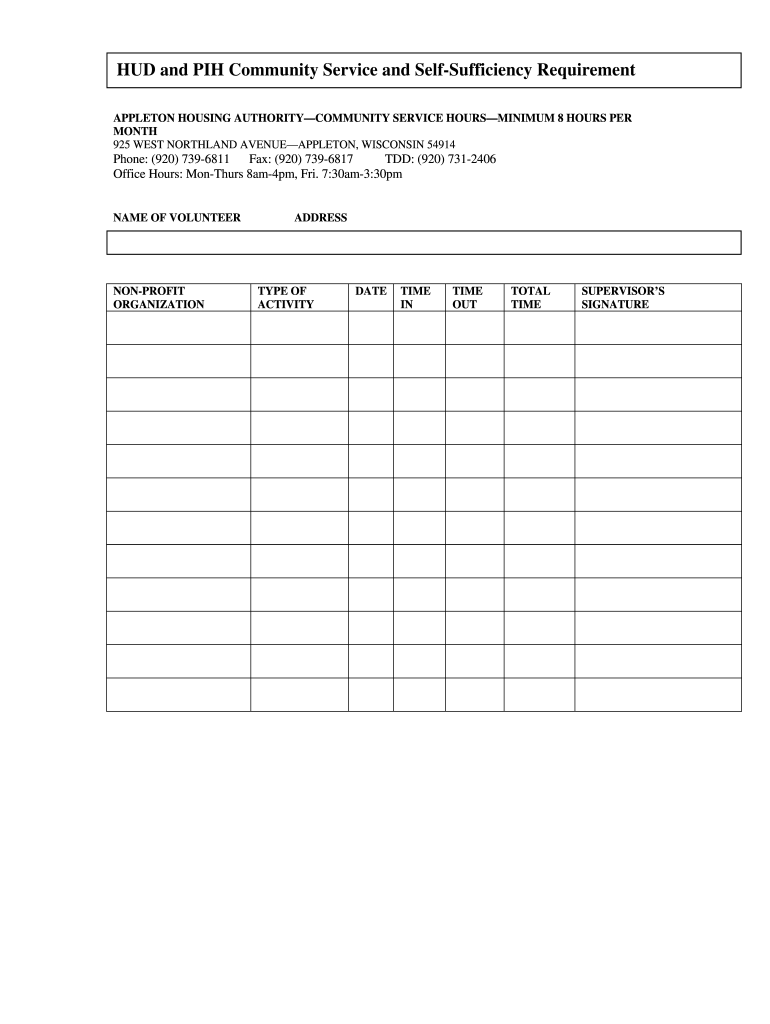







Definition and Purpose of the Community Service Form
The community service form is an important document used to track volunteer activities, primarily for individuals fulfilling community service requirements mandated by courts, educational institutions, or organizations. This form serves multiple purposes, including documentation for legal compliance, verification of hours served, and tracking an individual’s contributions to their community.
-
Legal Compliance: Many community service requirements arise from court orders, especially in cases involving youth offenders or individuals seeking sentence reduction. Courts typically require a detailed account of hours worked, types of service performed, and the organization where the service was completed.
-
Educational Requirements: Schools and colleges may also mandate community service as a condition for graduation or scholarship eligibility. Therefore, having a structured record of service hours is essential for students.
-
Organizational Tracking: Non-profits and service organizations often utilize community service forms to assess volunteer engagement, track the impact of volunteer work, and improve future volunteer efforts.
Key Elements of the Community Service Form
A well-structured community service form generally includes several crucial components designed to capture all necessary details about the service experience. Understanding these elements is vital for proper completion and submission.
-
Personal Information: This section typically requires the volunteer's name, contact information, date of birth, and possibly an identification number if required by the court or organization. Accurate information ensures proper identification and record-keeping.
-
Organization Details: Volunteers must specify the name of the organization where services were rendered, its address, and the supervisor's contact information. This verifies the legitimacy of the service activity and allows for follow-up if required.
-
Volunteer Activity Description: Detailed descriptions of the types of activities performed are essential. This could range from tutoring students to participating in environmental clean-up efforts. Accurate descriptions clarify the nature of the service and its impact on the community.
-
Hours Worked: The form must document the total hours committed to the service, along with dates of participation. Precise records of hours help in meeting any specific legal or educational requirements.
-
Signature and Verification: The community service form should conclude with a section for the supervising authority's signature, which serves as verification of the claimed hours and activities. This adds a layer of credibility to the documentation submitted.
Steps to Complete the Community Service Form
Filling out the community service form accurately is crucial for fulfilling various compliance requirements. Following a structured approach can streamline the process.
-
Gather Required Information: Before starting to fill out the form, collect all relevant details:
- Personal identification details
- Information about the community service organization
- Dates and a summary of the activities planned or completed
-
Fill in Personal Information: Start by accurately entering your name, contact information, and any requested identification numbers. Double-check for spelling errors to ensure clarity.
-
Provide Organization Details: Input the name and address of the organization where you completed the community service. If applicable, include the supervisor's name and contact details.
-
Detail the Volunteer Activities: In the designated section, describe your activities thoroughly. Use specific terms and active language to reflect the contributions made, such as “organized a food drive” or “mentored youth in literacy programs.”
-
Record the Hours Worked: Clearly document the total number of hours served and specify the dates. If you worked on multiple days, consider using a simple table format to enhance clarity and organization.
-
Obtain Supervisor’s Signature: Once completed, submit the form to the supervising authority for signature. Without this verification, the form may not hold the necessary weight for legal or academic purposes.
How to Obtain the Community Service Form
Acquiring a community service form can vary based on the entity requesting its completion. Here are common methods for obtaining the form:
-
Direct from Organizations: Many non-profit organizations and schools provide their own community service forms. Contact the organization directly or check their website for downloadable templates.
-
Legal and Court Websites: If the community service is court-mandated, many court systems offer printable forms on their official websites. This ensures that you are using the correct and legally accepted format.
-
Educational Institutions: Schools often provide community service forms through their administrative offices or student portals. It is advisable to consult academic advisors or the student affairs office for specific requirements.
-
Free Online Resources: Various websites offer free downloadable community service forms and templates in PDF or Word format. These resources are helpful for users needing a general format or those who want to create a customized version.
Importance of Community Service Documentation
Proper documentation of community service is critical for various stakeholders, including volunteers, educational institutions, and courts. The significance extends across several facets:
-
Meeting Legal Requirements: For those under court orders, accurate documentation can influence legal decisions and may even lead to sentence reductions or alternative sentencing options.
-
Academic Reporting: Students often need to demonstrate community involvement for graduation requirements or scholarship applications. Comprehensive documentation supports their applications and showcases their commitment to service.
-
Enhancing Organizational Programs: Organizations can leverage documented community service hours to assess the effectiveness of their programs. Detailed records enable non-profits to report to donors and stakeholders, highlighting community engagement and impact.
-
Personal Reflection: Individuals may use completed forms for personal record-keeping, reflecting on their contributions and guiding future service endeavors. This reflection can foster a deeper commitment to ongoing community engagement.
-
Building a Service History: For many, continuous involvement in community service can lead to numerous opportunities, both personal and professional. Keeping a well-documented history of volunteer work showcases a commitment to social responsibility.
Examples of Using the Community Service Form
Practical scenarios can help illustrate how the community service form is utilized in real-world contexts. Understanding these examples can elucidate the form's application and importance.
-
Court-Mandated Community Service: A teenager convicted of a minor offense may be sentenced to thirty hours of community service. They would fill out the community service form through the organization where they volunteer, recording hours with verification from their supervisor. Submission of the completed form fulfills a court requirement, possibly affecting their case outcomes.
-
High School Graduation Requirements: A high school student participates in a reading program at a local library to fulfill a service requirement for graduation. After completing the required ten hours, the student obtains the necessary signatures on the community service form, documenting their service for school records.
-
Non-Profit Volunteer Reporting: An individual volunteers at a food bank and logs hours using the community service form. This documentation allows the organization to track volunteer contributions and effectively report to stakeholders on community impact.
-
Scholarship Applications: A college applicant highlights their volunteer work on their application. They use the community service form to document over one hundred hours of service with various organizations, providing verification letters to support their claims.
-
Workplace Volunteerism: An employee of a corporation organizes a community clean-up day. They complete the community service form, ensuring that the hours worked are documented for both personal records and as part of the company’s community engagement strategy.




